Approximately 25% of heavy goods vehicles (HGVs) currently traversing Lithuania’s national highway network are operating in violation of weight regulations, with some exceeding maximum limits by as much as 100%. This data, released by the national road infrastructure company Via Lietuva, has prompted a significant technological shift in how the country monitors its transport corridors. To protect road surfaces from premature wear and ensure fair competition, the state is moving away from manual checks toward a fully automated, high-precision weighing system.
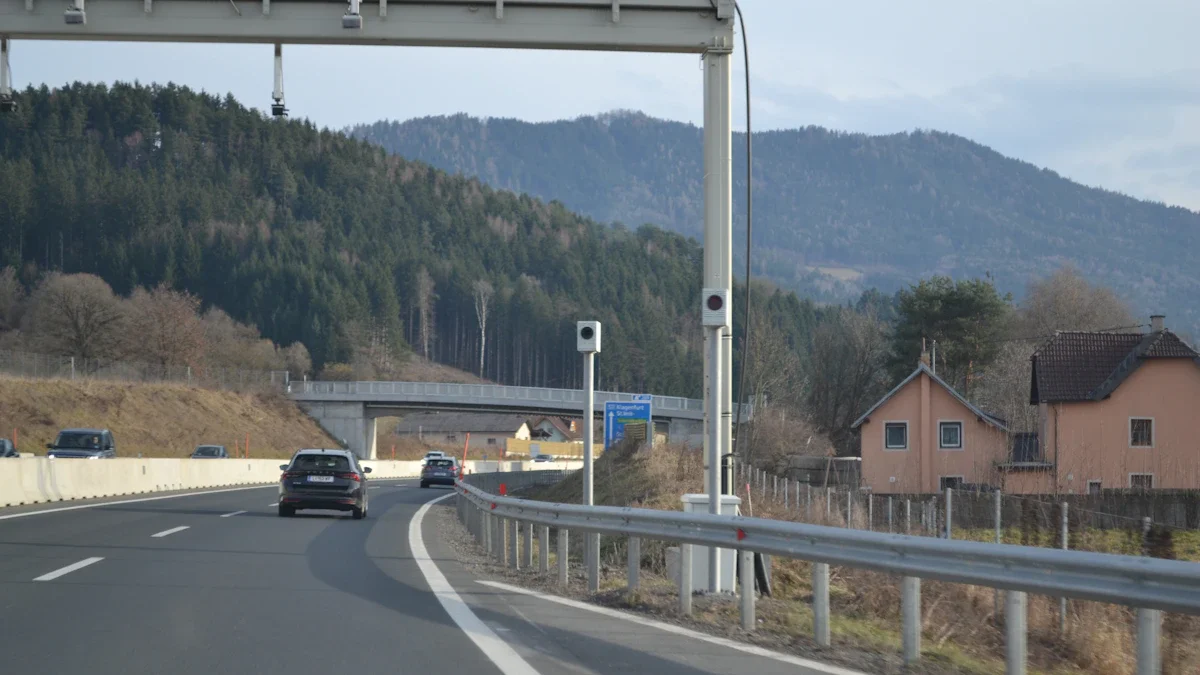
Via Lietuva has officially launched a public procurement process for six advanced Weigh-in-Motion (WIM) systems. These systems, often referred to as ‘weight cameras,’ are designed to identify and record the weight of moving vehicles without requiring them to stop or divert from the flow of traffic. This initiative is part of a broader strategic plan to install a total of 18 such systems across the country over the next three years.
High-Precision Enforcement Technology
The new systems are not merely monitoring tools; they are designed for direct enforcement. According to the Ministry of Transport, these scales will function similarly to speed cameras, automatically capturing violations and allowing for immediate administrative action. To ensure the legal robustness of these fines, Via Lietuva is requiring the systems to meet the A(5) accuracy class—the highest standard under the COST 323 international recommendations.
Currently, Lithuania primarily relies on static weighing technology, which requires vehicles to be pulled over by enforcement officers. The transition to dynamic, real-time weighing allows for 24/7 surveillance of the most heavily trafficked routes. Standard freight vehicles in Lithuania are permitted a total weight of up to 40 tonnes, with a drive axle limit of 11.5 tonnes. When these limits are ignored, the resulting damage to the asphalt layers increases exponentially, leading to shorter maintenance cycles and higher costs for taxpayers.
Strategic Deployment on Major Arteries
The initial rollout of the six new systems will focus on the most critical transit routes, including the A1 motorway connecting the capital to the coast and the A5 ‘Via Baltica’ corridor, which serves as a vital link to Western Europe.
| Highway Route | Specific Location (Kilometre Mark) |
|---|---|
| A1 Vilnius–Kaunas–Klaipėda | 111.34 km |
| A1 Vilnius–Kaunas–Klaipėda | 225.67 km |
| A2 Vilnius–Panevėžys | 38.25 km |
| A5 Kaunas–Marijampolė–Suvalkai | 52.94 km |
| A8 Panevėžys–Aristava–Sitkūnai | 26.4 km |
| A10 Panevėžys–Pasvalys–Riga | 45.42 km |
At present, only two such systems are operational in the country: one on the A1 at the 80.81 km mark and another on the A6 near Jonava. The latter is currently being upgraded as part of the Rail Baltica infrastructure project. The expansion to six additional sites represents a tripling of the country’s automated enforcement capacity within a single year.
Economic Impact and Infrastructure Protection
The move toward automated weighing is a central pillar of the ‘STOP Road Damage’ campaign initiated by Transport Minister Juras Taminskas. Earlier this year, more than 20 state institutions and business associations signed a memorandum pledging to reduce the impact of overloaded transport. The logic is as much economic as it is regulatory: the cost of repairing roads damaged by overweight lorries is ultimately borne by the state and, by extension, the public.
By enforcing weight limits more strictly, the government also aims to level the playing field for logistics companies. Operators who adhere to weight limits often face a competitive disadvantage against those who overload their vehicles to reduce the number of trips. The WIM systems ensure that ‘cheating’ the system becomes a high-risk, low-reward strategy.
Implementation Timeline
Via Lietuva expects to finalize the procurement contracts by the end of the third quarter of 2024. Once the contracts are signed, the selected providers will have one year to install and calibrate the systems. Motorists and logistics firms should expect the new ‘weight cameras’ to be fully operational and issuing fines by the end of September 2025.
While these systems are highly accurate, they are not a total panacea. Experts note that while the main highways will be strictly monitored, there remains a risk of ‘route leakage,’ where overloaded trucks may attempt to use secondary or regional roads to bypass the sensors. Consequently, the long-term plan to install 18 units is seen as essential to creating a comprehensive net that covers all viable transit paths across the country.
Source: BNS
Context & actions About this article
Article contextPeople & topics2#6
What do you think about this article?
Reader Ideas Newsroom
Have a sharper angle for this topic? Add it to the community idea board and let readers vote it up for editorial review.



/linkComments
8+ useful words can earn +10-60 DP; shorter replies can still publish without DP.