Liverpool schools implement new life-saving cardiac safety standards

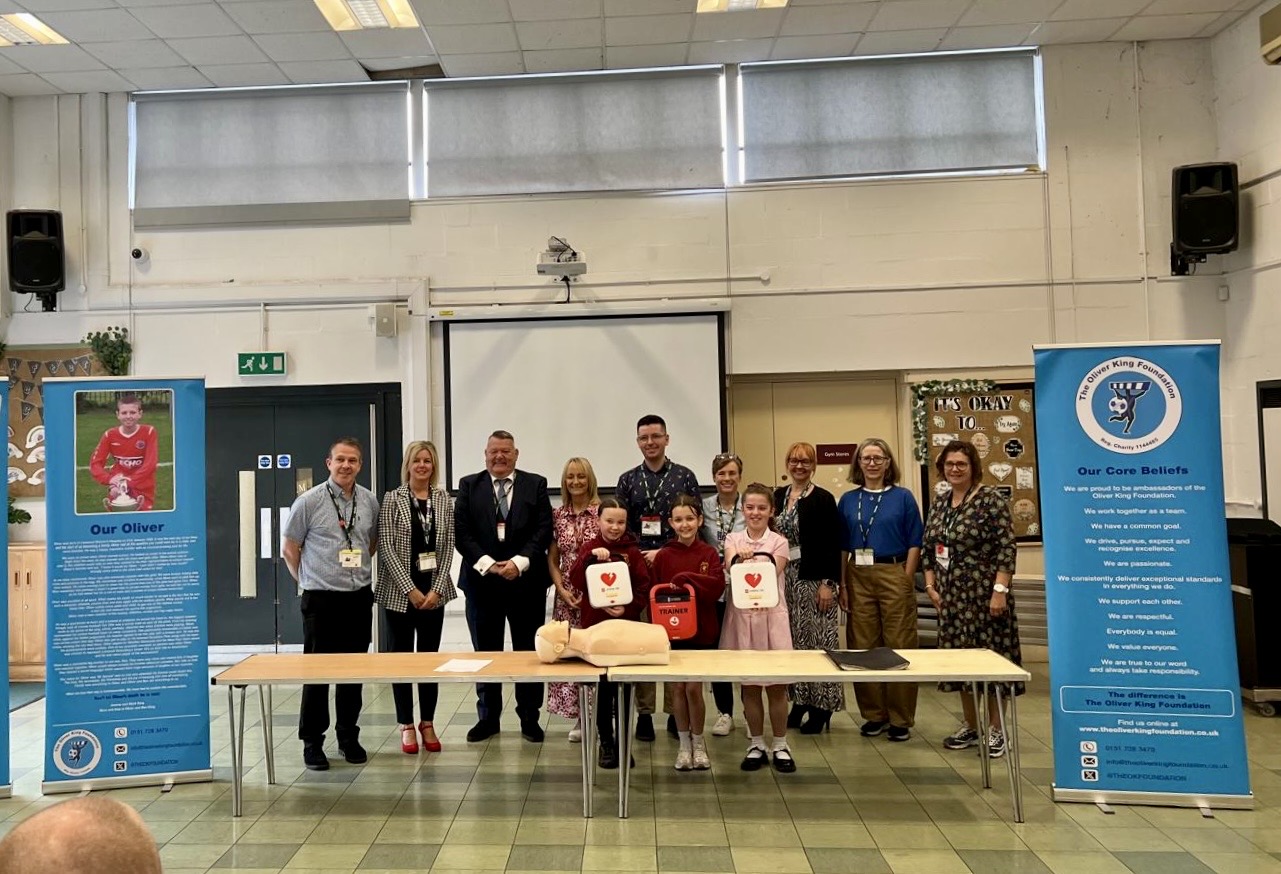
Inside the hall at Rice Lane Primary School this Tuesday, the atmosphere was one of focused determination rather than routine classroom activity. Teachers and staff gathered for the first session of a new citywide initiative designed to ensure that no cardiac emergency in a Liverpool school goes unanswered. This rollout marks a significant shift in how the city protects its youngest residents, moving from reactive measures to a proactive, standardized safety net.
Training rollout begins at Rice Lane Primary
The programme, launched by Liverpool City Council, represents a coordinated effort between Public Health, Education, and School Improvement Liverpool (SIL). By bringing together the Oliver King Foundation and the Council’s Health and Safety Unit, the initiative ensures that every educational facility in the city is equipped, trained, and ready to act. While cardiac arrest in children remains statistically uncommon, the unpredictability of these events necessitates immediate readiness.
Public Health Liverpool has provided the funding to allow the Oliver King Foundation and SIL to coordinate specialized training. Every school in the city has been offered at least two training places, ensuring a baseline of expertise is present on every campus. The goal is to move beyond simply having equipment on a wall; it is about fostering the confidence to use it when seconds are the only thing that matter.
National research highlights urgency for rapid intervention
The necessity of this citywide standard is backed by sobering data. Research from the University of Warwick indicates that 617 cardiac arrests occurred in individuals under the age of 18 across the UK in 2024. This averages out to approximately 12 incidents every week. Currently, the survival rate for children in these scenarios is just one in eight.
Medical evidence confirms that early CPR combined with rapid access to a defibrillator dramatically shifts these odds. Professor Matt Ashton, Director of Public Health for Liverpool City Council, noted that because cardiac arrest can happen without warning, the programme focuses on giving staff the specific skills needed to respond effectively before paramedics arrive. This initiative aligns with the 2023 national rollout of defibrillators to state-funded schools but adds a layer of localized training and accountability.

Turning a 2012 tragedy into a citywide safety standard
For many in the city, this initiative is the culmination of a journey that began with heartbreak. In 2012, 12-year-old Oliver King died after suffering a cardiac arrest during a swimming race at King David High School. His death became the catalyst for a decade of advocacy led by his father, Mark King OBE, who founded the Oliver King Foundation.
Mark King joined council leaders at the launch, emphasizing that the project is a major step toward ensuring no other family endures a similar loss. The foundation’s work has transitioned from campaigning for equipment to ensuring that the equipment is maintained and that people are not afraid to use it. Councillor Harry Doyle, Cabinet Member for Health, Wellbeing and Culture, stated that the city remains committed to honouring Oliver’s legacy by making Liverpool schools the most prepared in the country.

Mapping life-saving equipment on the national network
A critical technical component of the initiative involves “The Circuit,” the national defibrillator network. Many life-saving devices remain unknown to emergency services because they have not been registered. Liverpool’s new project includes a comprehensive audit to ensure every school defibrillator is logged on this system.
When a 999 call is placed, North West Ambulance Service dispatchers use The Circuit to direct bystanders to the nearest available device. By ensuring 100% registration across the city’s schools, the initiative extends protection not just to students, but potentially to the wider community. Schools are being encouraged to make their defibrillators accessible to the public where possible, turning local schools into neighborhood safety hubs.
Directors of Public Health and Education have issued a joint call to action to all headteachers and chairs of governors across primary, secondary, and special schools. The mandate is clear: engagement with this training is not just a recommendation, but a vital component of the city’s broader health and wellbeing strategy for 2026.
Source: Liverpool City Council



AI moderation
Portal AI moderator got this signal
Thanks. The comment is now marked for community review and AI moderation scoring.