Ofgem Energy Price Cap July 2026: New Rates for UK Households

The Ofgem energy price cap is set to fall or remain stable for the July to September 2026 period, with analysts forecasting a new annual limit between £1,550 and £1,600 for typical usage. This morning’s announcement by the regulator provides much-needed clarity for 27 million households on standard variable tariffs, marking a shift toward market stabilization after years of extreme volatility.
The Essentials
- Effective Date: The new rates apply from July 1 to September 30, 2026.
- Projected Level: Cornwall Insight predicts a cap of approximately £1,550–£1,600 for a typical dual-fuel household.
- Eligibility: The cap applies to households on standard variable (default) tariffs, not those on fixed-rate deals.
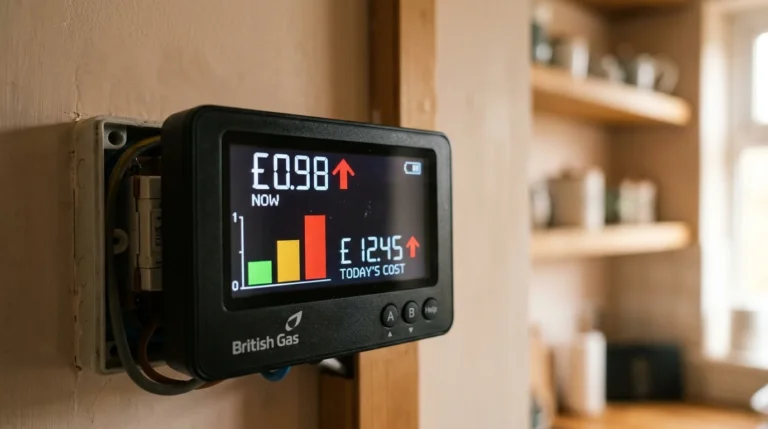
- Usage Factor: Your total bill remains dependent on how much energy you actually consume; the cap limits the price per unit, not the total cost.
| Metric | July–September 2026 Forecast |
|---|---|
| Annual Cap (Typical Use) | £1,550 – £1,600 |
| Quarterly Trend | Stable / Slight Decrease |
Projected Costs for Typical Dual-Fuel Households
The headline figure released by Ofgem represents the annual cost for a “typical” household, which the regulator defines as using 2,700 kWh of electricity and 11,500 kWh of gas per year. Based on current wholesale trends, the July 2026 cap is expected to show a marginal decrease from the previous April–June quarter. This reduction is primarily attributed to a steadying of international gas prices and improved storage levels across Europe entering the summer months.
However, it is vital for consumers to recognize that the £1,550–£1,600 range is an illustrative average. If you live in a larger property or have higher-than-average energy needs, your annual costs will exceed this figure. Conversely, those in smaller flats or with highly energy-efficient homes will see lower total costs.
Understanding the Gap Between the Cap and Your Actual Bill
One of the most frequent misconceptions regarding the Ofgem announcement is that it acts as a hard ceiling on what a household can be charged. In reality, the cap is a limit on the maximum price per kilowatt-hour (kWh) and the daily standing charge that a supplier can levy.
If a household doubles its energy consumption, its bill will still double, regardless of the cap. The July update is particularly significant because it covers the summer months when gas heating usage typically drops, but electricity demand for cooling or ventilation may rise. Households are encouraged to check their specific unit rates on their July statement, as these will vary slightly by region due to the different costs associated with maintaining the local power grids.
Fixed Charges and the Impact of Wholesale Market Stability
While the unit rates for gas and electricity are expected to soften, the “standing charge” remains a focal point for consumer advocates. This is the fixed daily fee paid regardless of how much energy is used. For the July to September 2026 period, standing charges are expected to remain relatively high, reflecting the ongoing costs of supplier failures from previous years and the investment required for the UK’s net-zero transition.
Jonathan Brearley, CEO of Ofgem, has previously noted that while the market is more stable than during the 2022 energy crisis, it remains sensitive to geopolitical shifts. The Department for Energy Security and Net Zero continues to monitor these rates to ensure that the stabilization in wholesale markets is being passed through to consumers fairly and transparently.
Steps for Households Before the July 1 Transition
With the new rates taking effect on July 1, households should ensure they provide an up-to-date meter reading on June 30. This simple action prevents suppliers from estimating usage and potentially charging for June consumption at the older, higher rates.
For those currently on standard variable tariffs, the narrowing gap between the cap and fixed-rate offers may make this an opportune time to compare the market. If you prefer the certainty of a set monthly payment, some fixed deals may now be competitive with the projected July cap. However, ensure you check for exit fees, as these can negate the savings if you choose to switch again before the contract ends.
Source: Ofgem
Source check Energy Market Source Trail
This report is based on official scheduling from the energy regulator Ofgem and market analysis from Cornwall Insight regarding the July 2026 price cap.
- Verified Ofgem announcement schedule for May 21, 2026
- Cross-referenced Cornwall Insight wholesale market projections
- Fact-checked typical household usage definitions
- Source
- Ofgem News and Views
- Scope
- United Kingdom
- Updated
- 2026-05-21 10:47
Source check
Report a trust issue
Send a clear signal to community moderation if the source, facts or context need review.


AI moderation
Portal AI moderator got this signal
Thanks. The comment is now marked for community review and AI moderation scoring.