
Rokas Kuprys, an oral surgeon at the Panevėžys Implantology Centre, has become one of the first medical professionals in Europe to clinically implement the ARi® dental implant system. This next-generation technology was recently introduced to the international professional community as a specialized solution for complex implantology cases, particularly those involving significant bone loss. By adopting this system in its early clinical stages, the Lithuanian specialist is contributing to the real-world evaluation of a technology designed to simplify procedures that previously required extensive surgical intervention.
Advancing Oral Surgery Standards in Panevėžys
The participation of Lithuanian doctors in the early clinical application of global medical innovations marks a significant shift in the country’s healthcare landscape. Traditionally, the development and initial testing of such advanced medical technologies are concentrated in major international research hubs. The inclusion of a Panevėžys-based surgeon in this process highlights the growing reputation of Lithuania’s dental specialists on the continental stage.
For patients in the region, this means access to cutting-edge treatments that were previously unavailable or required travel to major European capitals. Dr. Kuprys notes that international collaboration allows for the exchange of clinical insights and the comparison of results across different regions. This professional network ensures that local practices are aligned with the latest global standards, providing a higher level of care for patients facing difficult dental reconstructions.
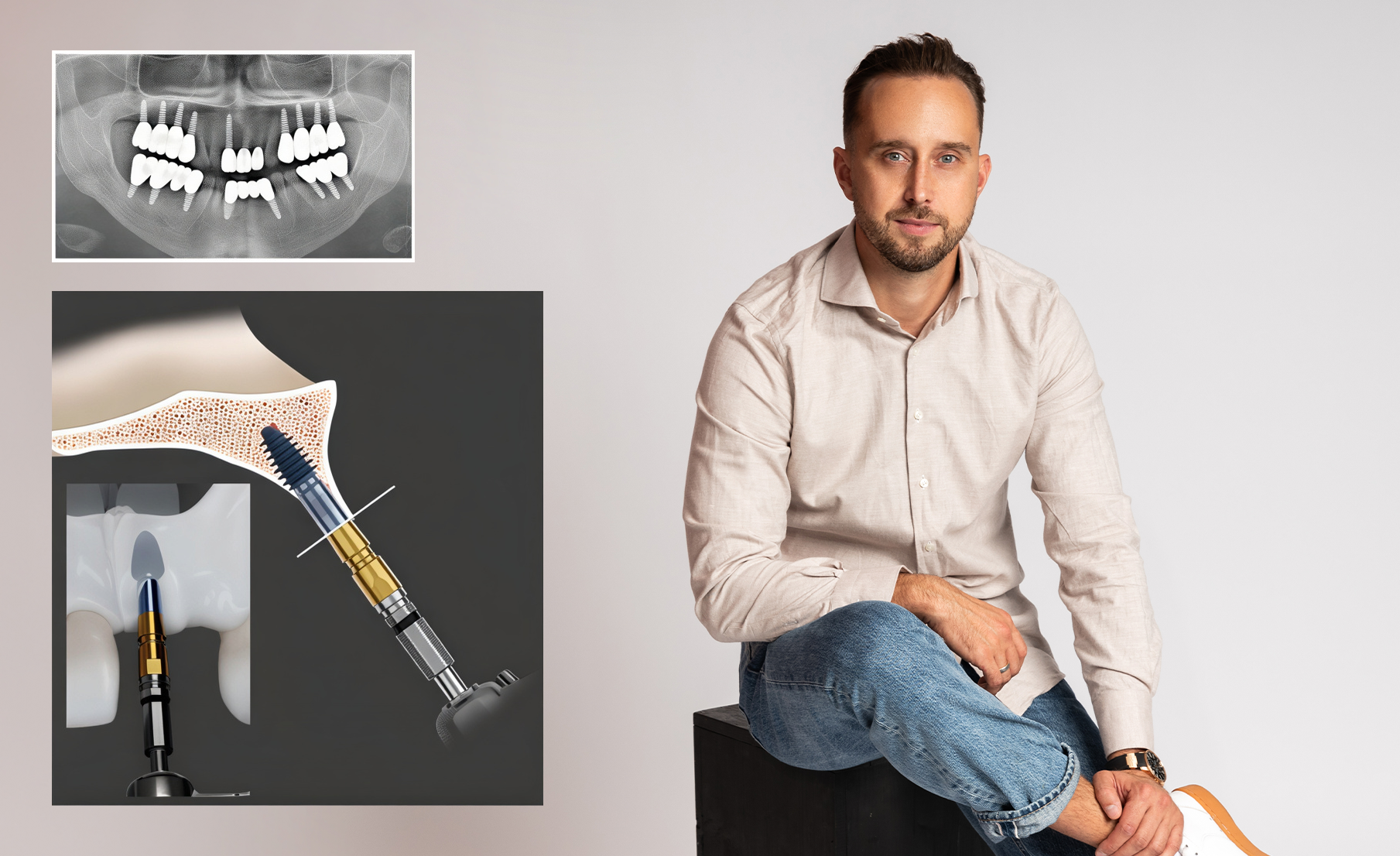
Technical Solutions for Severe Jawbone Atrophy
One of the most persistent challenges in oral surgery is the restoration of teeth for patients with severe alveolar bone atrophy, particularly in the anterior (front) part of the jaw. In conventional implantology, these cases often necessitate bone grafting—a secondary procedure where bone is transplanted to the jaw to provide enough volume for a standard implant. Bone grafting extends the total treatment time, increases costs, and adds complexity to the recovery process.
The ARi® system, developed by the South Korean company MegaGen, was specifically engineered to address these clinical hurdles. The design of the implant focuses on achieving primary stability by utilizing the basal bone rather than relying solely on the alveolar ridge. According to technical specifications, the implant features a specialized thread design and surface technology intended to promote rapid integration between the bone and the device. This approach potentially allows a significant portion of patients to bypass bone augmentation procedures entirely, streamlining the path to full dental restoration.
Lithuanian Expertise on the International Stage
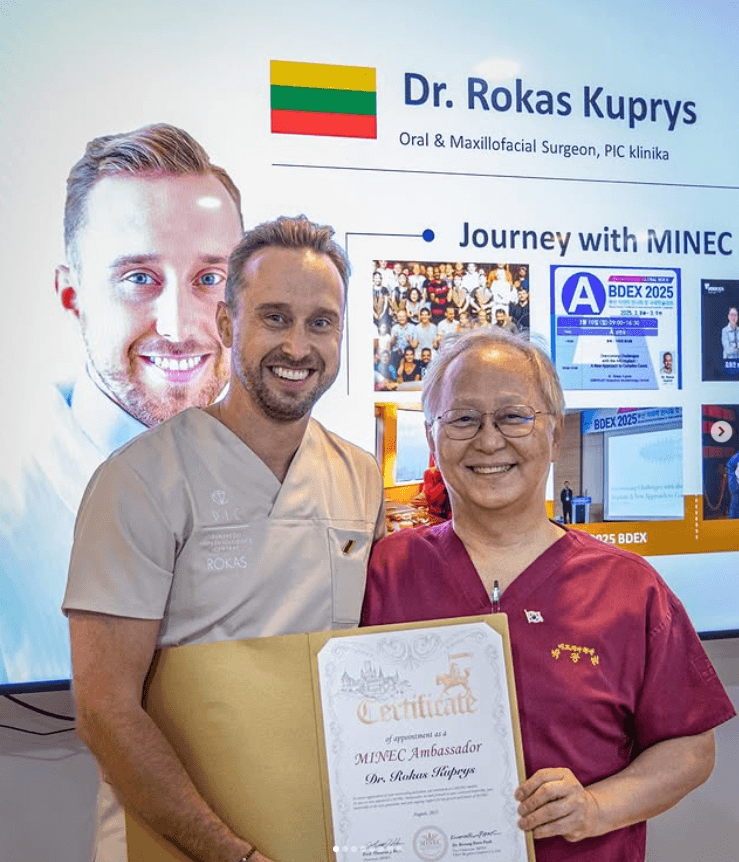
Beyond his clinical work in Panevėžys, Dr. Kuprys is actively involved in the international dissemination of this new technology. He is currently participating in professional training sessions alongside the system’s creator, South Korean dentist Dr. Kwang Bum Park. Together, they are presenting the clinical results and application techniques of the ARi® system to other dental professionals across Europe and beyond.
As a member of the International Team for Implantology (ITI) and the Lithuanian Society of Maxillofacial Surgery, Dr. Kuprys’s involvement in these global projects facilitates a two-way flow of information. While he brings new technology to Lithuania, he also provides vital clinical data back to the developers, helping to refine the technology for future use. While independent long-term clinical studies are still pending publication in scientific literature, the early adoption of such CE-marked medical devices in Lithuania underscores the country’s role as a proactive participant in modern medical evolution.
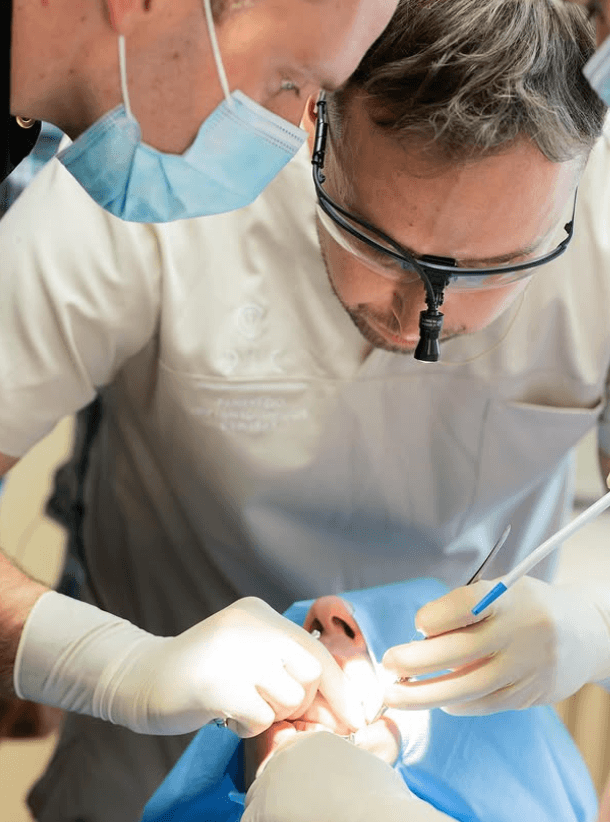
Patients are reminded that dental implantation is a medical procedure that requires a personalized approach. The suitability of any specific implant system is determined on an individual basis following a comprehensive evaluation of the patient’s oral health and bone structure.
Source: ELTA
Context & actions About this article
Article contextPeople & topics2#6
What do you think about this article?
Reader Ideas Newsroom
Have a sharper angle for this topic? Add it to the community idea board and let readers vote it up for editorial review.




/linkComments
8+ useful words can earn +10-60 DP; shorter replies can still publish without DP.