
By Hiyastar Editorial
Published: 29 May 2026
The Red Arrows 2026 schedule is not just a question of where the display team may appear next season. It now sits inside a wider public-interest story about aircraft availability, the age of the Hawk fleet and how much can be confirmed before official dates are released. For UK readers, the practical point is simple: individual airshow hopes should be treated as provisional until the public schedule is named by official channels or confirmed organisers.
BBC reporting has put the Red Arrows’ future operating picture back into focus, including coverage of the team flying with fewer jets to preserve an ageing fleet and separate questions around replacement aircraft. That does not amount to a confirmed 2026 route, display list or event window. It does, however, explain why schedule-watchers should look beyond the usual annual diary and pay attention to the fleet context behind it.
For wider context, our related report on the 2026 Southport Air Show is also useful.
Main takeaways
- No full Red Arrows 2026 public schedule is verified in the supplied evidence.
- BBC coverage points to wider pressure around aircraft availability and fleet age.
- Event organisers may promote ambitions before final Red Arrows participation is settled.
- The next meaningful check is an official schedule or named event confirmation.
Why the 2026 schedule matters before dates are confirmed
The Red Arrows are treated by many readers as a national summer fixture, not only a military display team. Their appearances shape expectations around airshows, seaside events, Armed Forces Day programmes, aviation festivals and major public gatherings across the UK.
That is why the 2026 schedule attracts attention long before a full list is available. A Red Arrows appearance can influence ticket interest, local planning, hotel demand and public expectations around an event’s headline moment. But those effects depend on confirmed participation, not speculation.
For 2026, the key difference is the wider operational context. BBC reports have raised questions around the current aircraft fleet and the long-term future of the display team. The schedule story is therefore not only about which towns or airfields could be listed. It is also about how the team’s capacity is managed while the fleet issue remains a live public topic.
That distinction matters. A display calendar can look like a simple list of dates, but each entry depends on aircraft, personnel, training, weather on the day and event-level approval. Readers should separate three things: events that would like the Red Arrows, events that say they expect them, and events that are officially confirmed.
What BBC reporting adds to the 2026 picture
The most useful context from BBC coverage is not a hidden schedule. It is the broader explanation of why Red Arrows appearances may be watched more closely than usual.
One BBC report has framed the team as flying with fewer jets to preserve an ageing fleet. Another has asked whether the Red Arrows will continue to “fly the flag for Britain”, while separate BBC coverage has reported on a British firm connected with potential future jet supply collapsing. Taken together, those reports point to a public-service issue around continuity, replacement options and display capacity.
The article titles alone do not verify a 2026 event list, and they should not be read as confirmation of any specific display. They do support a cautious reading of the schedule question: the 2026 diary is being discussed against the backdrop of aircraft preservation and future fleet uncertainty.
For readers, that means the most valuable information will be specific and attributable. A useful update would name an event, a date and the confirming body. A weaker update would merely say the Red Arrows are “expected” without a public confirmation.
Confirmed context is not the same as confirmed attendance
The Red Arrows can be central to event marketing, but public-interest reporting has to keep the boundary clear. A general report about the team’s fleet does not verify an individual show. A previous appearance at an event does not guarantee a future one. A local hope does not become a schedule entry until it is backed by the relevant public confirmation.
That is especially important for 2026 because many readers will search for the schedule months before the official picture is complete. The absence of a verified full schedule should not be treated as cancellation, but it also should not be filled with assumed dates.
What readers can treat as settled now
The settled point is limited but still useful: trusted national reporting exists on the Red Arrows’ operating context, and that context is relevant to how the 2026 schedule should be read. The available material supports caution, not certainty.
At this stage, readers can reasonably say that the 2026 schedule remains a watch item, that the Hawk fleet and future aircraft questions form part of the background, and that any claimed date needs a named public source behind it.
What readers should not treat as settled is a full 2026 route, a guaranteed appearance at a particular show, or a fixed event window. The supplied evidence does not verify those claims. It also does not support travel advice, safety advice, disruption claims or emergency-style instructions.
The right approach is to look for named confirmations. That may mean an official Red Arrows page, an event organiser announcement that clearly names the team, or a public-service release that gives dates and conditions. Until then, broad schedule claims are best read as provisional.
Why fewer aircraft would change the feel of a display season
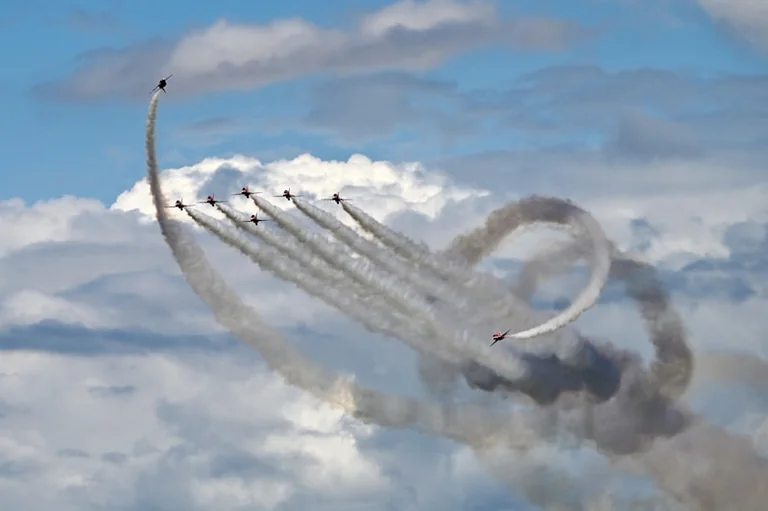
A Red Arrows display is not only judged by whether the team appears. The number of aircraft, the display format and the level of programme commitment all affect how a season is understood by the public.
BBC coverage of flying with fewer jets is relevant because the Red Arrows’ identity has long been tied to a distinctive formation display. If the team operates with reduced aircraft numbers to preserve the fleet, readers may still see appearances, but the public meaning of those appearances may shift. The story becomes less about a missing event and more about how a national display capability is being maintained.
This is where schedule coverage can easily become misleading. A calendar entry may answer “will they attend?”, but it may not answer “in what form?” A responsible reading of 2026 should leave room for both questions.
That does not mean every event is uncertain. It means the most useful updates will be precise. The strongest announcement would state the date, venue, display status and confirming authority. Anything less should be treated as a partial signal.
What event organisers and local readers are waiting for
Airshow organisers, councils and local tourism teams often build public messaging around headline displays. For them, the Red Arrows question can affect how an event is presented, even before the full programme is published.
For readers, the risk is not just being wrong about a date. It is mistaking early publicity for a confirmed schedule. That can happen when an event uses historic imagery, references past Red Arrows appearances or lists an ambition before the official programme is final.
The cleaner test is whether the announcement names the Red Arrows in the current year and links the appearance to a specific date. If the language is vague, the claim is weaker. If the update comes from an official event page or public-service channel, it carries more weight than a repost or unofficial tracker.
The difference between a season and a single booking
The full Red Arrows 2026 schedule will matter nationally, but individual readers usually care about one local event. Those are different levels of confirmation.
A national season announcement can show the wider pattern: how many UK appearances are listed, whether overseas events are included and how the team’s commitments are spaced. A single booking announcement only confirms one public appearance. Both can be useful, but neither should be stretched beyond what it says.
That distinction is particularly important when the fleet background is part of the story. A single confirmed appearance would not settle the whole season. A broad discussion of future aircraft would not settle one weekend’s event.
The public-service issue behind the display calendar
The Red Arrows sit in an unusual place in British public life. They are a military display team, a public symbol and a recurring feature of civic events. That makes their schedule a public-interest matter even when no urgent alert or warning is involved.
The current story is therefore about stewardship as much as spectacle. If aircraft are being preserved, if replacement options are uncertain, and if the team’s future is being debated in national reporting, the 2026 calendar becomes one visible part of a larger decision chain.
For readers, the most important thing is not to overread silence. A schedule may not be complete because the normal confirmation process has not finished. Equally, readers should not assume that past patterns will automatically repeat when the fleet context is under scrutiny.
The best public updates will clarify whether a display is confirmed, whether a flypast or full display is intended, and whether the information comes from an official schedule or from the event itself. Those details are more useful than broad claims that the team is “set to appear” without supporting wording.
The next confirmation that would change the story
The next meaningful milestone is a public Red Arrows 2026 schedule entry or a named event announcement that confirms the team for a specific date. That would move the story from fleet-context analysis into practical event coverage.
A stronger update would include the official schedule page, the named event, the date and the display status. A weaker update would only repeat that the Red Arrows are expected somewhere without a current public confirmation.
Until that milestone arrives, the safest reader-facing position is measured: the 2026 schedule remains unverified in the available evidence, trusted reporting explains why the wider fleet picture matters, and individual event claims should be checked against official public pages before being treated as settled.
Source: bbc.co.uk
Context & actions About this article
Source check Source context
This article uses trusted BBC reporting for the Red Arrows fleet context and does not treat any 2026 event date as confirmed without an official public confirmation.
- BBC reporting on Red Arrows fleet pressure
- No supplied evidence verifies a full 2026 public schedule
- No unofficial trackers are used as fact sources
- Source
- BBC News
- Scope
- United Kingdom
- Updated
- 2026-05-29 15:03
Source check
Report a trust issue
Send a clear signal to community moderation if the source, facts or context need review.
Article contextPeople & topics#7
What do you think about this article?
Reader Ideas Newsroom
Have a sharper angle for this topic? Add it to the community idea board and let readers vote it up for editorial review.


/linkComments
8+ useful words can earn +10-60 DP; shorter replies can still publish without DP.