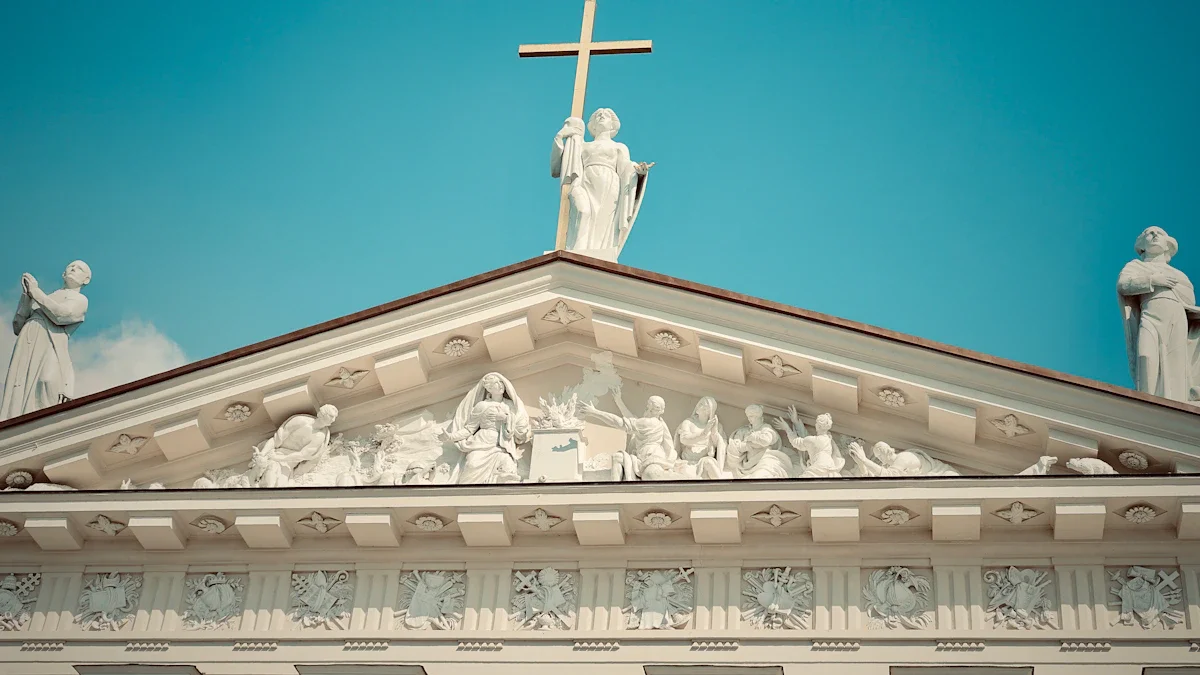
Beneath the white neoclassical facade of Vilnius Cathedral, a building that has survived fires, floods, and the heavy hand of Soviet secularization, lies a labyrinth of crypts that hold the secrets of a nation. For centuries, historians and citizens alike have looked toward these limestone foundations with a single, burning question: where is Vytautas the Great?
Now, the Lithuanian government has launched what is being described as the most comprehensive scientific study of the cathedral in its history. A high-level working group, established by Prime Minister Inga Ruginienė, has been tasked with creating a long-term roadmap for the research, protection, and restoration of this iconic site. The primary goal is to move beyond fragmented studies of the past and use modern technology to finally map the cathedral’s hidden layers.
A Royal Mystery Beneath the Limestone
For UK readers, the search for Vytautas the Great carries echoes of the 2012 discovery of Richard III beneath a Leicester car park. Vytautas, who ruled the Grand Duchy of Lithuania at its territorial peak in the 15th century, is a figure of mythic proportions. Under his reign, Lithuania stretched from the Baltic to the Black Sea, making it the largest state in Europe at the time.
While the cathedral is known to be the resting place of grand dukes, kings, and noblemen—including Alexander Jagiellon and the legendary Barbara Radziwiłł—the exact location of Vytautas’ remains has remained a mystery for six centuries. Historians believe he was buried here following his death in 1430, but the crypts were disturbed and hidden during various invasions and reconstructions.

“The Cathedral is one of the most important sites in Lithuanian history, but until now, its research has lacked the consistency and funding that matches its significance,” Prime Minister Ruginienė stated. She emphasized that the state now views this not just as an academic exercise, but as a duty to the nation’s historical memory.
Science Meets Sacred History
The new initiative will not rely on shovels alone. The working group, led by Ingrida Kutkienė, the Prime Minister’s advisor on cultural affairs, will coordinate a multi-disciplinary effort involving the Ministry of Finance, the Ministry of Foreign Affairs, and the Archdiocese of Vilnius.
Planned research includes:
* Paleogenetics and Bio-archaeology: Using DNA analysis to identify remains found in previously inaccessible niches.
* Ground-Penetrating Radar and Laser Scanning: To map the structural evolution of the cathedral without disturbing its sacred foundations.
* Art Historical and Architectural Analysis: To trace the development of the cathedral’s many chapels and its transition from a pagan site to the heart of Lithuanian Catholicism.

Doc. Dr. Aurimas Švedas, Director of the Lithuanian Institute of History, notes that the cathedral is more than an architectural monument. “It is the place where the history of the state, faith, culture, and our identity meet,” he explains. “By exploring the Cathedral, we are essentially exploring the question of how Lithuania became what it is today.”
A Roadmap to 2030
The timing of this project is no coincidence. Lithuania is preparing for the 600th anniversary of the death of Vytautas the Great in 2030. The working group has until July 1, 2026, to present a finalized plan for the complex research and restoration works, including a detailed budget and funding sources.
This project represents a shift in how the Baltic nation handles its heritage. Rather than isolated archaeological digs, this is a state-sponsored effort to integrate scientific data into a narrative that the public can engage with. The results are expected to answer decades-old questions about the earliest masonry of the site and the evolution of the royal burials.
As the working group begins its task, the hope is that by the time the 2030 anniversary arrives, the people of Lithuania—and the wider European community—will have a clearer picture of the man who shaped the medieval map of the continent. Whether or not Vytautas is found, the study promises to reveal new, unknown layers of a site that has stood as a silent witness to the rise, fall, and rebirth of a nation.
Source: ELTA
Context & actions About this article
Article contextPeople & topics4#5
What do you think about this article?
Reader Ideas Newsroom
Have a sharper angle for this topic? Add it to the community idea board and let readers vote it up for editorial review.



/linkComments
8+ useful words can earn +10-60 DP; shorter replies can still publish without DP.