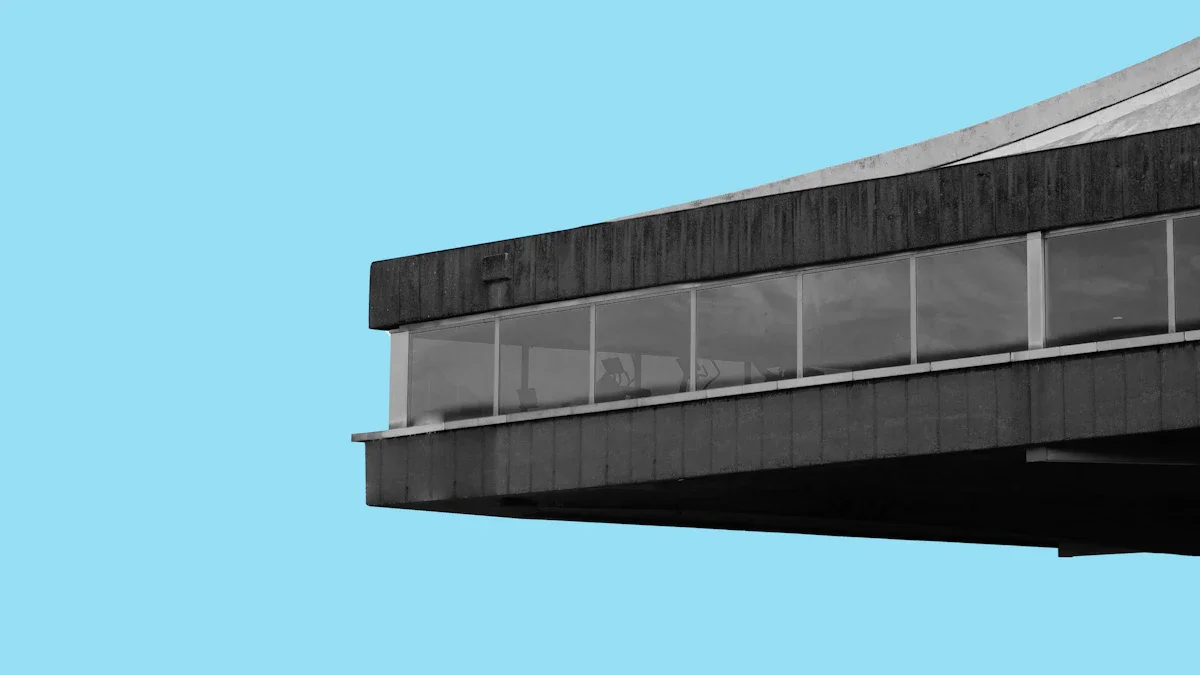
The Lithuanian Parliament (Seimas) has voted to advance a revised vision for the iconic Vilnius Palace of Concerts and Sports, signaling a definitive shift from a commercial entertainment venue toward a site of historical reflection and international congress. The decision aims to resolve a decades-long debate over the building’s future, which is complicated by its location atop a historic Jewish cemetery.
In a vote that saw 68 members in favour, 4 against, and 16 abstentions, the Seimas approved a resolution calling on the government to proceed with the reconstruction of the site as a project of national importance. However, the new mandate explicitly pivots away from the building’s original 1970s purpose as a sports arena or a modern commercial concert hall. Instead, the focus will be on creating a multi-functional space that balances modern utility with deep historical sensitivity.
A Balance of Values and History
The project, based on designs by Professor Albinas Kuncevičius, envisions the structure as a “Congress Palace.” The interior will be transformed to house conference spaces, a library, and a cultural information centre. Crucially, it will also feature permanent exhibitions dedicated to the Sąjūdis—the political reform movement that led to Lithuania’s independence—and a dedicated memorial and educational space for Jewish history.
Šarūnas Birutis, one of the primary initiators of the resolution, stressed that the decision was not merely about urban development but about the state’s moral obligations. “This is not a resolution about finance or concrete; it is a resolution about values,” Birutis stated during the session. “We are deciding how the state should treat its history, how it can reconcile respect for the dead, responsibility to the living, and duty to future generations.”
Navigating a Sensitive Heritage Site
The building’s location is one of the most sensitive archaeological and religious sites in the Baltic region. The Palace stands on the grounds of the former Šnipiškės Old Jewish Cemetery, which dates back to the 16th century. For years, international Jewish organisations and heritage advocates have voiced concerns over any commercial redevelopment that might desecrate the site.
The newly approved resolution seeks to address these concerns by commissioning a creative competition for a memorial and an exhibition specifically dedicated to the memory of the cemetery. The project has already received preliminary support from the Lithuanian Jewish Community and the Committee for the Preservation of Jewish Cemeteries in Europe, following technical adjustments made in 2019 to ensure the preservation of the ground’s sanctity.
Architectural Significance and National Identity
Beyond its religious context, the Vilnius Palace of Concerts and Sports is internationally recognised as a masterpiece of 20th-century Brutalist architecture. Added to the Register of Cultural Property in 2006, its distinctive wave-like roof and raw concrete aesthetic make it a landmark of Soviet-era modernism.
For Lithuanians, the building also holds immense political weight. In October 1988, it hosted the founding congress of the Reform Movement of Lithuania (Sąjūdis). In January 1991, it served as a place of public mourning for the victims of the Soviet military crackdown at the Vilnius TV Tower. By preserving the shell of the building while repurposing the interior, the government hopes to maintain this architectural link to the nation’s struggle for sovereignty.
Next Steps for the Reconstruction
The Seimas has tasked the Committee on Culture with forming a dedicated working group to refine the specific functions of the future Congress Palace. This group is expected to present a detailed project plan by 1 September this year.
Additionally, the Ministry of Culture has been urged to officially declare the building a cultural heritage object of national significance. While the Vilnius City Municipality is encouraged to promote the site as a hub for “business tourism” (conferences and summits), the resolution makes it clear that the site will no longer host the “noisy events” or commercial entertainment that once defined its use. This transition marks a significant moment in European urban planning, where the preservation of a controversial architectural style meets the complex demands of restorative justice and historical memory.
Original reporting by: elta
Source: ELTA
Context & actions About this article
Article contextPeople & topics2#5
What do you think about this article?
Reader Ideas Newsroom
Have a sharper angle for this topic? Add it to the community idea board and let readers vote it up for editorial review.



/linkComments
8+ useful words can earn +10-60 DP; shorter replies can still publish without DP.