
Vilnius city officials have launched a targeted campaign urging residents to resist the automatic urge to switch to English when interacting with foreign-born workers. The initiative, spearheaded by the Vilnius City Municipality, aims to transform routine daily interactions—such as ordering a coffee or taking a taxi—into vital language practice sessions for the city’s growing international population.
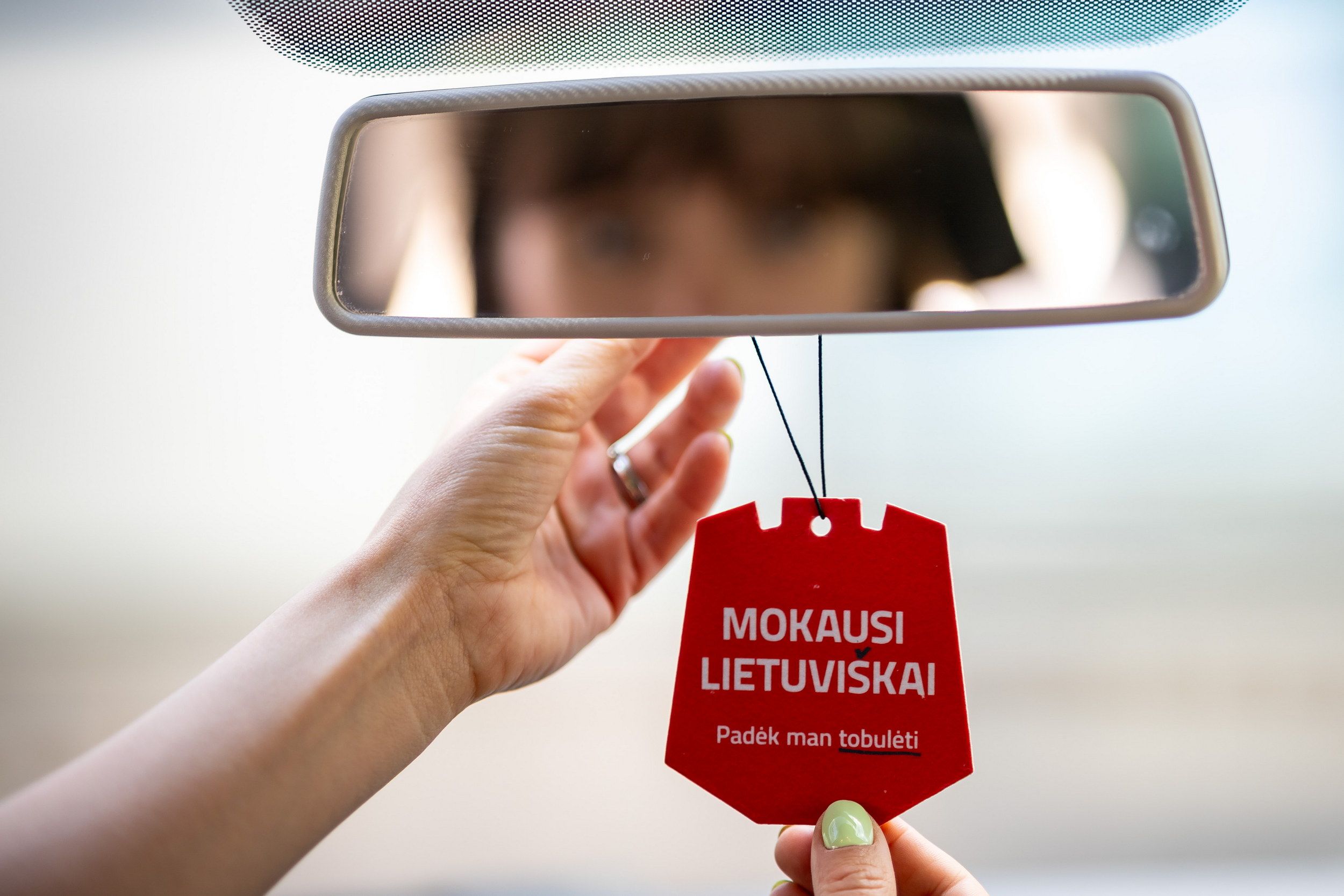
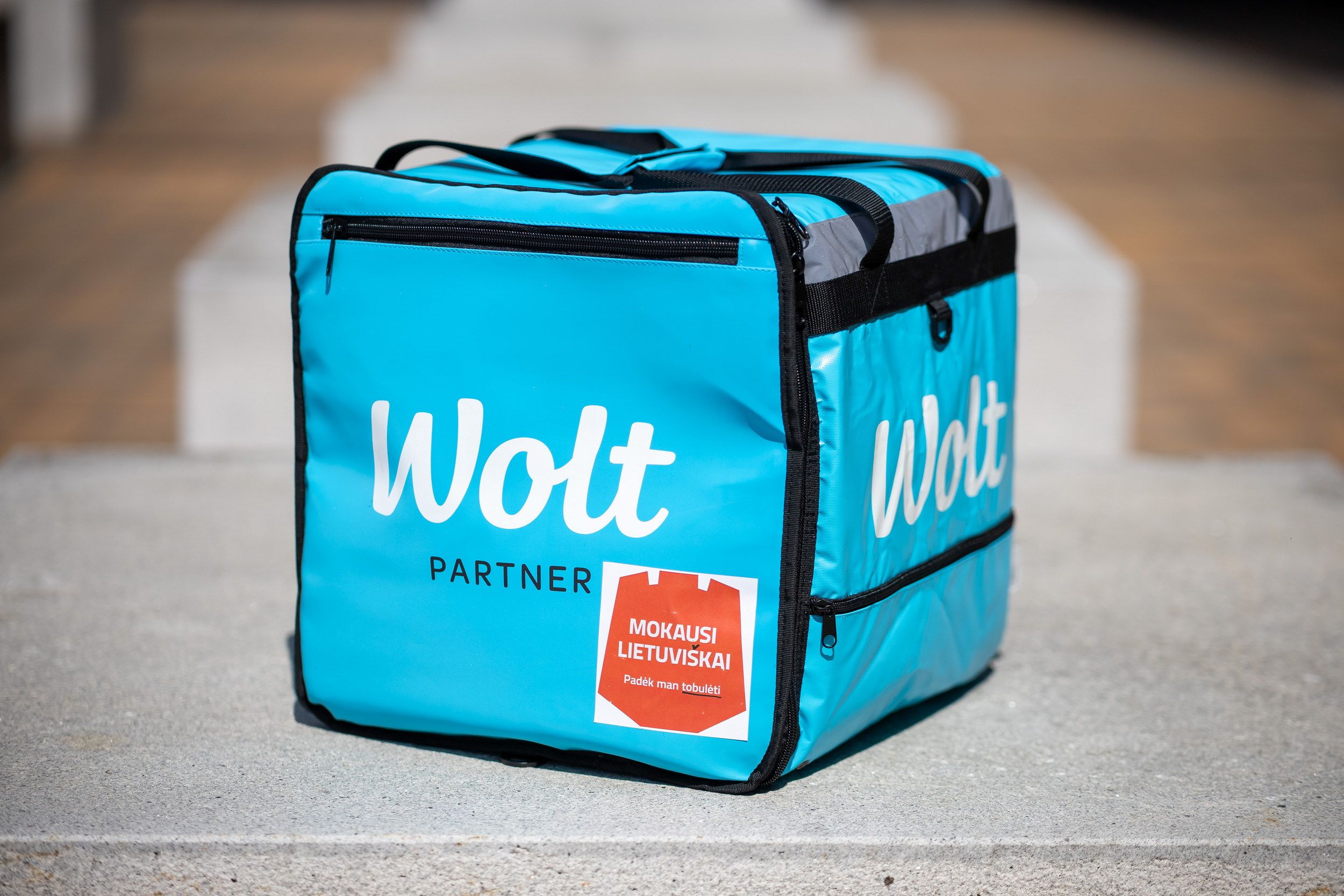
The campaign centers around a simple visual cue: stickers and car air fresheners bearing the message “Mokausi lietuviškai. Padėk man tobulėti” (I am learning Lithuanian. Help me improve). These items are being distributed to foreign-born couriers, drivers, and service staff to signal to the public that they are eager to practice the local language rather than defaulting to English.
A visual signal for social integration
The project stems from a common social reflex in Lithuania’s capital: when a local encounters someone from abroad, they often immediately pivot to English or another foreign language. While intended to be helpful, officials argue this “English reflex” inadvertently creates a barrier for newcomers trying to integrate and master one of the world’s oldest living languages.
Vilnius Mayor Valdas Benkunskas emphasized that language is the primary key to a full life in the city. “If we want to hear more Lithuanian in Vilnius, we must start the change with ourselves,” Benkunskas stated. “Often, without even thinking, we switch to English or another language, thereby depriving a person of the opportunity to learn and improve. Even a short conversation in a shop, a cafe, or while riding with a driver can become valuable practice.”
Reducing social tension through communication
The initiative is backed by recent data highlighting the social importance of language acquisition. A representative survey conducted by Norstat revealed that 76 percent of Vilnius residents believe that if immigrants used Lithuanian more frequently in everyday situations, social tensions related to immigration would decrease.
This sentiment suggests that language is viewed not just as a tool for communication, but as a bridge for social cohesion. The demand for language learning is already evident; the municipality’s dedicated platform, askalbu.lt, reported that registration for free or subsidized language courses often fills up almost instantly after being announced. The new sticker campaign is designed to supplement formal education with the “natural classroom” of the city streets.
The role of digital platforms and local business
Major digital service providers have already signaled their support for the move. Both Bolt and Wolt, the dominant ride-hailing and delivery platforms in the region, have joined the initiative. Representatives from these companies noted that their partner-couriers and drivers often view their work as a primary way to connect with the local community.
Laimonas Jakštys, head of ride-hailing at Bolt, noted that many foreign drivers are already putting in significant effort to learn the language to provide better service and feel like a full part of society. “A simple greeting or one question in Lithuanian can give a driver the self-confidence needed to keep learning,” Jakštys said.
Businesses employing foreign nationals are being encouraged to download and print the sticker templates from the official city platform to display at customer service points. For individual workers, the physical stickers and car fresheners are available for collection at the Vilnius City Municipality building during regular working hours.
Overcoming the English trap
The challenge Vilnius faces is one shared by many smaller European nations where English proficiency among the local population is high. In cities like Amsterdam, Stockholm, or Vilnius, foreigners often complain of an “English trap,” where their attempts to speak the local tongue are met with responses in English, effectively halting their linguistic progress.
By formalizing the request for help through visual markers, Vilnius hopes to shift the social etiquette. The goal is to move away from a culture of “convenience” toward one of “encouragement,” where the local community takes an active role in the integration of its newest residents. As the city continues to attract international talent and labor, this grassroots approach to language may prove as vital as any formal policy in maintaining social harmony.
Source: Vilniaus miesto savivaldybė
Context & actions About this article
Article contextPeople & topics2#5
What do you think about this article?
Reader Ideas Newsroom
Have a sharper angle for this topic? Add it to the community idea board and let readers vote it up for editorial review.


/linkComments
8+ useful words can earn +10-60 DP; shorter replies can still publish without DP.