
The Barcelona-Catalunya Grand Prix is not the next Formula 1 race after Canada. The official calendar shows Monaco on 5-7 June first, then Barcelona-Catalunya on 12-14 June. That detail matters because the useful story is not a rushed “next race” preview. It is a sharper question: after Monaco has distorted the form picture, what will a more conventional European circuit reveal about the 2026 cars and the early title fight?
Barcelona-Catalunya is well suited to that kind of read. Formula 1 lists the 2026 event as the Formula 1 MSC Cruises Gran Premio de Barcelona-Catalunya, with the Grand Prix scheduled for Sunday 14 June. The official timetable has qualifying on Saturday afternoon and a 66-lap race over the 4.657-kilometre Circuit de Barcelona-Catalunya on Sunday, making Saturday’s grid session part of the wider qualifying importance theme across the 2026 calendar. BBC Sport and Sky Sports also list the Catalunya or Barcelona-Catalunya weekend for 12-14 June, giving the schedule a useful cross-check for UK readers. The local 15:00 race start in Spain should be read as 14:00 UK time, subject to broadcaster listings and any later timetable changes.
Why this weekend has more weight than a normal calendar slot
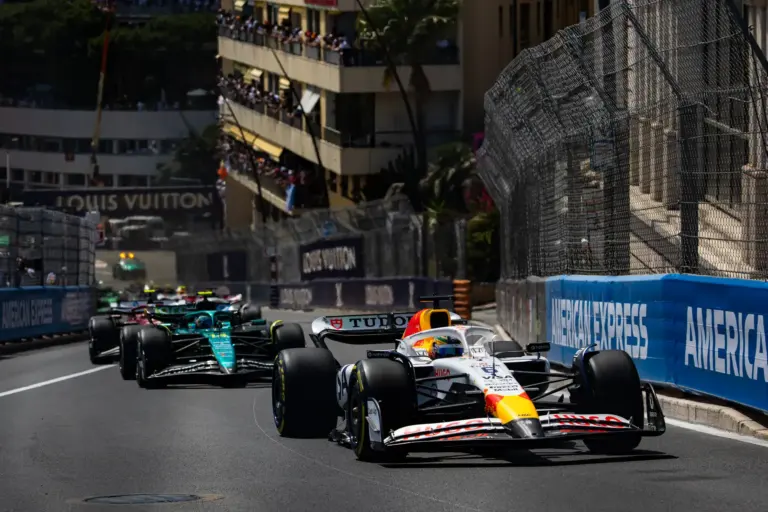
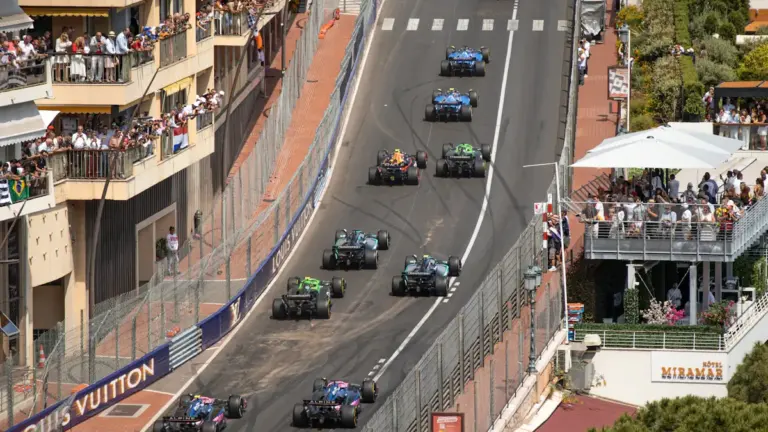
Barcelona has two separate stories running at once. The first is sporting: it comes immediately after Monaco, a street circuit where qualifying and track position can dominate the weekend narrative. The second is strategic: Formula 1 has renamed and extended the Barcelona-Catalunya race, confirming the circuit for 2026 and then for 2028, 2030 and 2032 as part of a rotation with Spa-Francorchamps.
That makes the 2026 edition feel like a reset rather than another repeat of the old Spanish Grand Prix routine. Formula 1’s own extension announcement points to the circuit’s mix of high- and low-speed corners, its long history since 1991 and recent investment around the venue. In practical terms, that is why the race attracts attention from people who want more than a result. Barcelona can expose whether a car is merely good in a narrow window or genuinely usable across different corner types and phases of a lap.

The form line after Canada
The current championship shape gives the Barcelona weekend a clear hook. Formula 1’s post-Canada coverage says Kimi Antonelli left Montreal with a fourth Grand Prix win in succession and a 43-point lead over Mercedes team-mate George Russell. It also makes clear that Canada was not a clean Mercedes procession: Russell retired from the lead after a power unit failure, while Ferrari, Red Bull and McLaren remain part of the chasing conversation.
That is why Barcelona should not be written as a simple Antonelli-versus-the-field story. The better question is whether the Mercedes advantage seen across the opening phase of the season survives two very different tests: Monaco first, then Barcelona. Monaco can reward track position and punish even small mistakes. Barcelona should give a cleaner read on balance, efficiency and race execution under the 2026 rules.
For Lewis Hamilton and Ferrari, Max Verstappen and Red Bull, and the McLaren drivers, Barcelona also offers a different kind of chance. A podium or strong qualifying performance there would carry more analytical value than a one-off street-circuit result because the circuit asks a broader set of questions. It is not proof of a title swing by itself, but it can reveal whether the gap is narrowing in a way that might travel to Austria, Silverstone and the rest of the European run.
The 2026 regulation layer
The 2026 season is not just another year of carry-over cars. Formula 1’s own terminology update describes the season as a major overhaul of both chassis and power units. The FIA has also set out the core ideas: smaller and lighter cars, a different power-unit balance, active aerodynamics, more electrical deployment and 100 percent sustainable fuel.
Those changes are exactly why a circuit like Barcelona matters. Active aerodynamics and energy deployment are not abstract technical phrases once the cars are on track. They shape how drivers manage straights, braking zones, corner exits and overtaking attempts. A car that looks efficient on one type of circuit may still struggle when the lap demands both commitment and stability. Barcelona’s varied profile gives teams and viewers a more complete test than a single headline speed trap or qualifying lap.
The important editorial discipline is to avoid pretending that the article already knows the answer. We do not yet have Barcelona practice data, qualifying results, weather impact, tyre behaviour, steward decisions or a final classification. Those details have to come from official session information and trusted race-weekend reporting when the event begins. Until then, the honest preview is a framework for what to watch.
What will decide the story during the weekend
The first signal will be practice reliability and repeatability. In a new-regulation season, a team does not only need one fast lap. It needs a car that can produce pace without forcing the driver to fight the balance every time the track changes. If Mercedes again looks comfortable across practice and qualifying, the Canada form line becomes harder to dismiss. If Ferrari, Red Bull or McLaren are closer over longer runs, the championship story opens up.
The second signal is qualifying. The official timetable puts the Formula 1 qualifying session on Saturday 13 June from 16:00 to 17:00 local time. Pole position will matter for the forecast question attached to this article, but it should also be read as a wider measurement of one-lap confidence. A surprise pole would not guarantee a race win. A dominant pole from a championship leader would change the tone of the weekend.
The third signal is race management. The Grand Prix is scheduled for 66 laps or 120 minutes. That creates enough time for execution to separate itself from Saturday speed: starts, pit timing, reliability, penalties and traffic can all matter. None of those factors should be invented before the weekend. They should be monitored once official session data and race control information are available.
Why UK readers should care before Silverstone
Barcelona lands before the British Grand Prix at Silverstone in early July, so it becomes one of the last big clues before the UK audience gets its home-race focal point. If Mercedes keeps control, the Silverstone build-up will be framed around whether anyone can interrupt Antonelli’s run. If Ferrari, Red Bull or McLaren close the gap in Barcelona, the British GP conversation becomes wider and more volatile.
It also matters for British interest because Hamilton remains one of the central figures in the chase. Canada put him back in a prominent podium conversation, but Barcelona can help show whether that result was a useful step or just a weekend-specific high. For UK readers following Hamilton, Russell, Norris and the wider field, this is the kind of race where the order can become easier to trust.
What would change this preview
The first update should come after Monaco, because Monaco may change the championship and team-momentum story before Barcelona begins. The second update should come after Friday practice in Spain, when the first real Barcelona evidence exists. The third should come after qualifying, when the polesitter is known and the race-start picture is public.
The final update should come after the official race classification. That is the point where the article can move from preview to result analysis: who converted pace, who lost ground, and whether the pole-to-win forecast resolved yes or no. Until then, the strongest version of this article is not a prediction shouted early. It is a disciplined watchlist for a race that should tell us more than Monaco can.
Bottom line
Barcelona-Catalunya is the race after Monaco, not before it, and that makes it more interesting. Monaco can compress the field and exaggerate track position. Barcelona should give a cleaner view of whether Mercedes’ early-season strength is broadly real, whether the chasing teams have moved closer, and how the 2026 technical reset behaves on a circuit with a fuller range of demands.
The early read is simple: Antonelli and Mercedes arrive with the strongest public form line, but Barcelona is exactly the kind of weekend where that form has to be proven again rather than merely repeated in a headline.
Context & actions About this article
Source check Source and resolution note
This forecast uses the official Formula 1 event page for the race identity and trusted BBC Sport and Sky Sports Formula 1 calendar context.
- Official Formula 1 event page confirms the target race page.
- The dossier window is 12-14 June 2026.
- The market resolves only from the official FIA/F1 race classification.
- Source
- Formula 1 official race page
- Scope
- International
- Updated
- 2026-05-28 15:30
Source check
Report a trust issue
Send a clear signal to community moderation if the source, facts or context need review.
Article contextPeople & topics#5
What do you think about this article?
Reader Ideas Newsroom
Have a sharper angle for this topic? Add it to the community idea board and let readers vote it up for editorial review.

/linkComments
8+ useful words can earn +10-60 DP; shorter replies can still publish without DP.