
By Hiyastar Sports Desk
Published: 27 May 2026
The 2026 Monaco Grand Prix is already a different kind of Formula 1 weekend because the session that can shape the race most clearly arrives before Sunday. Formula 1 lists qualifying at Circuit de Monaco on Saturday 6 June 2026 and the race on Sunday 7 June 2026, which means UK viewers should treat Saturday as more than a build-up show: on Monaco’s narrow streets, grid position can become the first major result of the weekend.
This does not mean the race is decided before it starts. Starts, pit stops, safety cars, strategy calls, mechanical issues and driver errors can still change the order. But Monaco remains the calendar venue where the cost of a poor qualifying lap is unusually high, because overtaking is limited by the shape of the circuit itself. Before any practice times exist, the confirmed timetable and track layout already explain why the weekend’s first decisive public answer is likely to come in qualifying.
Key points
- Qualifying is scheduled for Saturday 6 June 2026, with the race on Sunday 7 June 2026
- Formula 1 lists the circuit length as 3.337 km, with 78 race laps and a race distance of 260.286 km
- The circuit is described by Formula 1 as incredibly narrow and iconic, rewarding millimetric accuracy
- BBC Sport and Sky Sports provide UK-facing calendar and viewing context, but the hard race-weekend details come from Formula 1’s official pages
Monaco’s timetable puts Saturday under real pressure
For most Grand Prix weekends, qualifying matters because it sets the grid. At Monaco, that basic function carries extra weight. Formula 1’s official 2026 timetable places qualifying on Saturday 6 June, one day before the race classification is settled on Sunday 7 June. That makes the Saturday session the first point at which the weekend moves from expectation to evidence.
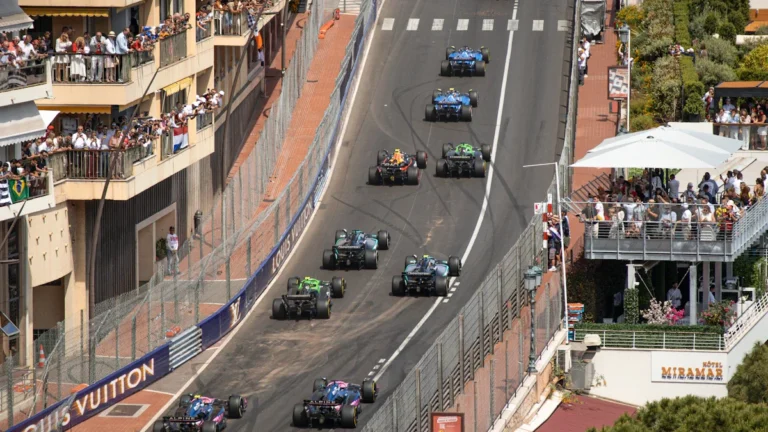
The reason is not hype around Monaco; it is the layout. Circuit de Monaco is a street circuit in Monte Carlo, and Formula 1 lists it at 3.337 km. The race is scheduled for 78 laps, creating a total race distance of 260.286 km. Those numbers are compact by Formula 1 standards, but the greater point is how little margin the venue gives a driver. Formula 1 describes Monaco as incredibly narrow and iconic, and as a place that rewards millimetric accuracy.
That phrase matters because qualifying at Monaco is not just about peak speed. It is about placing the car close to barriers repeatedly, managing traffic on a short lap and completing the final sector without losing rhythm. A strong lap can protect a driver from the circuit’s usual overtaking difficulty. A compromised lap can leave a faster car trapped behind slower traffic once the race begins.
For UK readers, the practical takeaway is simple: if you normally treat qualifying as a preview, Monaco asks for a different reading. Saturday is when the cleanest comparison of single-lap execution arrives, and it may set the race’s tactical ceiling before the lights go out on Sunday.
Why Monaco still resists normal race-weekend logic
Modern Formula 1 weekends often invite attention on tyre degradation, long-run pace, upgrade packages and race strategy. Those factors may become relevant at Monaco too, but none of them should be invented before the cars run. The verified pre-weekend picture is narrower and more reliable: the circuit is short, confined and precise, and the official schedule puts qualifying before the race as usual.
What makes Monaco unusual is the relationship between those facts. On a wider circuit, a car that starts out of position can often use straight-line speed, DRS zones, tyre offset or braking opportunities to recover. At Monaco, the track’s narrow nature reduces the number of clean passing chances. Even when a following car is faster, making that speed count can be difficult without a mistake ahead, a strategy opening or an external race interruption.

That is why the Saturday order can feel more durable than it does elsewhere. It is not because Monaco removes uncertainty. It is because the circuit makes position unusually valuable. Clean air, pit-stop timing and track position can become linked in a way that leaves teams with fewer simple rescue routes.
The reader value before the weekend is to separate what is known from what remains unknown. What is known: the venue, dates, circuit length, lap count, race distance and official qualifying and race days. What is unknown: actual pace, weather, penalties, session incidents, tyre behaviour and competitive form at this event. Any claim about the likely pole sitter or winner before the sessions would go beyond the confirmed evidence.
The confirmed Monaco GP 2026 details
| Detail | Confirmed information |
|---|---|
| Event | Formula 1 Louis Vuitton Grand Prix de Monaco 2026 |
| Venue | Circuit de Monaco, Monte Carlo |
| Weekend dates | 5 June to 7 June 2026 |
| Qualifying | Saturday 6 June 2026 |
| Race | Sunday 7 June 2026 |
| Circuit length | 3.337 km |
| Race laps | 78 |
| Race distance | 260.286 km |
Formula 1’s official Monaco race page provides the event and circuit identity, while its official timetable gives the session dates. BBC Sport lists the Monaco Grand Prix in its Formula 1 calendar for 5-7 June 2026, giving UK readers a familiar schedule reference. Sky Sports also lists UK-facing Monaco GP session and broadcast windows, including qualifying and race coverage.
Those UK schedule pages are useful because Monaco is not just an on-track event for British fans; it is also a viewing-planning weekend. The practical question is when attention should sharpen. Based on the official timetable, the answer is Saturday 6 June for qualifying, then Sunday 7 June for the race classification.
What UK viewers should check before qualifying
The most useful pre-weekend check is the official session timetable. UK viewers should confirm the qualifying window from Formula 1’s timetable and their broadcaster’s schedule, because broadcast build-up can start before the session itself. Sky Sports is the natural UK broadcast reference, while BBC Sport is useful for calendar and results context.
The second check is whether any official session information changes once the weekend begins. Practice can reveal how drivers are handling traffic, whether teams are cleanly preparing laps and whether any incidents affect car preparation. None of that should be assumed now, but all of it can change the meaning of qualifying once real running begins.
The third check is the final classification of qualifying itself. At Monaco, the top of the grid matters, but so does the wider order. A leading car starting in clean air has a different Sunday than a car caught in the pack. Midfield positioning can also matter because a small gap on the timing screen may become a large strategic difference in the race.
The fourth check is the official race result on Sunday. Monaco can still produce changes after qualifying through starts, pit timing, safety car periods, mistakes and reliability. The key is not to treat Saturday as a guaranteed race result, but to recognise it as the session most likely to define the shape of the race.

Why the race can be shaped before Sunday
A Formula 1 race is normally judged on Sunday because points are awarded from the race classification. Monaco complicates that common rhythm. The race still matters most, but qualifying can create the strategic frame inside which Sunday happens.
If a driver qualifies well, the race team can often focus on protection: holding track position, managing pit windows and avoiding unnecessary exposure. If a driver qualifies poorly, the race may require a more aggressive strategy, an opportunistic stop or a mistake from another car. That difference exists at many circuits, but Monaco’s narrow layout makes it more pronounced.
This is also why Monaco qualifying carries emotional weight for viewers. It is a visible test of control. The lap is short enough that traffic can be costly, but demanding enough that small errors are punished. Barriers define the track edge rather than distant run-off areas, so confidence and precision become part of the spectacle.
For an analytical reader, the important caveat is that Monaco’s reputation should not become a shortcut for unsupported claims. There is no verified basis yet to say which team will be strongest, which driver will struggle, how the tyres will behave or whether the weather will intervene. The evidence-backed point is more limited and more useful: the official schedule puts qualifying on Saturday, and the circuit characteristics make that session unusually consequential.
The next checks that will change the story
The first major update point is qualifying on Saturday 6 June 2026. That session will replace pre-weekend theory with the actual grid, showing which drivers combined pace, traffic management and precision when the circuit gave them the least room to recover from error.
The second major update point is the race classification on Sunday 7 June 2026. That result will show whether qualifying position converted into race outcome, whether strategy changed the order, and whether Monaco’s narrow streets again made Saturday the defining session of the weekend.
Context & actions About this article
Source check Source check
This article uses Formula 1 for the confirmed Monaco GP event, circuit and timetable details, with BBC Sport and Sky Sports used for UK-facing schedule context.
- Formula 1 lists Monaco qualifying on Saturday 6 June 2026.
- Formula 1 lists the Monaco race on Sunday 7 June 2026.
- Formula 1 lists Circuit de Monaco as 3.337 km with 78 laps and a 260.286 km race distance.
- BBC Sport and Sky Sports provide UK-facing calendar and viewing context.
- Source
- Formula 1 Monaco Grand Prix 2026
- Scope
- Monaco
- Updated
- 2026-05-27 14:27
Source check
Report a trust issue
Send a clear signal to community moderation if the source, facts or context need review.
Article contextPeople & topics#6
What do you think about this article?
Reader Ideas Newsroom
Have a sharper angle for this topic? Add it to the community idea board and let readers vote it up for editorial review.
/linkComments
8+ useful words can earn +10-60 DP; shorter replies can still publish without DP.