
By Hiyastar Editorial
Enrique Riquelme is moving through the news agenda because trusted publishers are now treating him as a serious figure in the Real Madrid power story, not as a passing name in football politics. For UK readers, the practical point is simple: this is not just a personality item. It touches the future governance of one of Europe’s most watched clubs, the standing of Florentino Perez, and the public test of whether a challenger can turn attention into formal momentum.
Useful details:
- Enrique Riquelme is the central name in a Real Madrid presidency story now covered by major outlets.
- Reuters has framed him as an energy and renewables businessman challenging for the club presidency.
- BBC coverage has focused on his campaign launch and stated plans.
- ESPN has highlighted his public criticism of Florentino Perez.
- The next meaningful check is any official club election step or public candidate filing.
Why Enrique Riquelme is trending now
The reason Riquelme is trending is the convergence of business, football and institutional power. Real Madrid is not an ordinary club in the public imagination. Its presidency carries sporting influence, commercial weight and symbolic authority far beyond Spain.
For wider context, our related report on Jose Mourinho trend turns is also useful.
That is why a challenger’s emergence draws wider attention. Reuters has reported Riquelme’s plan to challenge for the Real Madrid presidency, while BBC coverage has presented him in the context of a launched presidential campaign. ESPN has also placed him directly against Florentino Perez, the long-serving president whose leadership remains central to Real Madrid’s modern identity.
The Financial Times has supplied the broader business frame around Perez and Real Madrid, describing the club’s pull for investors as a matter of prestige rather than simple profit. That context matters because any presidential challenge is not only about match results or transfer policy. It is also about how the club sees itself as a global institution.
For readers outside Spain, the story may appear niche at first glance. It is not. Real Madrid decisions often shape European football politics, media attention, sponsorship discussion and club governance debates. A credible challenge to the presidency therefore becomes a story about who gets to define the club’s next phase.
What the trusted coverage actually establishes
The strongest established point is that Riquelme is now a target of mainstream editorial attention in connection with Real Madrid’s presidency. Reuters, BBC, ESPN and the Financial Times all provide source-backed context for a normal trending news article.
That does not mean every claim circulating around the topic should be treated as settled. The available trusted framing supports a cautious article about Riquelme’s public emergence, his positioning against Perez, and the significance of the presidency question. It does not justify invented timelines, private negotiations, insider vote counts or guaranteed outcomes.
What can be treated as solid
Riquelme can be described as the central trending figure in this Real Madrid presidency story. Reuters coverage identifies him in business terms and links him to a challenge for the presidency. BBC coverage points readers to his campaign launch and plans. ESPN coverage places him in direct political contrast with Perez.
Those are meaningful facts because they show the story has moved beyond vague online attention. The name is being handled by established publishers with football, business and international-news reach.
What still needs caution
The current public picture does not support confident claims about the final election field, the timing of every procedural step, or the likely result. It would also be premature to treat the level of support for any candidate as proven unless official club processes or named reporting establish it.
That distinction is important for UK readers who may encounter a fast-moving mixture of football opinion, supporter debate and business commentary. The trusted story is about a challenger becoming visible. The unverified story would be about assuming the outcome.
Why Real Madrid’s presidency matters beyond Spain
Real Madrid’s president is not a ceremonial figure in the way some casual observers might imagine. The role is closely linked to strategy, institutional identity and public direction. The presidency sits at the centre of how the club presents itself to supporters, partners, players and rivals.
Perez’s long-standing association with Real Madrid is one reason the Riquelme story has gained traction. A challenge to an established figure carries built-in tension: continuity versus change, institutional authority versus renewal, and prestige versus public accountability.
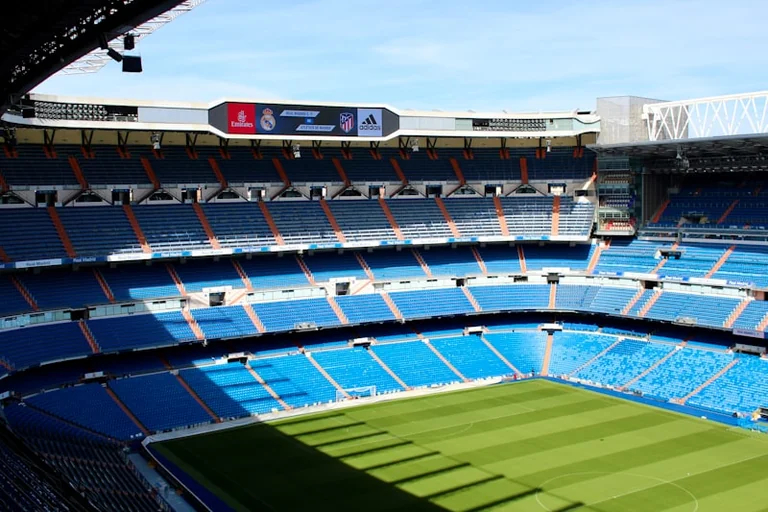
For the Premier League audience in the UK, the story also offers a useful comparison with club ownership and governance debates closer to home. Real Madrid’s structure is different from most English clubs, but the same underlying questions are familiar: who controls the sporting project, what commercial priorities matter, and how much say supporters should feel they have in a club’s direction.
The FT’s wider framing of Real Madrid as an institution that offers prestige more than simple profit helps explain the stakes. Anyone seeking the presidency is not only competing for an office. They are competing for the right to steer a global football brand with cultural, sporting and commercial power.
The Perez factor keeps the story live
Florentino Perez remains the unavoidable reference point. Even when coverage is about Riquelme, the story is partly about Perez’s authority and the club model associated with him.
That is why the trend is unlikely to fade quickly if Riquelme continues to make public moves. A presidential campaign, or even the possibility of one, creates a frame through which every statement can be read: is this a serious institutional challenge, a pressure campaign, or an early stage of a longer contest?
ESPN’s coverage of Riquelme’s criticism of Perez captures that dynamic. It shows the story is not merely biographical. It is oppositional. Readers are being asked to understand a contest of ideas, tone and leadership rather than just a new name entering the news cycle.
The risk for readers is over-reading each development. Real Madrid politics can produce intense coverage, but intensity is not the same as certainty. Until public procedural steps become clearer, the most reliable reading is that Riquelme has entered a high-profile debate whose final shape is still open.
What UK readers should take from it
For UK football readers, the main takeaway is that Riquelme’s rise in coverage could affect how Real Madrid’s future is discussed across Europe. The club’s presidency has consequences for transfer narratives, European football policy, commercial partnerships and the way the club communicates power.
That does not mean immediate change is guaranteed. It means the conversation has widened. Perez is no longer the only name shaping the public discussion, and Riquelme is now prominent enough for major outlets to explain his role.
There is also a media-literacy point. Trending football politics often attracts unsupported claims because supporters want certainty before institutions provide it. The most useful approach is to separate three things: confirmed public coverage, candidate positioning, and formal club process.
Confirmed public coverage tells us Riquelme is now a significant story. Candidate positioning tells us how he wants to be understood. Formal club process will decide whether the story becomes a direct institutional contest with defined rules and consequences.
The unanswered questions are procedural, not just personal
The next stage of the story is less about whether Riquelme is being noticed and more about what public process follows. Readers should watch for official Real Madrid election information, formal candidacy requirements, named statements from the club, and further reporting from established publishers.
Several practical questions remain open:
- What official steps will define the presidency process?
- How clearly will Riquelme set out his programme for the club?
- How will Perez and Real Madrid respond publicly, if at all?
- Which parts of the debate become formal club business rather than media argument?
Those questions matter because they separate a trending story from an outcome-changing one. Attention can make a challenger visible, but institutions are moved by rules, deadlines, eligibility and public decisions.
The reader-facing next check is Real Madrid’s official election or governance communication, followed by named reporting from Reuters, BBC, ESPN or the Financial Times that confirms a formal candidacy step, public decision, or official response. That is the point at which the story would move from a high-profile challenge narrative into a more concrete contest.
Source: ft.com
Context & actions About this article
Source check Source context
This article uses coverage from Reuters, BBC, ESPN and the Financial Times to explain why Enrique Riquelme is now a significant Real Madrid story.
- Reuters coverage of Riquelme and the Real Madrid presidency challenge
- BBC coverage of Riquelme's campaign launch and plans
- ESPN coverage of Riquelme's criticism of Florentino Perez
- Financial Times context on Perez and Real Madrid's business prestige
- Source
- Financial Times
- Scope
- International
- Updated
- 2026-06-03 23:24
Source check
Report a trust issue
Send a clear signal to community moderation if the source, facts or context need review.
Article contextPeople & topics2#6
What do you think about this article?
Reader Ideas Newsroom
Have a sharper angle for this topic? Add it to the community idea board and let readers vote it up for editorial review.



/linkComments
8+ useful words can earn +10-60 DP; shorter replies can still publish without DP.