By Hiyastar Editorial
Published: 4 June 2026
The Trump Netanyahu story is moving because trusted international coverage now links their relationship to wider pressure around Iran, Israel, Gaza and Lebanon. For UK readers, the immediate point is not one single dramatic claim; it is that the political space around Middle East diplomacy appears tighter, more public and more consequential.
Reader context
- BBC coverage has put a Trump-Netanyahu phone call at the centre of the latest attention.
- AP coverage adds regional context around Israel, Hezbollah and de-escalation language.
- Gaza, Iran and Lebanon all sit around the same diplomatic pressure point.
- The next meaningful check is public movement from governments or recognised international bodies.
Why this story is moving now
The phrase Trump Netanyahu is trending because it compresses several live questions into two names: Donald Trump’s influence over US policy, Benjamin Netanyahu’s direction of Israel’s war and security strategy, and the limits of outside pressure when regional conflicts overlap.
For wider context, our related report on Poland Nigeria Trend Puts is also useful.
The BBC’s report titled “‘Crazy’ phone call between Trump and Netanyahu complicates Iran talks” gives the trend its sharpest current hook. The wording points to a relationship under strain at a moment when Washington’s approach to Iran is being watched closely by allies, opponents and governments across the Middle East.
That matters because diplomacy does not happen in a vacuum. When public reporting suggests tension between two leaders who are central to US-Israel relations, readers should treat it as a sign that policy alignment may be harder to read from public statements alone.
For UK readers, the practical significance is wider than personality politics. Britain is exposed to the diplomatic consequences of the region through foreign policy, security alliances, energy markets, humanitarian debate and domestic political pressure. Even when UK ministers are not the lead actors, the direction of US and Israeli decision-making shapes the context in which Britain responds.
What can be said without overstating it
The most important confirmed point is narrow but useful: trusted outlets have identified Trump Netanyahu as the subject of current news attention, and they have provided enough context for a source-backed editorial reading of the trend.
That does not mean every detail circulating around the topic is verified. It also does not mean readers should assume a private exchange, a public headline or a diplomatic disagreement automatically predicts the next military or political move.
The safe reading
The safe reading is that the Trump-Netanyahu relationship is being discussed because it sits at the junction of several public storylines. BBC coverage connects it to Iran talks. Other BBC-linked coverage points readers toward the wider war context. AP reporting adds a separate but related thread around Trump saying Israel and Hezbollah had agreed to dial back fighting.
Together, those strands show why the topic has news value. They do not prove a final outcome, a settled diplomatic position or a guaranteed shift in policy.
The risk of reading too much into one moment
The risk for readers is treating a trending headline as a completed story. High-level diplomacy often produces contradictory signals: public pressure, private negotiation, hard-line statements and tactical moderation can appear close together.
That is why the best way to follow this story is to separate three things: what leaders have publicly said, what governments have formally announced, and what trusted news organisations have independently reported. Those categories are related, but they are not interchangeable.
Why Iran is central to the Trump-Netanyahu angle
Iran is central because it is not just another foreign policy issue in this story. It is one of the main questions through which US-Israel alignment is judged: sanctions, talks, military pressure, regional proxies and nuclear diplomacy all sit around it.
When BBC coverage frames the Trump-Netanyahu phone call as complicating Iran talks, the reader-facing implication is clear. The relationship between Washington and Jerusalem can affect how credible, flexible or constrained any diplomatic push appears.
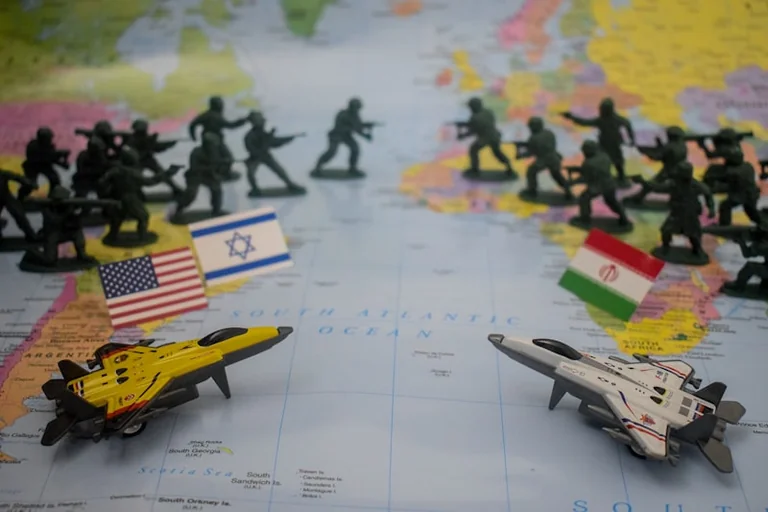
That does not require assuming a hidden deal or a private rupture. The public significance is enough: if two political centres are not visibly aligned, other actors may calculate differently. Iran, regional governments, European allies and domestic political audiences all watch those signals.
The word “talks” also matters. Talks imply a process, not a result. A process can be slowed, hardened, redirected or used as leverage. Until an official outcome is published, the public story remains about pressure and positioning rather than resolution.
Gaza and Lebanon keep the issue from staying narrow
The Trump Netanyahu trend also draws attention because Iran is not isolated from the rest of the region. Gaza remains part of the political backdrop around Netanyahu. Lebanon and Hezbollah add another security layer.
AP’s report that Trump said Israel and Hezbollah had agreed to dial back fighting is relevant because it shows how de-escalation language can appear alongside continuing regional strain. Readers should not treat that as proof of a settled peace track. It is better understood as one public claim in a fast-moving diplomatic environment.
BBC-linked coverage about Netanyahu directing the IDF to increase control of Gaza to 70% adds another reason the topic cannot be reduced to a single phone call. Gaza policy, Israel’s military posture and international pressure all affect how Netanyahu’s choices are interpreted abroad.
For UK audiences, this is where the story becomes more practical. Parliament, broadcasters, aid groups, Jewish and Muslim communities, foreign policy analysts and campaign organisations all respond to developments in Gaza, Iran and Lebanon through different lenses. A shift in one area can quickly change the tone of debate in another.
What readers should treat as uncertain
Several points remain uncertain from the public information available in the supplied trusted coverage.
- The exact private content and full context of any leader-to-leader call should not be assumed beyond reliable reporting.
- The durability of any Israel-Hezbollah de-escalation language remains a matter for public follow-up.
- The effect on Iran talks cannot be reduced to one headline or one leader’s preference.
- The wider military and humanitarian situation can change faster than editorial analysis can settle.
This uncertainty is not a weakness in the story. It is the story. The current trend is about competing pressures and incomplete signals, which is why careful attribution matters more than confident prediction.
How this affects UK readers
The clearest UK impact is interpretive. Readers trying to follow Middle East news need to understand why Trump and Netanyahu are being discussed together now, and why the topic keeps appearing beside Iran, Gaza and Lebanon.
There is also a political impact. UK debate about the Middle East is shaped by the positions taken by Washington and Jerusalem, even when the UK government is not driving events. A visible change in tone between Trump and Netanyahu could influence how British politicians frame calls for restraint, support, criticism or diplomatic action.
There may also be a public attention effect. Stories involving Trump and Netanyahu can dominate feeds because they combine personality, war, diplomacy and uncertainty. That makes it especially important to avoid unsupported certainty. A story can be important without being fully resolved.
The better reader habit is to ask: has a government published a decision, has a recognised international body confirmed a development, and have multiple trusted outlets reported the same material context? If the answer is no, the story may still be worth watching, but it should be read as developing rather than settled.
The next public milestone that would change the story
The next meaningful check is not another round of speculation about motives. It is a public, attributable development: a White House statement, an Israeli government statement, a confirmed update on Iran talks, a recognised international diplomatic move, or fresh reporting from established outlets such as the BBC or AP that adds new on-record detail.
Until then, the Trump Netanyahu story is best read as a pressure map. It shows where US-Israel relations, Iran diplomacy, Gaza policy and Lebanon security concerns overlap, but it does not yet provide a final answer about where those pressures will lead.
Source: bbc.co.uk
Context & actions About this article
Source check Source context
This article uses established news coverage to explain why the Trump Netanyahu topic is moving now.
- BBC coverage on the Trump-Netanyahu phone call and Iran talks
- AP coverage on Trump, Israel, Hezbollah and de-escalation language
- Related BBC-linked coverage on Gaza, Iran and the wider regional context
- Source
- BBC
- Scope
- International
- Updated
- 2026-06-03 23:48
Source check
Report a trust issue
Send a clear signal to community moderation if the source, facts or context need review.
Article contextPeople & topics2#7
What do you think about this article?
Reader Ideas Newsroom
Have a sharper angle for this topic? Add it to the community idea board and let readers vote it up for editorial review.



/linkComments
8+ useful words can earn +10-60 DP; shorter replies can still publish without DP.