Julian Assange Wins High Court Right to Appeal US Extradition
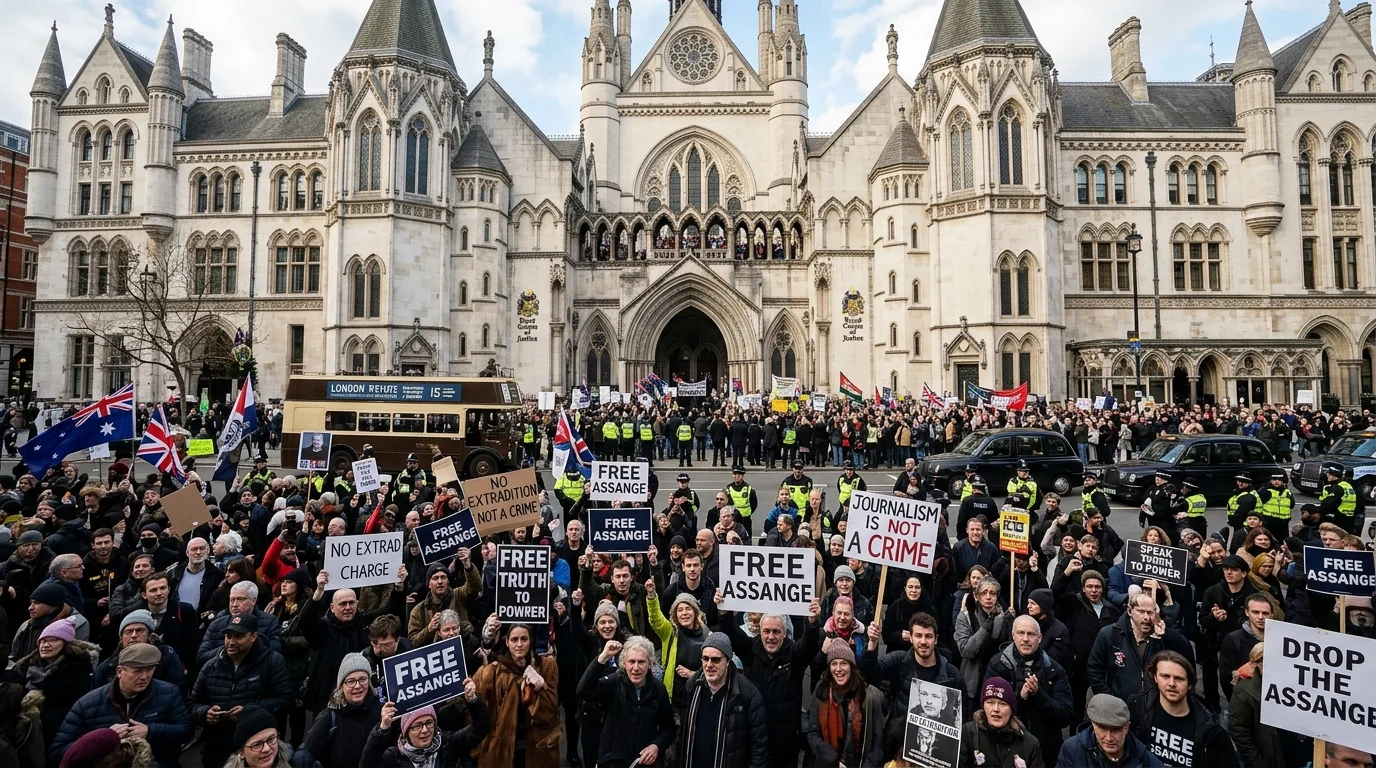
Julian Assange has been granted permission to appeal his extradition to the United States following a pivotal ruling at the High Court in London on May 20, 2026. Two senior judges at the Royal Courts of Justice determined that the WikiLeaks founder has a real prospect of success in challenging the extradition order. This decision effectively halts his immediate transfer to U.S. custody, where he faces 18 charges—primarily under the Espionage Act—related to the release of classified military and diplomatic documents in 2010.
The ruling marks a significant legal victory for Assange, who has been held in the high-security Belmarsh Prison since 2019. The court’s decision centers on the adequacy of diplomatic assurances provided by the U.S. government regarding Assange’s potential treatment and legal rights within the American judicial system.
Judicial Findings on US Diplomatic Assurances
The High Court judges focused specifically on whether Assange would be granted the same First Amendment protections as a U.S. citizen. In previous hearings, the U.S. government provided assurances intended to mitigate concerns over the death penalty and the right to a fair trial. However, the court ruled today that these assurances were “insufficient” to guarantee that Assange would not be prejudiced during a trial due to his Australian nationality.
The judges noted a “real prospect” that Assange could be discriminated against by a U.S. court because he is not an American citizen. Under current U.S. legal interpretations, the First Amendment may not apply to non-citizens acting outside the United States. The High Court found that without a binding guarantee that Assange can rely on these free speech protections, the extradition cannot proceed under the current terms.
Concerns Regarding Nationality and Free Speech
The legal argument brought forward by Assange’s defense team highlighted that the U.S. Department of Justice could seek to argue that his actions as a publisher and journalist are not protected by the U.S. Constitution because of his citizenship. This potential for nationality-based discrimination was a cornerstone of the High Court’s decision to allow the appeal.
Supporters gathered outside the Royal Courts of Justice this morning, including Assange’s wife, Stella Assange, who has consistently warned that his health is in a state of precipitous decline. Legal observers noted that the court’s skepticism toward the U.S. assurances reflects a growing concern within the UK judiciary regarding the extraterritorial application of U.S. law and its impact on international press freedoms.
Current Status at Belmarsh Prison
Despite today’s ruling, Julian Assange remains in custody at Belmarsh Prison in southeast London. He did not attend the hearing in person due to ongoing health issues, which his legal team and medical experts have described as severe. The 54-year-old has spent the last seven years in various forms of confinement, including seven years in the Ecuadorian Embassy and over five years in Belmarsh.
The High Court’s decision ensures that Assange will remain in the United Kingdom while a full appeal hearing is prepared. This process is expected to take several months, during which time his defense will continue to argue that the prosecution is politically motivated and represents an unprecedented threat to investigative journalism globally.
The Legal Road Ahead for the WikiLeaks Founder
The granting of the right to appeal means that a new, comprehensive hearing will be scheduled to address the merits of Assange’s arguments against the U.S. extradition request. This hearing will focus on the conflict between U.S. national security laws and the UK’s extradition treaty obligations, specifically regarding political offenses and the protection of human rights.
If the appeal is eventually successful, the extradition order could be quashed entirely. If it fails, Assange’s last remaining legal recourse in Europe would be an application to the European Court of Human Rights (ECHR) to intervene. For now, the U.S. Department of Justice must decide whether to provide further, more robust assurances that satisfy the UK court’s requirements or prepare for a prolonged legal battle in the appellate court.
Source: Reuters