Latvia’s ‘Forest Brothers’: New Memorial Honours Post-War Resistance

As the sun dipped below the horizon in the rural parish of Dviete, the crackle of a bonfire at the old mill provided the backdrop for a moment of profound historical reflection. In this quiet corner of the Augšdaugava region, local residents gathered not just for the annual Museum Night festivities, but to unveil a permanent tribute to a chapter of history that was suppressed for decades: the National Partisan movement.
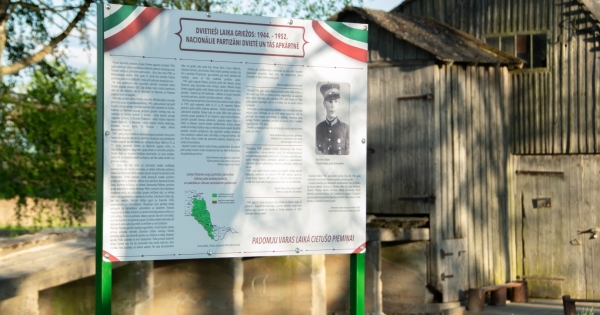
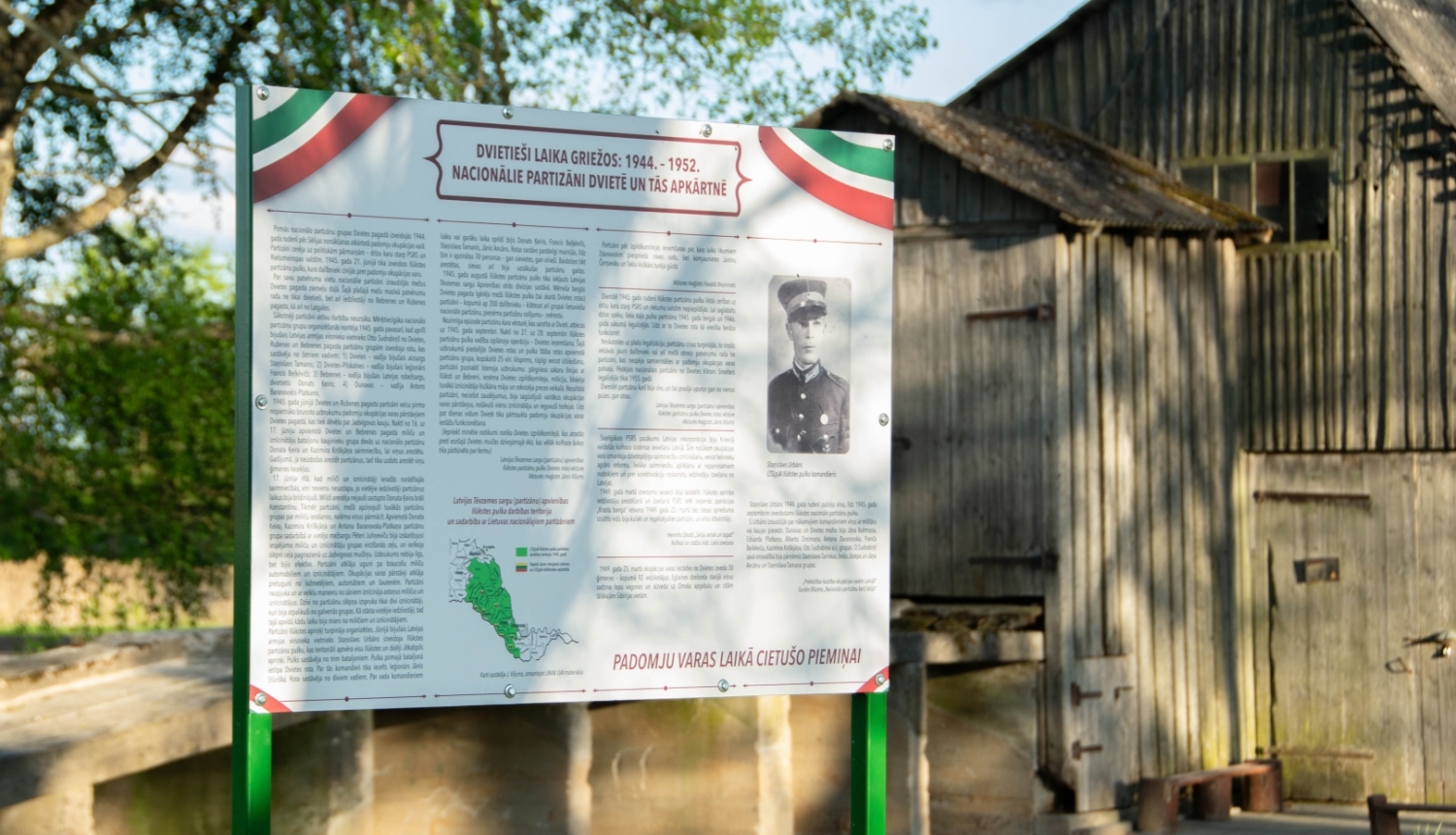
The newly inaugurated memorial stand serves as a physical anchor for the stories of the men and women who took to the forests between 1944 and 1952. For the people of Dviete and the wider Sēlija region, these are not merely dry facts found in textbooks, but the lived experiences of ancestors whose lives were fractured by the arrival of the Soviet regime.
A Legacy of Resistance in the Selonian Forests
The National Partisans—often referred to in Western historiography as the ‘Forest Brothers’—were resistance fighters who waged a guerrilla war against Soviet occupation following the end of the Second World War. As the Red Army pushed back German forces and re-established control over the Baltic States in 1944, thousands of Latvians retreated into the dense woodlands to avoid conscription and mass arrests.
In Dviete, the first partisan groups formed in the autumn of 1944. These fighters were driven by a desperate hope that the geopolitical landscape would shift—specifically, that a conflict between the USSR and Western powers would break out, leading to the restoration of Latvian independence. This expectation of Western intervention was a common thread among resistance movements across Eastern Europe at the time, though it ultimately never materialised.
Historian Jānis Viļums, who spoke at the unveiling, noted that the northern forests of Dviete became a sanctuary not only for locals but for fighters from neighbouring Bebrene, Dunava, and even the Latgale region. By June 1945, the Ilūkste Partisan Regiment was formally established under the command of Staņislavs Urbāns, with the Dviete Company serving as a core unit.
The Human Cost of the ‘Hidden War’
One of the most striking aspects of the research presented at the memorial is the diversity of the resistance. The Dviete Company’s composition was in a state of constant flux, but historians have so far identified 70 specific individuals—both men and women—who joined the ranks. Their motivations were often born of survival as much as ideology; many fled to the woods simply because they were on lists for deportation to Siberia.
The history of this period is marked by what locals describe as ‘living scars.’ The Soviet response to the insurgency was brutal, involving not only direct military engagement but the systematic deportation of families suspected of supporting the partisans. This collective trauma created gaps in family lineages that are only now being openly discussed and documented.
From Silence to Celebration
The atmosphere in Dviete during the unveiling was a study in contrasts. While the subject matter was heavy with the weight of past tragedies, the event itself was marked by a sense of community warmth. Local youth—including Kristers Kuoss on piano and Lāsma Marcinkeviča on guitar—provided a musical programme that underscored the transition of this history from the survivors to the next generation.
This initiative is part of a broader movement across Latvia to reclaim local narratives. By opening the doors of the Dviete manor, the local library, and the Sacred Heritage exhibition hall, the community is demonstrating that even the smallest rural parishes hold complex historical materials that contribute to the national identity.
Preserving the Narrative for the Future
The memorial stand in Dviete is more than a tourist marker; it is a commitment to ensuring that the stories of the 1944–1955 period do not remain ‘static’ within the pages of academic journals. As the generation that remembered the post-war years firsthand passes away, these community-led efforts to document names, dates, and specific forest bunkers become vital.
For visitors and locals alike, the stand offers a chronological journey through the partisan war chronicles of Sēlija. It stands as a reminder that the peace of the modern Latvian countryside was hard-won, built upon the resilience of those who refused to accept the loss of their sovereignty without a fight.
Source: Augšdaugavas novada pašvaldība