Lithuania’s Top Young Engineers to Face Off in National Final
The future of European engineering is taking shape in Vilnius this month as Lithuania prepares for the grand finale of its fourth national youth engineering championship, “Steam Team.” On May 15, the LITEXPO Exhibition and Congress Centre will host 15 of the country’s most inventive school teams, all vying for the title of the nation’s best young creators.
Organized by the Lithuanian Engineering and Technology Industry Association (LINPRA), the competition has grown from a local initiative into a significant national event for students in grades 5 through 12. Since its inception in 2023, the championship has seen over 150 teams and more than 500 young inventors participate, reflecting a growing appetite for hands-on STEM (Science, Technology, Engineering, and Mathematics) education in the Baltic region.
The Art of the Chain Reaction
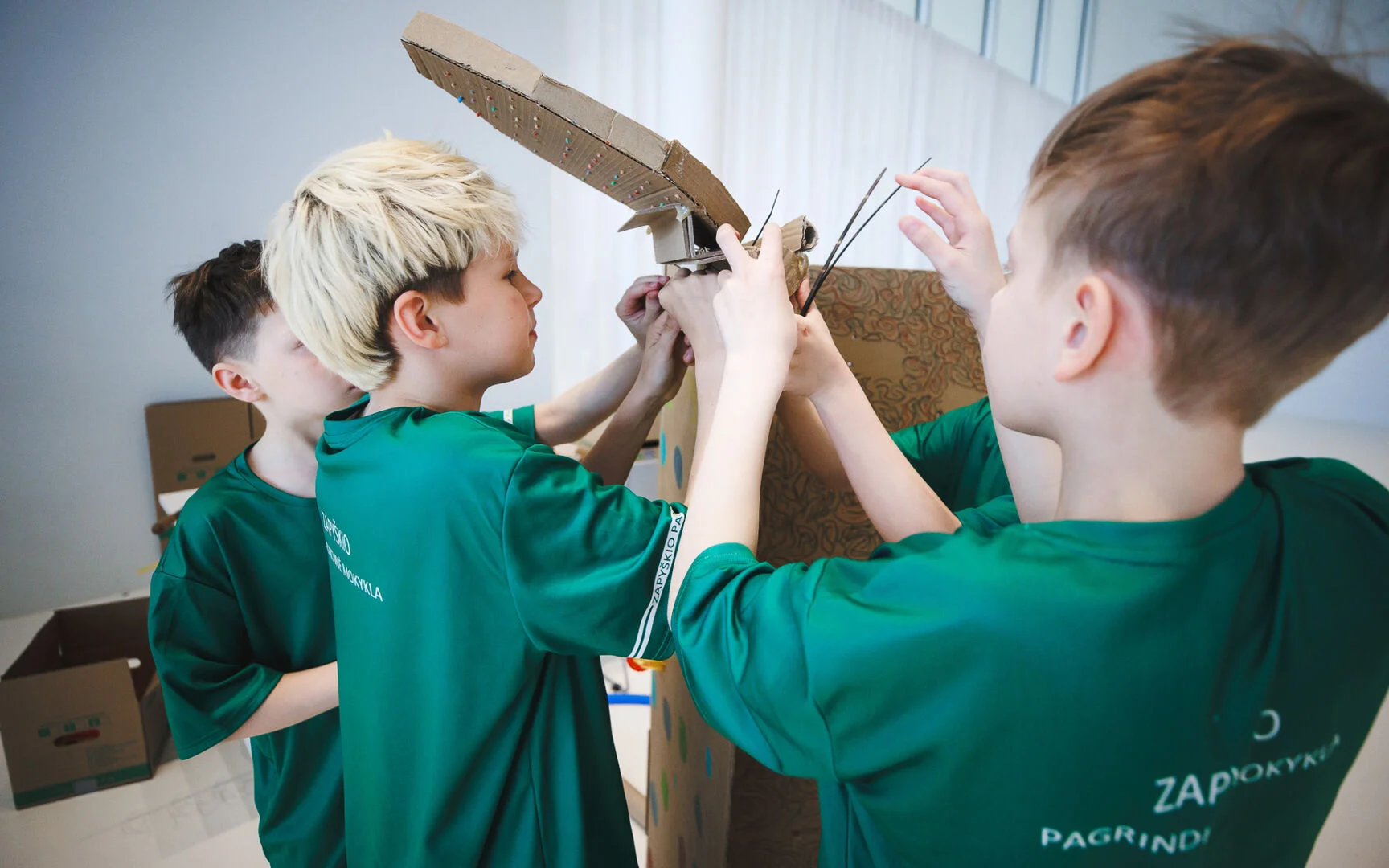
The core challenge of the “Steam Team” final is as whimsical as it is technically demanding: the construction of a Goldberg machine. Named after the American cartoonist Rube Goldberg, these devices are designed to perform a simple task through a complex, indirect, and often humorous chain reaction. In the context of the competition, teams of two to five members must assemble a series of mechanical actions where one trigger leads to another in a seamless sequence.
Judging is rigorous. Experts will evaluate the machines based on four key pillars: creativity, technical execution, innovation, and system reliability. Unlike theoretical classroom exercises, these machines require physical precision; a single misaligned domino or a poorly weighted lever can stall the entire system, demanding quick thinking and troubleshooting from the students.

Bridging the Skills Gap
Beyond the spectacle of falling marbles and spinning gears, the competition addresses a universal challenge facing modern economies: the engineering skills gap. Darius Lasionis, head of LINPRA, emphasizes that the contest is about more than just building machines; it is about building confidence.
“The competition allows young people interested in engineering to test their knowledge and ideas in practice,” Lasionis explains. “They aren’t just solving equations; they are creating real, functioning solutions that often surprise even experienced specialists. For many children, this becomes a decisive impulse when considering their future career paths.”
This sentiment is echoed by Kęstutis Jasiūnas, Chairman of the Board at Ekspla—a leading Lithuanian firm producing advanced lasers for science and industry. Having judged the semi-finals, Jasiūnas noted that working on tangible projects helps students feel the joy of collective creation. “Curiosity is the basis of ingenuity and innovation,” he says, noting that the competition naturally encourages participants to ask why a process happens the way it does.

The Road to LITEXPO
The finalists were selected through a grueling series of semi-finals held throughout April in major cities including Kaunas, Klaipėda, Šiauliai, Panevėžys, and Alytus. Out of more than 80 competing teams, only 15 secured a spot in the Vilnius showdown.
Among the notable finalists are the “Batman cult” from Gravitas Schola and “Riešės STEAM” from Vilnius, as well as the “STEAMgineers” from the KTU Engineering License in Kaunas. The younger category (grades 5-8) features teams like “Vandenyno dugne” (At the Bottom of the Ocean) from Alytus, while the older category (grades 9-12) includes the robotics specialists “JBG Robotics” from Panevėžys.
Stakes and Rewards
The final event at LITEXPO is scheduled to run from 10:00 AM until approximately 6:00 PM, when the 2024 champions will be crowned. The stakes are high, with significant financial incentives to encourage further technical pursuits. The first-place winners in both age categories will receive a €1,000 prize. Second and third places will be awarded €500 and €300 respectively, with additional prizes provided by sponsors from the Lithuanian tech industry.

As the UK and other European nations look for ways to inspire the next generation of engineers, Lithuania’s “Steam Team” model offers a compelling example of how industry associations and schools can collaborate to turn abstract science into a high-stakes, engaging national sport.
Original reporting by: infoerdve.lt
Source: BNS