Met Office thunderstorm warning for London and South East
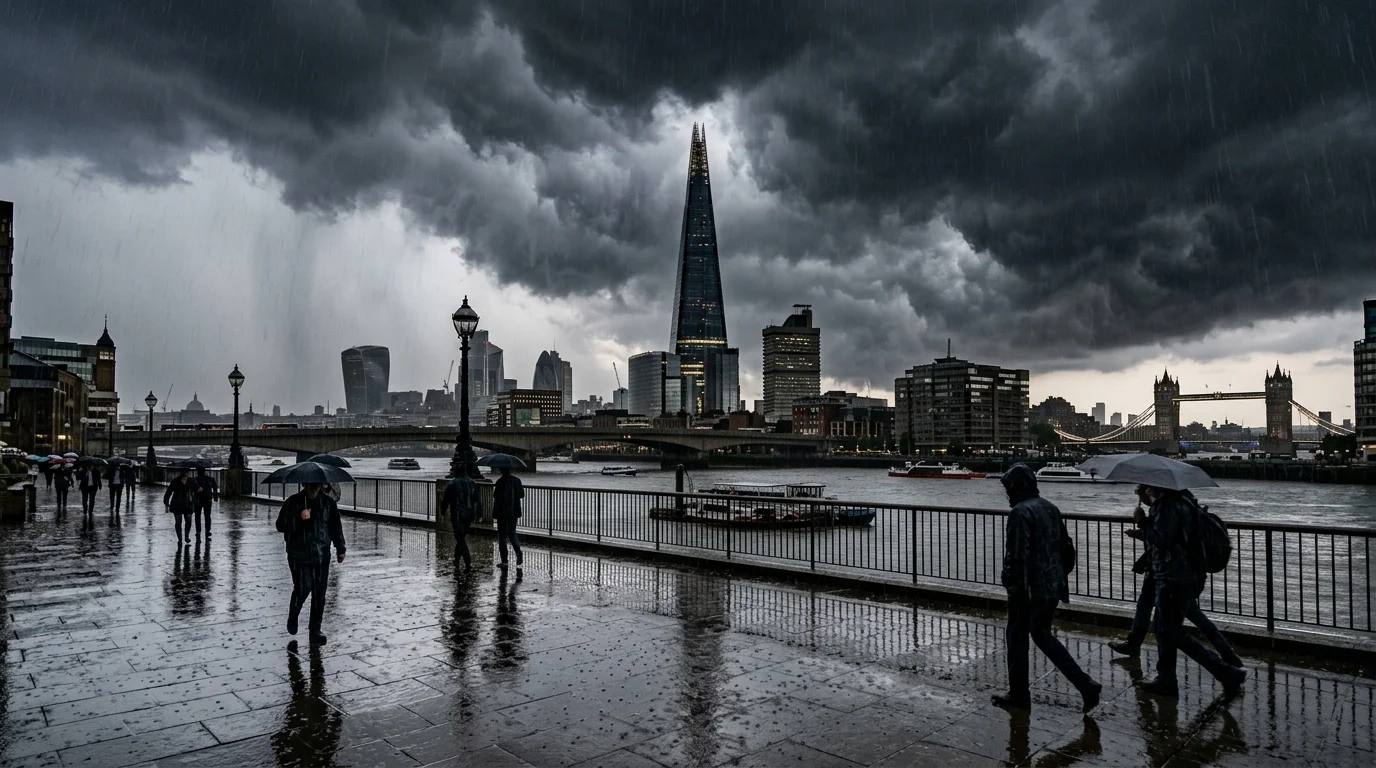
The Met Office has issued a Yellow thunderstorm warning for London, the South East and parts of East Anglia from 12:00 PM to 9:00 PM on Friday, May 15, 2026, with forecasters warning that sudden downpours could cause flash flooding, lightning disruption and difficult journeys during the evening rush hour.
People travelling later in the day should check the latest Met Office warning map, live rail updates and local flood alerts before setting off. South Western Railway and Southern passengers should allow extra time where heavy rain or lightning affects routes through London and the wider South East.
Thunderstorm warning runs from midday to 9 PM
The Yellow warning is in force for nine hours, starting at 12:00 PM and ending at 9:00 PM on Friday. The Met Office warning states that some places could see up to 30mm of rain in one hour, enough to overwhelm drains and create standing water on roads.
The most disruptive rain is expected to come in short, intense bursts rather than steady rainfall across the whole region. That means conditions may change quickly between nearby towns and boroughs, with one area seeing heavy rain and surface water while another remains largely dry.
Useful details:
- Warning level: Yellow thunderstorm warning
- Valid period: 12:00 PM to 9:00 PM, Friday, May 15, 2026
- Main hazards: flash flooding, lightning, power cuts and travel disruption
- Rainfall risk: up to 30mm in one hour in affected spots
- Travel concern: London and South East commuter routes during the Friday evening peak
Areas covered across London, the South East and East Anglia
The warning area covers London, much of South East England and parts of East Anglia. Counties and areas likely to be affected include Greater London, Surrey, Kent, Sussex, Hampshire, Berkshire, Buckinghamshire, Hertfordshire, Essex, Suffolk, Norfolk and Cambridgeshire.
Drivers should be alert for surface water on faster roads, under bridges and near low-lying junctions. Rail passengers should check operator apps before leaving, especially where journeys depend on South Western Railway or Southern services through busy London terminals.
Driving advice for standing water and lightning
The safest response to standing water is to slow down early and avoid driving through it unless you are certain it is shallow. Even water that looks manageable can hide potholes, stalled vehicles or a raised kerb line, and driving too fast through it can cause aquaplaning or push water into the engine.
If heavy rain reduces visibility, use dipped headlights, leave a larger gap to the vehicle in front and avoid sudden braking. Do not stop under trees during lightning, and avoid touching metal roadside structures during an active storm. If flood water blocks a road, turn around and use another route rather than trying to judge the depth.
The Environment Agency and local councils may issue separate flood information if surface water problems develop. The Met Office warning should be checked again during the afternoon because thunderstorm locations can shift quickly within a Yellow warning area.
Frequently Asked Questions
What does a Yellow thunderstorm warning mean for London and the South East?
A Yellow thunderstorm warning means thunderstorms could cause disruption in some places, but not everywhere in the warning area will be hit. For this warning, the main risks are sudden heavy downpours, lightning, surface-water flooding and delays to travel. The biggest concern is that rain may fall very quickly in isolated spots, so conditions can change from dry roads to dangerous standing water within minutes.
What should I do before travelling during the thunderstorm warning?
Before setting off, check three things: the latest Met Office warning map, live rail or TfL updates, and local flood alerts if your route passes through low-lying areas. Allow extra time, charge your phone, avoid driving through floodwater, and consider changing your journey if heavy rain is forecast during the evening peak. Rail passengers should check their operator before leaving, as lightning and flooding can cause short-notice delays.
How could the storms affect homes, shops and local businesses?
The most likely local impacts are blocked drains, flooded roads, delayed deliveries, outdoor event disruption and brief power cuts. Businesses with street-level entrances should move stock or electrical items away from doors if surface water is a known risk. Households should clear nearby drains where safe, secure garden furniture, and avoid using corded electrical equipment during lightning.
Should schools, commuters or event organisers cancel plans because of the warning?
A Yellow warning does not automatically mean plans must be cancelled, but it does mean they should be reviewed. Schools and event organisers should have a wet-weather plan, keep people away from exposed open spaces during lightning, and monitor updates through the afternoon. Commuters should avoid assuming conditions will be the same across the whole region, as one borough or town may see intense rain while another stays mostly dry.
Where can I check what happens next after the thunderstorm warning?
Use official live sources rather than relying on an old forecast. Check the Met Office warnings page for any change to the warning area or timing, National Rail and train operator updates for service disruption, TfL status updates for London travel, and Environment Agency flood alerts for local flood risk. If flooding threatens life or property, follow emergency service advice immediately.
Source: Met Office
Source check Source trail
This report is based on the Met Office Yellow thunderstorm warning published for Friday, May 15, 2026.
- Warning period checked against the Met Office source
- Rainfall risk stated as up to 30mm in one hour
- Travel advice kept separate from unconfirmed operator disruption
- Safety guidance limited to practical public-service advice
- Source
- Met Office weather warnings
- Scope
- London and South East England
- Updated
- 2026-05-23 09:21
Source check
Report a trust issue
Send a clear signal to community moderation if the source, facts or context need review.




AI moderation
Portal AI moderator got this signal
Thanks. The comment is now marked for community review and AI moderation scoring.