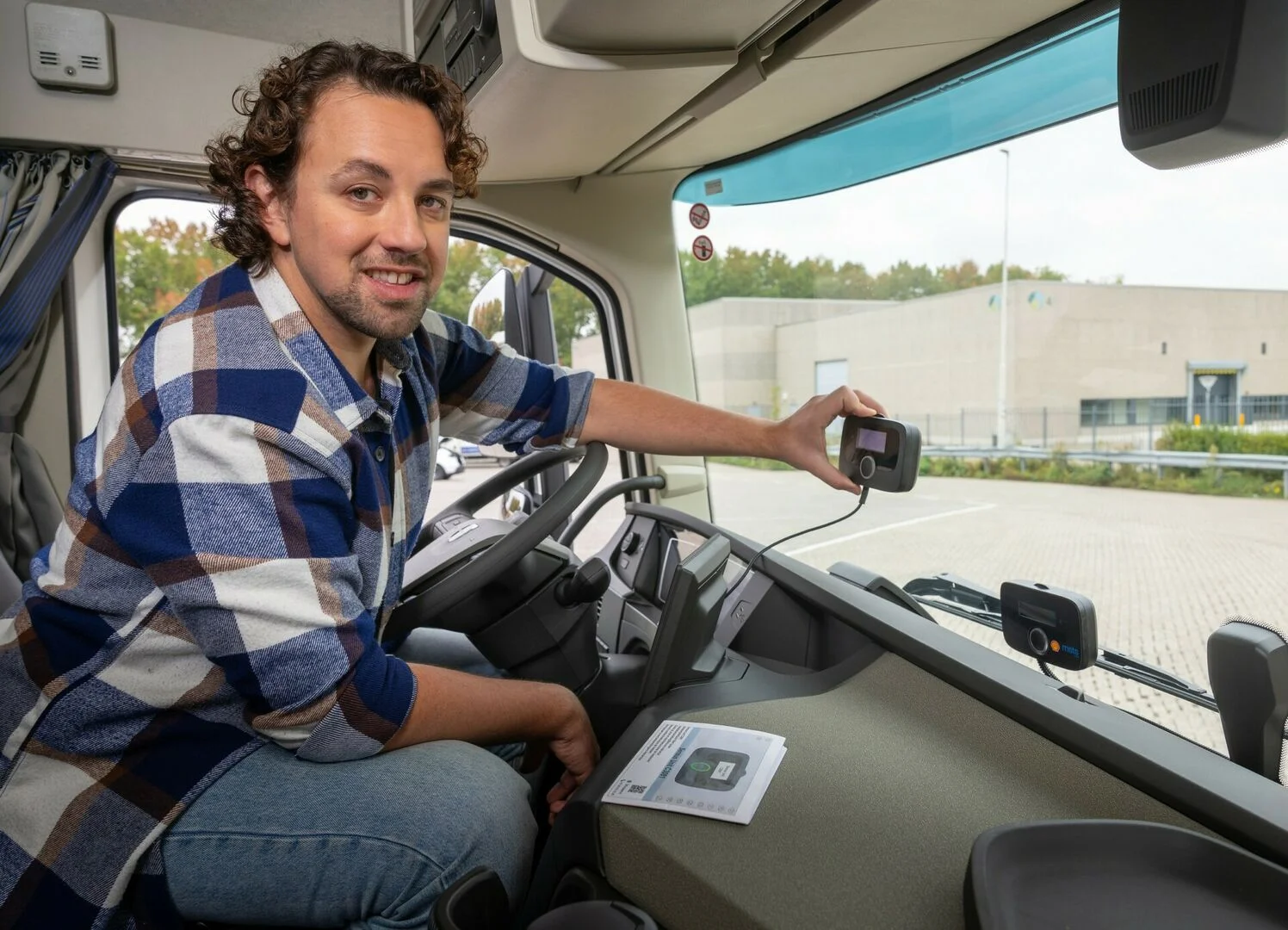
Starting July 1, 2026, the Netherlands will implement a significant shift in how heavy goods vehicles are taxed. Moving away from time-based systems, the new distance-based truck tax (Vrachtwagenheffing) will apply to N2 and N3 category vehicles. For UK-based hauliers and international logistics firms, this isn’t just a change in cost, but a major technical requirement that demands immediate attention to avoid steep fines.
The Dutch RDW (National Road Traffic Service) has confirmed that enforcement will begin the same day the tax is introduced. The goal is not merely revenue, but creating a level playing field for all carriers while encouraging the proper use of on-board technology.
Why the On-Board Unit is Mandatory on All Roads
One of the most critical aspects of the new Dutch system is the requirement for the On-Board Unit (OBU) to remain active at all times. Unlike some toll systems where the device only needs to be functional on specific motorways, the RDW has mandated that the equipment must be powered on the moment a truck enters the country.
This applies even when driving on roads where the tax is not currently levied. The rationale behind this is to ensure uniform enforcement and to prevent “accidental” non-compliance when a driver transitions between taxed and non-taxed routes. For UK drivers crossing from the Port of Rotterdam or via the Belgian border, this means the OBU becomes a permanent fixture of their dashboard operations within Dutch territory. A common misconception is that exemptions granted in other EU countries might apply in the Netherlands; the RDW warns that this is rarely the case and local legislation must be followed strictly.
Compliance Checklist for Transport Operators
To ensure compliance by the 2026 deadline, transport operators should begin auditing their current fleet equipment. The RDW has outlined several steps for a smooth transition:
| Requirement | Action Needed |
|---|---|
| Service Contract | Secure a contract with an approved provider for Dutch road tax services. |
| Equipment Check | Ensure the OBU is compatible with the Dutch network. |
| Registration | Correctly link the OBU to the vehicle’s specific registration number. |
| Operational Status | The device must be switched on and functional throughout the journey. |
| Fault Reporting | Report malfunctions immediately; a 3-hour window is allowed for repair/replacement. |
Owners who already have contracts with European Electronic Toll Service (EETS) providers are advised to check if their current agreement can be extended to cover the Netherlands. If not, a separate OBU will be required specifically for Dutch transit.
Penalty Structure and Grace Period
The Netherlands is introducing a tiered penalty system to encourage early adoption. For the first six months—until January 1, 2027—fines will be reduced by 50% to allow the industry to adapt.
Standard fines for non-compliance are significant. Driving without a valid service contract carries a fine of €800 (reduced to €400 during the grace period). Other violations, such as driving with the OBU switched off, using malfunctioning equipment, or using a device registered to a different truck, carry a €500 fine (reduced to €250 during the grace period).
To prevent excessive penalization, the RDW will limit fines to one per vehicle per 24-hour period. If multiple violations are detected within that window, only the highest applicable fine will be issued.
Enforcement and the Human Element
Monitoring will be conducted through a network of fixed gantries positioned over motorways and mobile units stationed at roadsides. However, the Dutch authorities have emphasized a “human dimension” in their enforcement strategy. Before a fine is automatically dispatched, a human reviewer will assess the data to account for potential technical glitches or exceptional circumstances.
Fines will be sent by mail to the vehicle owner. In cases where an address is unknown or collection is deemed impossible, Dutch authorities reserve the right to stop the vehicle on the road, where the fine must be settled immediately. For UK operators, the message is clear: the transition to a digital, distance-based toll is a firm commitment, and preparation is the only way to avoid the logistical headache of roadside stops and heavy penalties.
Source: BNS
Context & actions About this article
Article contextPeople & topics#5
What do you think about this article?
Reader Ideas Newsroom
Have a sharper angle for this topic? Add it to the community idea board and let readers vote it up for editorial review.




/linkComments
8+ useful words can earn +10-60 DP; shorter replies can still publish without DP.