Northern Lights UK Forecast: Best Times to See the Aurora on Monday
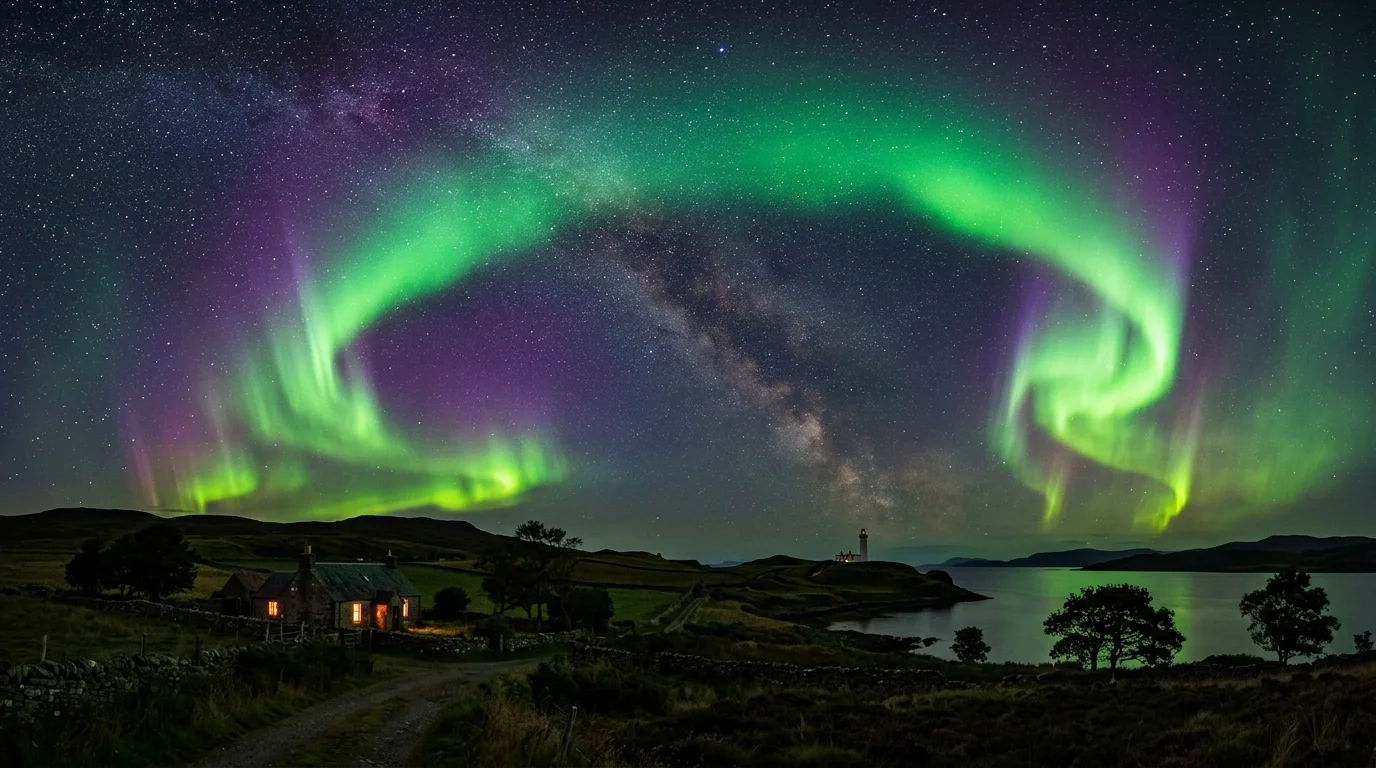
The Aurora Borealis remains a possibility across the United Kingdom tonight, Monday, May 11, 2026, following a weekend of extraordinary solar activity. While the peak of the recent solar storm has passed, the Met Office and NOAA indicate that significant sub-storms could still trigger visible displays, particularly in northern regions and areas with low light pollution.
Key Viewing Details for Monday Night
- Primary Window: 10:00 PM to 2:00 AM.
- K-Index Expectation: Levels between 4 and 6 are anticipated.
- Best Locations: Scotland, Northern Ireland, and Northern England.
- Visual Type: Potential for green glows on the horizon and occasional pillars.
Forecast and K-Index Levels for May 11
Solar activity is currently in a recovery phase after the historic G4-class storm over the weekend. However, the geomagnetic field remains unsettled. Forecasters are monitoring a K-index—a measure of geomagnetic activity—of approximately 5. A K-index of 5 or higher typically means the Aurora can be seen from the north of the UK, while a spike to 6 or 7 could push the ‘auroral oval’ further south toward the Midlands.
Unlike the constant glow seen on Saturday, tonight’s activity is more likely to manifest as “sub-storms.” These are shorter, intense bursts of light that can appear suddenly and fade within 15 to 30 minutes. Persistence is key for skywatchers tonight.
Regional Visibility and Cloud Cover
Weather conditions will play a decisive role in visibility. According to the latest Met Office satellite imagery, clear skies are most likely across eastern Scotland and parts of Northeast England. Western regions may face intermittent cloud cover, which can obscure the display.
| Region | Visibility Forecast | Best Viewing Conditions |
|---|---|---|
| Scotland | High | Clear skies expected in the East |
| Northern England | Moderate | Best away from Pennine cloud |
| Midlands | Low | Requires a K-index spike to 6+ |
| South of England | Very Low | Photographic only (long exposure) |
| Northern Ireland | Moderate | Breaks in cloud expected after midnight |
Practical Tips for Successful Aurora Hunting
To maximize your chances of seeing the Northern Lights tonight, you must move away from urban centers. Light pollution from streetlights significantly washes out the subtle greens and reds of the Aurora.
- Find a Dark Site: Look for a north-facing coastal spot or a high hill with no major cities to the north.
- Allow Your Eyes to Adjust: It takes about 20 minutes for your eyes to reach full dark adaptation. Avoid looking at your phone screen during this time.
- Use Long Exposure: Even if the Aurora is not visible to the naked eye, modern smartphone cameras in ‘Night Mode’ or DSLRs with a 5-10 second exposure can often capture the colors the human eye misses.
Stay updated with real-time data from the NOAA Space Weather Prediction Center to track sudden increases in solar wind speed that could signal an imminent display.
Frequently Asked Questions
Why are the Northern Lights still visible in the UK on Monday night after the weekend peak?
The Earth’s geomagnetic field remains in an unsettled ‘recovery phase’ following the historic G4-class solar storm. While the constant, widespread glow has subsided, Monday night is characterized by sub-storms—sudden, intense bursts of energy that can cause the Aurora to flare up for 15 to 30 minutes at a time. These occur because the solar wind is still buffeting the Earth’s magnetosphere, creating localized displays even as the overall storm wanes.
How can I maximize my chances of seeing the Aurora tonight without professional equipment?
To increase your visibility odds, follow these three steps:
1. Timing: Be outside during the peak window of 10:00 PM to 2:00 AM.
2. Location: Find a ‘Dark Sky’ spot with an unobstructed view of the Northern horizon. Avoid streetlights and city glow.
3. Technology: Use your smartphone’s ‘Night Mode’ with a 3-5 second exposure. Digital sensors can often detect green and purple wavelengths that the human eye perceives only as a faint grey mist or ‘cloud’ in the dark.
Will the Aurora reach as far south as the Midlands or London on Monday?
Visibility in the Midlands and Southern England depends on the K-index hitting 6 or 7. While the baseline forecast is a K-index of 5 (favouring Scotland and Northern England), geomagnetic spikes are common during recovery phases. Residents in the South should look for a faint green glow low on the horizon rather than overhead displays, and a camera will be essential to confirm the sighting in these regions.
How can I track live solar activity to know exactly when to head outside?
For real-time updates, monitor the AuroraWatch UK alerts from Lancaster University or the NOAA Space Weather Prediction Center. Pay close attention to the ‘Bz’ value on live magnetometers; when the Bz line tilts ‘Southward’ (negative), it indicates that the solar wind is effectively ‘connecting’ with Earth’s magnetic field, often preceding a visible flare-up within minutes.
Source: Content Brain