
Tomorrow’s UK weather still sits inside an official heat-health alert period for parts of England, even though the most extreme late-May temperatures are expected to begin easing from the Bank Holiday peak. The Met Office’s 25 May 2026 heatwave update pointed to 35C in parts of England on Monday and again on Tuesday, followed by 31C on Wednesday and 30C on Thursday. UKHSA then extended heat-health alerts until 5pm on Thursday 28 May, with amber alerts covering several English regions.
That is why searches for tomorrow’s weather are not just about whether it will be sunny. The practical question is whether the heat is still high enough to affect health, travel, work, schools, sleep and local plans. For many readers in England, the answer is yes: conditions may be a step down from the peak, but they remain within an alert period that official agencies say should be taken seriously.
Tomorrow remains hot even as the peak starts to ease
The Met Office published and updated its late-May heatwave statement on 25 May 2026, describing an exceptional spell of warmth for May. The update said 35C was forecast in parts of England on Monday and again on Tuesday, which put the early part of the week close to record-challenging territory for the time of year.
The same update also gave the clearest signal for what comes next. It forecast headline highs of 31C on Wednesday, 30C on Thursday, 27C on Friday and 28C on Saturday. That means the story for tomorrow is not a sudden return to average late-spring conditions. It is a slower cooldown from a very hot starting point.
For readers, that distinction matters. A drop from 35C to around 31C can sound like relief, and for some places it will feel less extreme. But 31C in late May is still unusually warm for the UK, especially in built-up areas where overnight temperatures can stay high and indoor spaces can retain heat.
The Met Office also said heatwave thresholds had been reached in parts of the UK and explained that those thresholds vary by county. This is important because a heatwave is not defined by one national number. The threshold depends on local climate norms, so a temperature that meets the definition in one county may not meet it in another.
What the Met Office forecast says for the rest of the week
The official Met Office signal is for heat to continue through the week before a gradual easing. The key values in its 25 May update were 31C for Wednesday, 30C for Thursday, 27C for Friday and 28C for Saturday.
Those headline highs do not mean every town or city will reach those exact figures. National forecast values normally describe the top end of expected conditions, while local temperatures vary with cloud, wind direction, sea breeze, elevation, urban heat and any showers or storms that develop. Coastal areas can be notably cooler than inland towns, while city centres can feel hotter than nearby rural locations.
The useful way to read the forecast is therefore as a risk signal rather than a promise that every place will experience the same weather. The peak may be shifting lower, but the overall pattern still supports very warm or hot conditions in parts of England through Thursday, with later days still warmer than many readers would expect for late May.
This also explains why people are checking tomorrow rather than the wider week alone. Short-range detail matters during heat events. A small change in cloud, breeze or storm risk can affect how hot a workplace feels, whether a commute is uncomfortable, whether children need extra planning for school travel, and whether outdoor events need shade and water arrangements.
Where heat-health alerts are active in England
The UK Health Security Agency updated its heat-health alert story on 26 May 2026. It said the South West alert had been escalated to amber from 26 May, and that amber heat-health alerts were then in place for the South West, South East, London, East of England, West Midlands and East Midlands.
UKHSA also said the North East and North West remained under yellow alerts. The alert duration was extended by 24 hours and was set to remain in place until 5pm on Thursday 28 May 2026.
The UKHSA heat-health dashboard showed several English regions under yellow or amber alerts and listed an update time of 10:05am on 26 May 2026. Readers using the dashboard should check the timestamp as well as the colour, because the map can be revised when forecast confidence, expected impacts or timing changes.
Amber does not mean the same thing as a red emergency alert, but it is more than a routine notice. The Met Office heat-health alert service page explains that the system is run by UKHSA in partnership with the Met Office and covers England. It describes amber as an enhanced-response level where expected impacts may be felt across the health service and other sectors.
In practical terms, amber alerts are designed for organisations and responders as well as the public. They help hospitals, care providers, local authorities, transport operators and other services prepare for heat-related pressure. For households, the alert is a prompt to check local details and think ahead, especially where people are more vulnerable to heat.
Heat-health alerts are not the same as severe weather warnings
One of the easiest points to miss is that heat-health alerts and Met Office severe weather warnings are different systems.
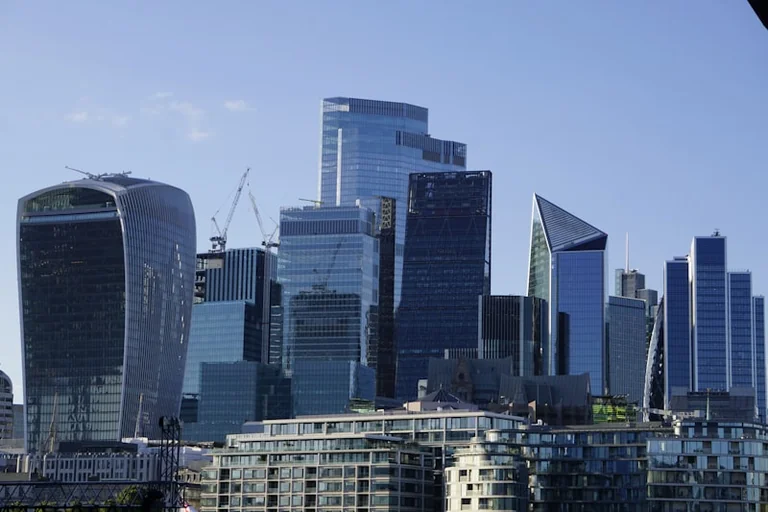
Heat-health alerts are public health alerts for England. They are issued by UKHSA in partnership with the Met Office and focus on expected health impacts from heat. They use colours such as yellow and amber to describe the level of response and potential impact.
Met Office severe weather warnings are a separate warning service for weather hazards that may cause disruption or danger, such as thunderstorms, wind, rain, snow, ice, fog or extreme heat. Those warnings appear on the Met Office UK warnings map and can change quickly as the forecast evolves.
That distinction matters for tomorrow’s weather. A region can be under a heat-health alert without necessarily having a live thunderstorm warning. Equally, if storms or disruption risks develop, the severe weather warnings map is the page that should show the current warning status.
Readers should therefore avoid treating one map as a substitute for the other. The UKHSA dashboard is the right place to check the heat-health alert level for English regions. The Met Office warnings page is the right place to check whether any severe weather warning has been issued for a specific area.
What could still change before tomorrow
The broad forecast signal is clear: the exceptional peak heat is expected to ease gradually, not collapse immediately. The details still matter.
First, local temperatures can differ sharply from the national headline. Inland southern and central areas may stay hotter than exposed coastal districts. Urban areas may also hold heat overnight, which can make the following day feel more draining even if the afternoon maximum is slightly lower.
Second, any thunderstorm or disruption risk needs checking close to the time. readers should not be read as saying a current thunderstorm warning exists. The reliable check is the live Met Office UK warnings page, because warnings can be added, removed or updated as confidence changes.
Third, UKHSA alert levels can be revised. The dashboard timestamp matters because the public health alert picture depends on forecast confidence, expected temperatures, overnight conditions and likely effects on health and services.
Finally, the word ‘cooldown’ can be misleading. A move from the mid-30s to the low-30s is a moderation, but it is still hot by UK standards in late May. Later values of 27C and 28C would be lower than the peak but still warm enough to affect outdoor plans, sleep and vulnerable people in some settings.
What readers should check next
For tomorrow’s weather, the most useful approach is to check three official pages rather than relying on one headline temperature.
First, check the Met Office local forecast for your town, city or postcode. The national maximum gives the shape of the event, but your local forecast will show timing, cloud, wind, overnight temperatures and any change in the daily high.
Second, check the UKHSA heat-health alert dashboard if you are in England. Look at both the alert colour and the latest update time. Amber and yellow alerts are regional, so the situation in London, the Midlands or the South West may not match the North West or North East.
Third, check the Met Office UK warnings page for the current severe-weather warning status. Heat-health alerts do not automatically mean there is a thunderstorm warning, and the absence of a warning at one point does not prevent one being issued later if the forecast changes.
For households, workplaces and event organisers, the sensible planning questions are simple: how hot will it be locally, how warm will it stay overnight, whether vulnerable people have enough support, whether outdoor plans have shade and water, and whether any live warning changes could affect travel or public events.
Context & actions About this article
Source check Official sources
The article uses official weather and public health updates published on 25 and 26 May 2026, with readers directed to live pages for changing warnings.
- Met Office heatwave update dated 25 May 2026
- UKHSA heat-health alert update dated 26 May 2026
- UKHSA heat-health dashboard timestamp
- Live Met Office UK warnings map
- Source
- Met Office heatwave update
- Scope
- United Kingdom
- Updated
- 2026-05-27 20:28
Source check
Report a trust issue
Send a clear signal to community moderation if the source, facts or context need review.
Article contextPeople & topics#7
What do you think about this article?
Reader Ideas Newsroom
Have a sharper angle for this topic? Add it to the community idea board and let readers vote it up for editorial review.


/linkComments
8+ useful words can earn +10-60 DP; shorter replies can still publish without DP.