Vilnius to Host Major Global Heraldry and Genealogy Summit in 2026
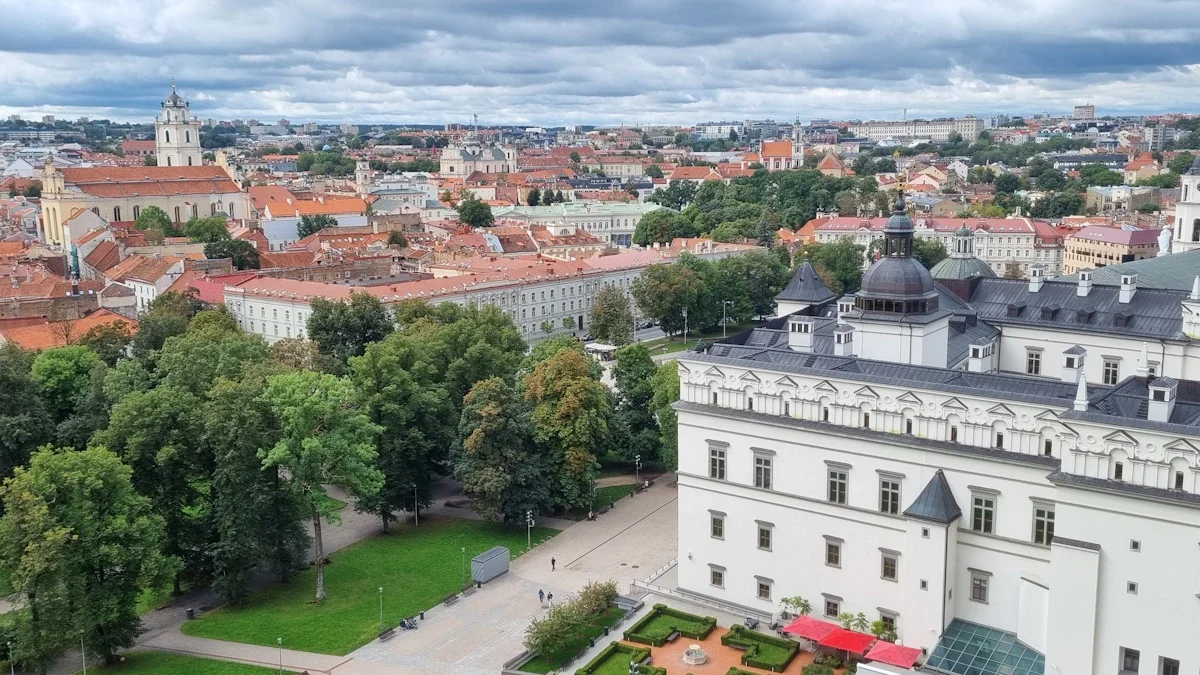
The Palace of the Grand Dukes of Lithuania, a reconstructed symbol of sovereign power in the heart of Vilnius, is set to become the focal point for the world’s leading experts in lineage and symbolism. In May 2026, the city will host the V International Colloquium on Genealogy, Heraldry, and Vexillology (ICGHV5), an event that underscores Lithuania’s growing influence in the study of historical identities and noble heritage.
For two days, the historic capital of the Grand Duchy of Lithuania will welcome scholars, heraldic artists, and armigers from 24 countries. This gathering is not merely an academic exercise; it is a high-profile assembly of the heads of major international organisations, including the International Academy of Genealogy (AIG), the International Federation of Vexillological Associations (FIAV), and the International Confederation of Genealogy and Heraldry (CIGH). The event aims to bridge the gap between rigorous archival research and the living traditions of family history.
A Gateway to the Grand Duchy’s Legacy
The choice of venue is deeply symbolic. The Palace of the Grand Dukes serves as a reminder of a time when Lithuania was one of the largest states in Europe, stretching from the Baltic to the Black Sea. The colloquium’s theme, “The State and Noble Families: Political, Social, and Cultural Heritage,” seeks to explore how these historical dynasties shaped the modern map of Europe.

Discussions will delve into the lives of iconic figures such as Barbara Radziwiłł (Barbora Radvilaitė), often referred to as the “Lithuanian Juliet,” and Bona Sforza, the Italian-born Queen of Poland and Grand Duchess of Lithuania who brought Renaissance culture to the region. Scholars will also tackle the complex genealogy of the Gediminids, the dynasty that founded Vilnius and led the Grand Duchy during its medieval peak. Dr Tomas Baranauskas is expected to present research on one of the most intriguing puzzles of Lithuanian medieval history: the exact kinship between the rulers Traidenis and Gediminas.
The Science of Flags and Shields
While genealogy focuses on bloodlines, the colloquium also places a heavy emphasis on heraldry (the study of coats of arms) and vexillology (the study of flags). These disciplines are often misunderstood as mere hobbies, but for the experts descending on Vilnius, they are vital tools for understanding statehood and cultural memory. Dr Željko Heimer, President of the FIAV, noted that Vilnius has rapidly become a vital hub for these experts within the Baltic region, providing a platform for dialogue that rarely exists elsewhere.

Beyond the lectures, the event will feature the fifth international gathering of armigers—individuals who possess and use personal coats of arms. This living tradition remains vibrant across Europe, and the Vilnius summit has been credited with expanding the international network of those who maintain these heraldic customs. An exhibition of work by heraldic artists from Latvia, North Macedonia, Spain, Sweden, and Lithuania will also be on display, showcasing the intricate craftsmanship required to translate family history into visual symbols.
A Lasting Academic Impact
The colloquium will serve as the launchpad for a new 360-page publication titled Genealogy, Heraldry and Vexillology. This volume is currently the only periodic publication of its kind in the Baltic States, offering a rare English-accessible resource for researchers worldwide interested in Eastern European noble history.

The event is the culmination of an initiative that began in 2023 during the 700th anniversary of Vilnius. At that time, representatives from 15 countries signed the Vilnius Declaration, which led to the creation of the International Institute for Comparative Genealogy, Heraldry, and Vexillology (IICGHV). This institute now seeks to standardise research methods and preserve the documentary heritage of noble families, much of which is stored in the Lithuanian State Historical Archives.
For those interested in the intersection of history, art, and personal identity, the 2026 colloquium represents a unique opportunity to see how the symbols of the past continue to influence the political and cultural visions of Central and Eastern Europe today.
Source: BNS




AI moderation
Portal AI moderator got this signal
Thanks. The comment is now marked for community review and AI moderation scoring.