Baltic States Unite to Lead Autonomous Transport and Rail Innovation
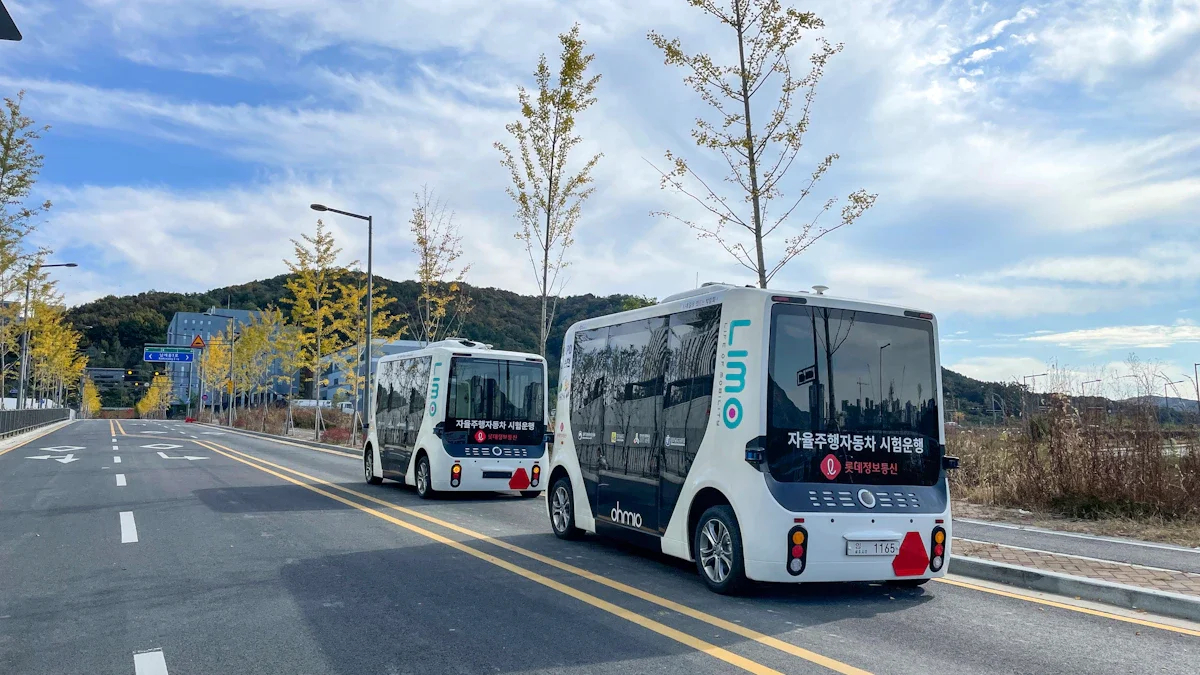
The transport ministers of Lithuania, Latvia, and Estonia have formalised a strategic partnership aimed at positioning the Baltic region as a global hub for autonomous transport technology. During a meeting in Tallinn, Lithuanian Transport Minister Juras Taminskas, alongside his Latvian and Estonian counterparts, signed a memorandum of understanding to synchronise the development and testing of self-driving vehicles across their shared borders.
This agreement marks a shift from individual national efforts toward a unified regional approach. The primary objective is to ensure the Baltic states do not merely adapt to global technological shifts but actively shape the regulatory and operational standards for autonomous mobility. By creating a cross-border “sandbox” or testing environment, the three nations intend to allow developers to trial innovations under real-world conditions that span multiple jurisdictions—a critical requirement for the eventual commercial rollout of self-driving freight and passenger services.
Cross-Border Testing and Data Synchronisation
The memorandum focuses on several technical and regulatory pillars. Central to the plan is the establishment of a bandomoji aplinka (test environment) that facilitates the exchange of safety-related data between the three nations. This data-sharing mechanism is intended to identify potential risks and refine the AI algorithms governing autonomous systems in diverse weather and road conditions characteristic of Northern Europe.
Minister Taminskas emphasised that the collaboration is designed to foster an investment-friendly environment. By harmonising regulations now, the Baltic states hope to attract international tech firms looking for a stable, integrated market to pilot their technologies. This move is seen as a vital step in increasing the competitiveness of the Lithuanian transport sector, which has historically been a cornerstone of the nation’s economy.
Strategic Infrastructure and Regional Security
While the focus in Tallinn was on the future of autonomous mobility, the ministers also addressed the progress of traditional high-capacity infrastructure projects that underpin regional connectivity. Discussions covered the ongoing development of Rail Baltica—a project to integrate the Baltic states into the European rail network using the standard European gauge—and the expansion of the Via Baltica motorway.
These projects are increasingly viewed through the lens of regional security and military mobility. The ability to move passengers, freight, and military assets rapidly across the North-South axis is a priority for the European Union’s eastern flank. Lithuania is currently intensifying construction on a 114km section of Rail Baltica between Kaunas and Panevėžys, with work expected to accelerate in the coming years.

Furthermore, the reconstruction of the Via Baltica highway remains a priority. While the 40km stretch from Marijampolė to the Polish border has been completed, the remaining section from Kaunas to the Latvian border is slated for renewal starting in 2030, contingent on securing additional EU funding. The ministers noted that coordinating these efforts is essential to ensure that the infrastructure remains consistent across borders, avoiding bottlenecks at national frontiers.
Funding and the 2027 EU Presidency
The timing of this cooperation is strategically aligned with the European Union’s long-term financial planning. Lithuania is preparing for its presidency of the Council of the European Union in 2027, a period that will coincide with critical negotiations for the 2028–2034 EU budget.
The Baltic states are seeking to amplify their collective voice to secure higher levels of European financing for strategic transport projects. By demonstrating a unified front in both cutting-edge technology (autonomous transport) and essential infrastructure (Rail Baltica), the region aims to prove its readiness for deeper integration into the European transport network (TEN-T).
This proactive stance is intended to ensure that the Baltic region remains a priority for military mobility grants and innovation funding, which are seen as essential for both economic growth and the broader security architecture of the European Union. As the 2030 deadline for several major infrastructure milestones approaches, the Tallinn memorandum serves as a declaration of intent that the Baltics will pursue a high-tech, integrated future for regional travel.
Source: ELTA