Ealing residents reclaim parking as 1,000 abandoned vehicles are towed

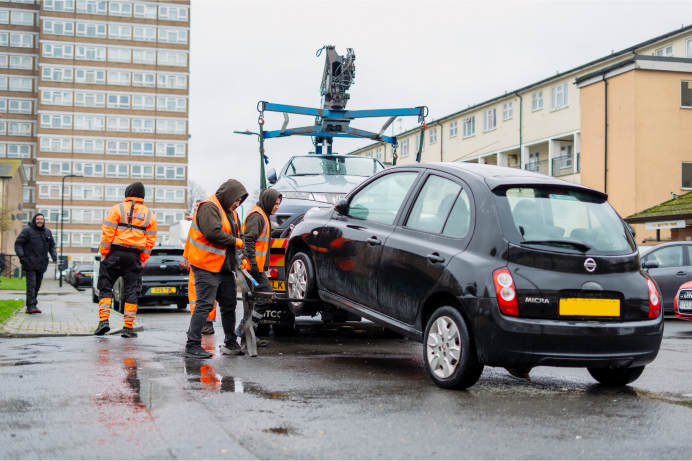
More than 1,000 abandoned vehicles have been removed from the streets and housing estates of Ealing in a major enforcement operation. This crackdown, which began in September 2025, represents a significant escalation in efforts to improve local parking availability and community safety across the borough.
In just seven months, enforcement teams have cleared a volume of vehicles that far exceeds previous annual records. Historically, the local authority typically removed approximately 400 abandoned vehicles across an entire year. The current pace of removal highlights a rigorous new approach to managing the public highway and residential parking zones.
Luxury brands and criminal evidence discovered
While many abandoned vehicles are often older models reaching the end of their lifespan, this operation has uncovered several high-end surprises. Among the 1,000 vehicles seized were luxury models including a Maserati, a Rolls Royce, a Jaguar, and multiple Audis. The presence of these prestige cars on residential streets and estates has raised questions about why such high-value assets were left to decay.
The crackdown has also highlighted the link between neglected vehicles and local crime. In one instance, enforcement officers discovered a machete and a cache of Class A drugs inside a vehicle slated for removal. These findings support the long-standing concern that stationary, untaxed, and abandoned cars can serve as hubs for anti-social behavior and criminal activity.
Distribution of removals across estates and public roads
The majority of the vehicles were lifted directly from public roads, where they often occupied valuable parking spaces for months. However, the operation also extended deep into residential areas. Around 125 vehicles were removed from council housing estates, and two were seized from private land following specific legal procedures.
Councillor Dominic Moffitt, the cabinet member for climate action, noted that these vehicles cause real frustration for residents. Beyond the loss of parking, abandoned cars are often seen as a sign of neighborhood neglect. The council’s towing contractor is now maintaining a constant watch at known hotspots to ensure that as soon as a vehicle is identified as abandoned or untaxed, it is removed immediately.
Criteria for vehicle seizure and owner penalties
For a vehicle to be legally parked on a road or within a housing estate, it must meet several strict criteria. Every car must have valid road tax, a current MOT, and active insurance. Furthermore, the vehicle must be in good working order. Cars that are declared off-road via a Statutory Off-Road Notification (SORN) are strictly prohibited from being parked on public roads or council estates.

A vehicle can also be classified as abandoned if it has a significant backlog of unpaid Penalty Charge Notices (PCNs). If a car is towed, the owner faces substantial fees to reclaim it. Any vehicles that remain unclaimed after a set period are either sold at public auction or sent to be scrapped. Additionally, the council has reminded residents that commercial garages are not permitted to use housing estates as overspill parking for their repair businesses.
Reporting procedures for local residents
The enforcement teams rely heavily on intelligence provided by the community to identify problem vehicles. Residents who suspect a car has been abandoned are encouraged to use the Love Clean Streets app, which allows for geo-tagged reporting and photo evidence. Reports can also be filed directly through the official council website.
Officers are continuing to patrol housing estates to identify untaxed or dangerous vehicles that have not yet been flagged. This rolling program of enforcement is expected to continue throughout 2026 to ensure that parking remains available for legitimate users and that the streets remain clear of potential criminal hazards.
Source: Ealing Council