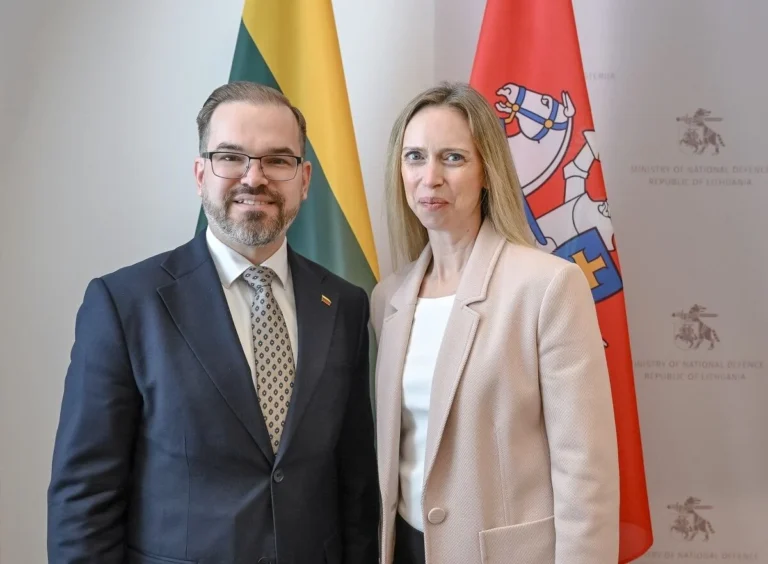
Lithuania and Ukraine Forge Strategic Defense Industry Alliance

Lithuanian President Gitanas Nausėda held a high-stakes meeting in Vilnius on Monday with Kyrylo Budanov, the head of Ukraine’s Main Directorate of Intelligence (HUR). The discussion signaled a significant evolution in Baltic-Ukrainian relations, moving beyond immediate humanitarian and military transfers toward a deep-seated integration of defense industries and long-term regional security guarantees.
The meeting comes at a critical juncture for European security, as the Baltic states continue to lead the diplomatic charge for sustained military support. The dialogue between Nausėda and Budanov focused on the localization of defense production, the ongoing negotiations for Ukraine’s European Union membership, and the current operational situation on the front lines against Russian aggression.
Strengthening the NATO Eastern Flank through Industrial Cooperation
A primary outcome of the meeting was the emphasis on shifting from a donor-recipient model to a collaborative industrial partnership. President Nausėda highlighted that Lithuania, as a key state on NATO’s Eastern Flank, is actively investing in Ukraine’s defense industry. This strategy aims to localize the production of essential military hardware, particularly in the realm of air defense and drone technology, which have become the defining features of the current conflict.
“Lithuania supports and will continue to support Ukraine in all areas, providing comprehensive political, military, and financial support as well as humanitarian aid,” Nausėda stated following the meeting. The President underscored that by developing defense industry localization, both nations can ensure a more resilient supply chain that is less vulnerable to international logistical delays.
This move is seen by analysts as a proactive step to ensure Ukraine’s self-sufficiency in the long term. For the UK and other NATO allies, the Lithuanian model of direct investment into Ukrainian manufacturing facilities serves as a potential blueprint for how Western nations can sustain support without depleting their own domestic stockpiles.
Strategic Security and the 2030 EU Horizon
Beyond immediate battlefield requirements, the meeting addressed the broader geopolitical architecture of Europe. President Nausėda reaffirmed Lithuania’s strategic goal: full Ukrainian membership in the European Union by 2030. He described this timeline not merely as a political aspiration but as an “essential security guarantee” for the entire continent.
The Lithuanian leader was candid about the reality of the conflict, noting that despite significant economic strain and military losses, there is no indication that Russia is prepared to de-escalate. “Instead of seeking only a peace perspective, we, together with our partners in NATO and the EU, must collectively make decisions that will ensure the necessary support for Ukraine this year and beyond,” Nausėda said.
This stance reflects a growing consensus among frontline NATO states that a “frozen conflict” or a premature peace deal would only allow Moscow to rearm. The focus remains on a decisive Ukrainian victory supported by robust European integration.
A Multi-Sector Approach to Resilience
The discussions also touched upon critical non-military support. Lithuania remains a primary partner in repairing and reinforcing Ukraine’s energy sector, which has been a frequent target of Russian missile strikes. Furthermore, the two leaders discussed the sensitive and ongoing efforts to locate and return Ukrainian children who have been forcibly deported to Russia.
By addressing these humanitarian and infrastructure needs alongside military-industrial cooperation, Lithuania is positioning itself as a comprehensive strategic hub for Ukraine’s survival and eventual reconstruction. As the war enters a protracted phase, the Vilnius meeting underscores that the Baltic states are prepared for a marathon of support, urging their Western counterparts to match this long-term commitment.
Original reporting by: bns
Source: BNS