Lithuania Claims ‘Best-Protected’ EU Border During Finnish State Visit
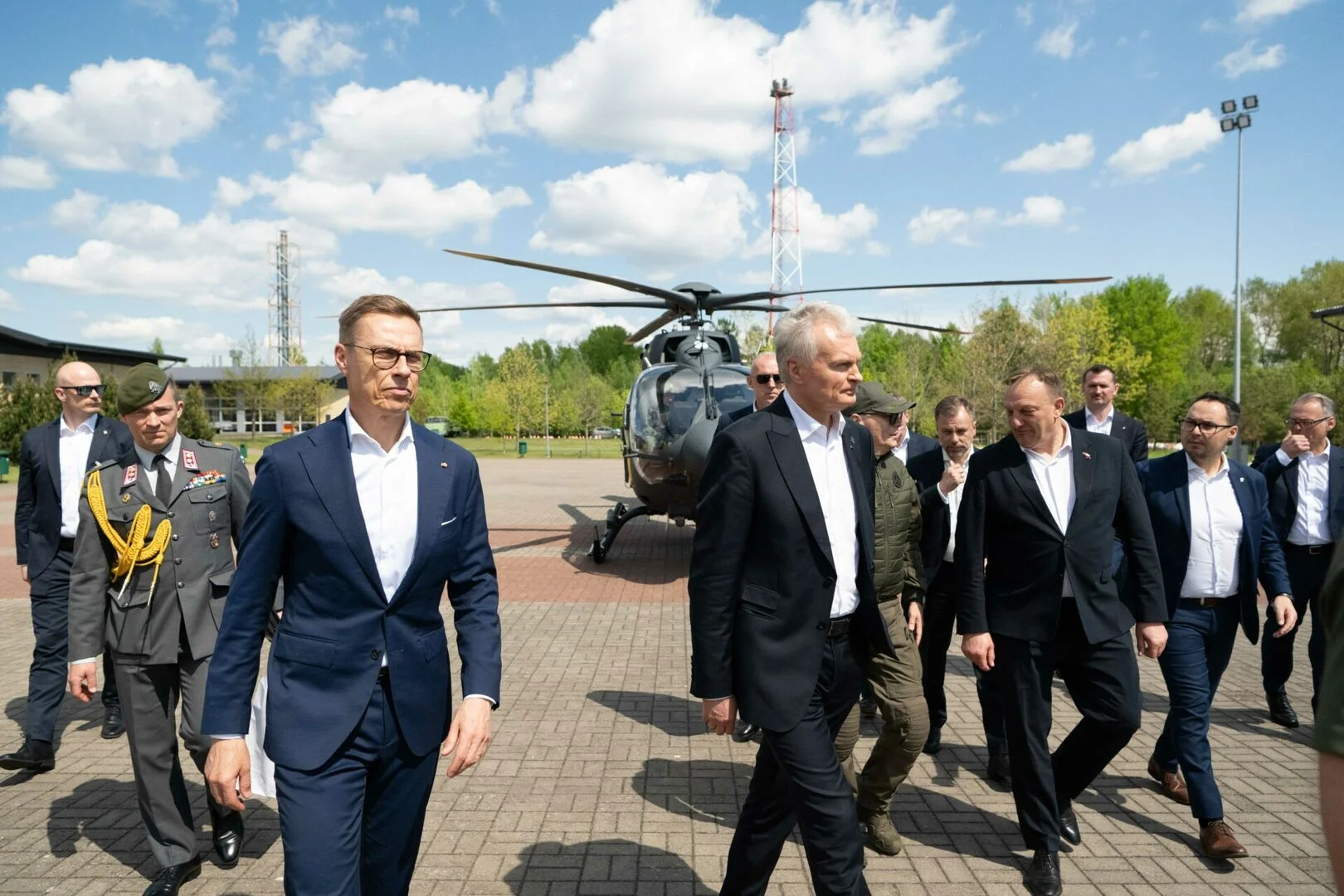
Lithuanian President Gitanas Nausėda has declared that his country now possesses what is likely the most robustly defended external border in the European Union. The statement was made during a high-profile visit to the Padvarionys border checkpoint on Friday, where Nausėda was joined by Finnish President Alexander Stubb, who is currently on a state visit to the Baltic nation.
The visit to the State Border Guard Service (VSAT) facilities served as a demonstration of the intensive security measures implemented along the 679-kilometre frontier with Belarus. This border has become a focal point of European security since 2021, when Lithuania and its neighbours began facing what officials describe as “instrumentalised migration”—a hybrid tactic allegedly orchestrated by the Minsk regime to destabilise the EU by pushing irregular migrants across the border.
The Infrastructure of the Eastern Shield
Addressing the media at the Vilnius Border Guard Frontier Station, President Nausėda highlighted that the strengthening of the EU and NATO’s external borders remains a top priority for the Lithuanian government. The infrastructure now in place represents a significant upgrade from pre-2021 levels, featuring a formidable physical barrier and sophisticated electronic surveillance.
“We are proud to have perhaps the best-protected external border in the EU,” Nausėda stated. “The measures we have implemented allow us to say with confidence that illegal migrants practically no longer enter EU territory through the Lithuanian external border, and the number of attempts themselves has significantly decreased.”
According to VSAT officials, the entire stretch of the border with Belarus is now equipped with high-definition video surveillance and night-vision devices. These are supported by a ground-based motion detection system and mobile units that maintain a 24/7 patrol cycle. This multi-layered approach is designed to provide total situational awareness, ensuring that any movement near the perimeter is detected and intercepted in real-time.
Neutralising Hybrid Threats and Air Space Security
Beyond ground-level crossings, the Lithuanian security apparatus has expanded its focus to include low-altitude aerial threats. The President revealed that the State Border Guard Service is now integrated into the national air defence framework. This integration grants border guards the authority to neutralise unmanned aerial vehicles (UAVs) and meteorological balloons that cross the border.
While these balloons are frequently used for smuggling contraband, such as cigarettes, they are also viewed as potential tools for surveillance or other hybrid activities. By empowering border units to take kinetic action against these objects, Lithuania is closing a vulnerability that has previously been exploited by actors on the Belarusian side.
Furthermore, the Lithuanian government is currently coordinating with other Baltic states to install permanent fortifications and counter-mobility measures along the border perimeter. This initiative, often referred to as the Baltic Defence Line, aims to provide a physical deterrent against conventional military movement, reinforcing the border’s role as a primary line of defence for the NATO alliance.
A Nordic-Baltic Security Blueprint
The collaboration between Lithuania and Finland was a central theme of the visit. President Nausėda noted that Lithuanian border management has been heavily influenced by the Finnish model, which has decades of experience managing a long and sensitive border with Russia.
“Lithuanian border guards have been actively and productively cooperating with Finnish border guards for more than 30 years,” Nausėda said. “Essentially, we have adopted the Finnish border protection model.”
This partnership was further solidified just days ago with the signing of a new cooperation agreement between the respective border services. For Finland, which recently joined NATO and closed its own border with Russia due to similar migration pressures, the Lithuanian experience provides valuable data on the effectiveness of physical barriers and high-tech surveillance in deterring hybrid attacks. The joint inspection by the two presidents signals a unified Nordic-Baltic front in addressing the security challenges posed by the EU’s eastern neighbours.
Source: BNS