Lithuania Moves to Ratify Commission for Ukraine War Reparations

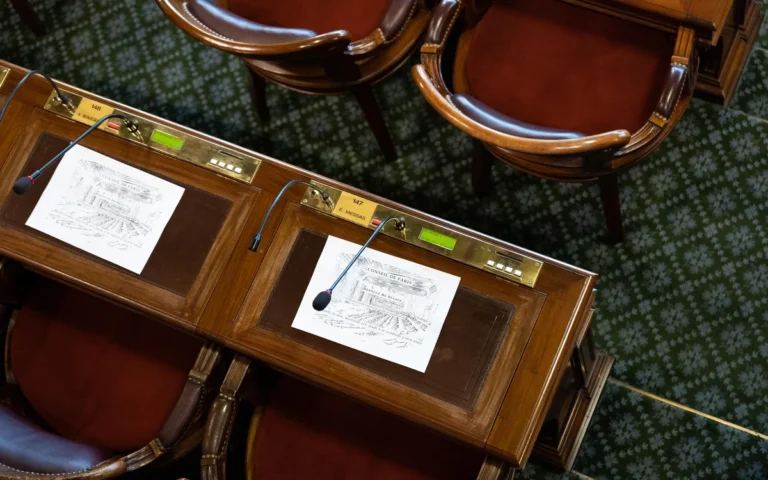
The Lithuanian Parliament, the Seimas, has taken a decisive step toward establishing a formal international mechanism to ensure Russia remains legally and financially accountable for damages caused during its invasion of Ukraine. Following a successful deliberation, lawmakers have signaled their intent to ratify a convention that will create the International Commission for Claims Regarding Ukraine.
This move marks a transition from merely documenting the destruction of war to the complex legal process of adjudicating financial liability. The convention, which was originally signed in The Hague on December 16, 2025, represents a collaborative effort by the international community to move beyond political condemnation and toward enforceable reparations.
A New Administrative Authority for Justice
The proposed Commission is designed as an independent administrative institution with the specific mandate to review, assess, and issue binding decisions on claims for damages, losses, or injuries. These claims must stem from actions by the Russian Federation that are deemed illegal under international law, specifically those occurring within or directed against the sovereign territory of Ukraine.
Unlike previous initiatives that focused on humanitarian aid or general reconstruction funds, this Commission will have the authority to determine the precise amount of compensation payable in each individual case. This involves a rigorous legal and evidentiary process to ensure that every claim—whether from a private citizen, a business, or the Ukrainian state—is evaluated against international standards of justice.
Organizational Structure and Global Reach
The convention outlines a comprehensive framework for the Commission’s operations. It establishes the body’s legal personality, organizational hierarchy, and the specific procedures for handling a potentially massive volume of claims. Crucially, the Commission will take over the existing Register of Damage for Ukraine, integrating the data already collected into a formal judicial pipeline.
While the Commission’s primary headquarters will be located within the territory of one of the participating member states, it will maintain a dedicated office in Ukraine to facilitate direct access for victims and local authorities. This physical presence is seen as essential for the gathering of on-the-ground evidence and the verification of claims in real-time.

The Path to International Enforcement
For the Commission to become a functional reality, the convention requires ratification by 25 interested nations. Lithuania’s move to ratify is part of a broader diplomatic push to reach this threshold and begin the work of financial adjudication. The Final Act of the diplomatic conference in The Hague explicitly states that Russia must bear all legal consequences of its illegal acts, including the fundamental duty to make full reparation for the injury caused.
In Lithuania, the project was approved by the Seimas by consensus following its second reading. However, under the country’s legislative procedure, a final vote is still required before the ratification is formally completed and the instrument of ratification is deposited.
Why This Matters Beyond the Baltic Region
The establishment of this Commission is a landmark development for international law. It sets a precedent for how the global community handles state-sponsored aggression in the 21st century. By creating a structured, multi-national body to handle reparations, the coalition of supporting nations aims to ensure that the cost of war is not borne solely by the victims or international donors, but by the aggressor state itself.
For the United Kingdom and other Western allies, the progress of this convention serves as a blueprint for the eventual economic settlement of the conflict. As the international community looks toward the long-term reconstruction of Ukraine, the work of this Commission will likely become the primary legal channel through which the financial burden of the war is addressed.
Source: BNS