Lithuania’s State Arms Factory Hits Record Profits Amid Defense Surge
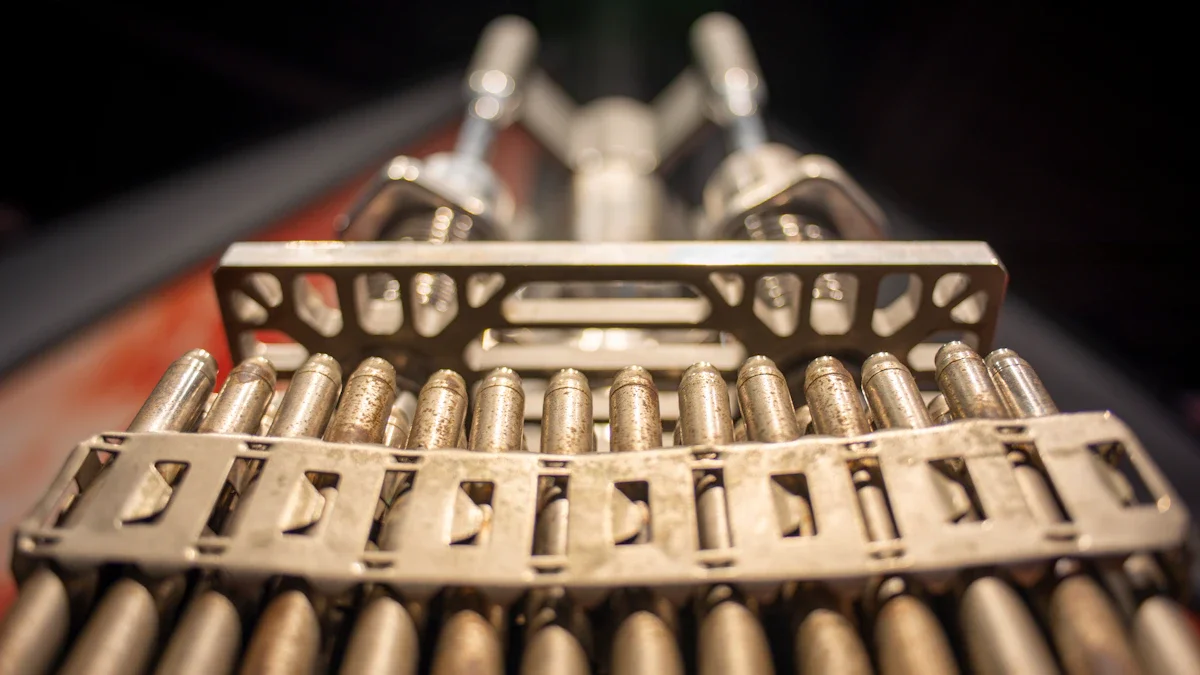
As Europe continues to grapple with the most significant security shift in decades, Lithuania’s state-owned Giraitė Armament Factory (GGG) has reported a landmark financial year for 2025. Driven by a 61% surge in demand for military-grade ammunition, the factory has not only increased its revenue but has also secured a massive capital injection to double its production capacity by 2027.
The performance of Giraitė is a bellwether for the European defense industry’s ability to scale up in response to NATO’s growing requirements. For UK observers and defense analysts, the factory’s success highlights the lucrative but volatile nature of the current munitions market, where supply chain stability is as valuable as the hardware itself.
Financial Breakdown: Growth in a High-Stakes Market
In 2025, Giraitė managed to navigate a landscape defined by rising raw material costs and logistical bottlenecks to deliver a 24% increase in sales revenue. The company’s net profit also saw a healthy 19% rise, allowing for a significant dividend payout to the Lithuanian state treasury.
| Financial Metric | 2024 Performance | 2025 Performance |
|---|---|---|
| Sales Revenue | €23.0 Million | €28.4 Million |
| Net Profit | €3.0 Million | €3.6 Million |
| Export Revenue | €15.4 Million | €19.3 Million |
| Share Capital | €22.3 Million | €47.5 Million |
What these numbers represent: The growth in revenue is primarily fueled by military and law enforcement contracts, which now represent the lion’s share of GGG’s portfolio. The 13% net profit margin indicates that despite the “demand tension” and increased costs of gunpowder and brass, the facility has maintained high operational efficiency. The massive jump in share capital—more than doubling—is a strategic move by the Lithuanian government to fund a total overhaul of production lines.
Market Context: Navigating the Global Munitions Crunch
According to Mindaugas Kurauskas, Director of the Giraitė Armament Factory, 2025 was a year of “high uncertainty.” The global shortage of gunpowder and critical raw materials has forced manufacturers to become more agile in their supply chain management.
“The sector faced complex supply planning and an increased need for pricing flexibility,” Kurauskas noted. This volatility is a universal issue; UK defense contractors have faced similar hurdles. However, Giraitė’s status as a state-owned entity has allowed it to prioritize “security of supply” over short-term retail profits. While sales to the civilian market (hunters and sport shooters) remained stable, the factory pivoted heavily toward NATO-standard ammunition for assault rifles and light machine guns.
Future Outlook: Doubling Down on Capacity
A pivotal decision in 2025 was the government’s move to increase the company’s authorized capital from approximately €22.3 million to over €47.5 million. This investment is earmarked for the “Production Capacity Increase” project.
By 2027, the factory aims to double its output. This expansion is not just about volume; it includes a shift toward higher value-added products, such as medium-caliber ammunition, developed in collaboration with international partners. For the UK market, it is worth noting that GGG’s products are certified by the British Proof Laboratory, ensuring they meet the rigorous standards required for both NATO use and high-end civilian distribution.
Beyond the machinery, the factory is also modernizing its footprint. In 2025, it began operating a 600 kW solar power plant, which now covers 30% of its electricity needs. This move toward energy independence is a critical component of the factory’s long-term strategy to remain operational even during potential regional energy crises.
Original reporting by: infoerdve.lt
Source: ELTA