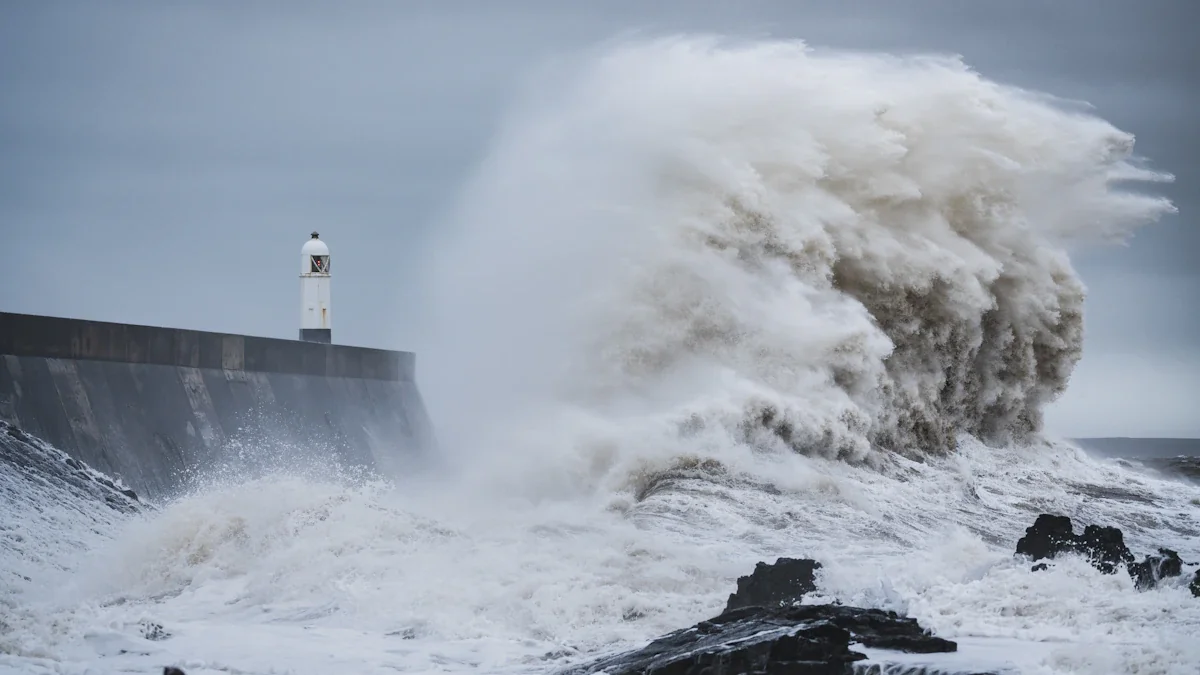
The Met Office is the deciding public source for whether the UK sees an amber weather warning before Monday morning, with travel, school runs and early work journeys the main reader concern. The official UK weather warnings page is the page to check for active warning colour, area and timing, while Met Office guidance explains that amber warnings are used when impacts are more likely or more serious than a yellow alert.
The forecast in practical terms
- will the Met Office issue an amber warning before Monday morning?
- Deadline: before Monday morning, using the public Met Office warning record as the check.
- YES: the Met Office publishes an amber UK weather warning before that point.
- NO: no amber warning is published before that point, even if yellow warnings or general poor weather continue.
- Resolving page: the Met Office UK weather warnings page.
This is a narrow forecast, not a general judgement on whether the weather feels bad. A wet, windy or disruptive spell can still remain below amber level if the Met Office judges the likely impacts and confidence do not meet that threshold.
Why an amber warning would matter for Monday routines
An amber warning would be a stronger public signal than a yellow warning. For readers, the practical difference is not just colour. It can change how seriously people should treat travel disruption, power interruption risk, outdoor plans and local authority messaging.
The Met Office warning guide sets out that warning colours are linked to a combination of likelihood and impact. That means an amber outcome is not only about whether heavy rain, wind, snow, ice or heat is possible. It also depends on how confident forecasters are and how disruptive the event could become.
For Monday morning, that distinction matters because the first part of the day concentrates risk. Commuters are on roads and rail, parents are checking school arrangements, delivery drivers are already working, and local services may need to decide whether routine plans still hold.
A yellow warning can still bring disruption. But an amber warning would usually push more readers from casual awareness into active planning: checking route alternatives, allowing more time, securing outdoor items, reviewing flood or wind exposure, and following local emergency or transport advice where relevant.
What the Met Office pages can and cannot tell readers
The official UK warnings page is the key public check because it lists active weather warnings by colour, geography and timing. It is the page readers should use to verify whether an amber warning exists, where it applies and when it starts or ends.
The separate Met Office warning guide is useful because it explains how to interpret warning colours. It helps readers avoid a common mistake: treating amber as a simple severity label detached from probability. The warning system is about expected impact and confidence together.
That means there are two different questions. The first is whether severe weather is possible. The second is whether the Met Office has enough impact and confidence evidence to issue an amber warning before the deadline.
This forecast can resolve only on the second question. It is not enough for social media posts, local reports or private weather models to suggest difficult conditions. The public Met Office warning page is the relevant record for whether the amber warning was issued.
The YES path: what would need to happen
A YES outcome would require the Met Office to publish an amber warning before Monday morning. The warning could apply to all or part of the UK, depending on the affected area shown on the warnings page.
The most likely route to a YES outcome would be a clearer signal that impacts could become significant enough to justify amber. In practical terms, that could mean rising confidence in travel disruption, flooding, hazardous wind, snow, ice or another weather hazard reaching a higher impact threshold.
For readers in England and elsewhere in the UK, the important detail would be the warning map and text, not the headline colour alone. Amber warnings can be geographically targeted. A national conversation about amber risk does not mean every town, road or rail line is equally exposed.
If amber appears, the next useful checks are immediate and local: the start time, the end time, the affected region, the named hazard and the Met Office impact text. Those details determine whether Monday morning travel, school routines or outdoor work are directly affected.
The NO path: why a warning may stay below amber
A NO outcome is also plausible in this type of forecast because unsettled weather does not automatically produce an amber warning. The Met Office may keep warnings at yellow, alter the geography, shorten the timing, or decide that the expected impacts do not justify a higher colour.
The warning guide matters here. Amber is not issued simply because conditions are unpleasant or because disruption is possible somewhere. The colour reflects a balance of expected impact and likelihood. If confidence stays lower, or if the expected impacts look more limited, the public warning level may remain below amber.
For readers, a NO result should not be read as a guarantee of easy conditions. Yellow warnings and localised weather impacts can still create delays, surface water, difficult driving or short-notice changes to outdoor plans.
The practical difference is that the formal amber threshold would not have been crossed before the deadline. That distinction is important for resolving the forecast cleanly and for avoiding overstatement.
How the forecast will be resolved
The resolution is based on public Met Office information. If the Met Office UK weather warnings page shows that an amber warning was issued before Monday morning, the forecast resolves YES.
If Monday morning arrives and the Met Office has not issued an amber warning before that point, the forecast resolves NO. Yellow warnings, media speculation, model charts or local concern would not count on their own.
If a warning is issued and later amended, the key question remains whether an amber warning existed before the deadline. The affected area and hazard should be read from the warning page, because those details define the public impact rather than the market wording.
This approach keeps the forecast tied to a verifiable public record. It also protects readers from treating rumour, screenshots without context or unofficial weather commentary as the deciding evidence.
What readers should do before Monday morning
The most useful action is to check the Met Office UK weather warnings page close to travel time, especially if a journey crosses county or regional boundaries. Warning areas can be specific, and a route may pass through a higher-risk area even if the starting point looks unaffected.
Readers should also check transport operators, local councils and school or workplace channels where relevant. The Met Office warning is the weather signal, but practical disruption often appears through local transport changes, road closures, flood alerts or service updates.
For households, the sensible preparation is proportionate. Charge phones, allow extra journey time if warnings cover your area, secure loose outdoor items if wind is the hazard, and avoid unnecessary travel through known flood-prone routes if heavy rain is highlighted.
The next decisive check is simple: open the Met Office UK weather warnings page before Monday morning and look for an amber warning, its affected area and its timing. That public page is what changes the answer from NO to YES.
Source: Met Office
Context & actions About this article
Source check Forecast check
This forecast depends on whether the Met Office publishes an amber UK weather warning before Monday morning.
- Check the active warning colour on the Met Office UK warnings page
- Read the affected area and timing on the warning page
- Use the Met Office warning guide to interpret amber impact language
- Source
- Met Office UK weather warnings
- Scope
- United Kingdom
- Updated
- 2026-06-01 00:14
Source check
Report a trust issue
Send a clear signal to community moderation if the source, facts or context need review.
Article contextPeople & topics#6
What do you think about this article?
Reader Ideas Newsroom
Have a sharper angle for this topic? Add it to the community idea board and let readers vote it up for editorial review.


/linkComments
8+ useful words can earn +10-60 DP; shorter replies can still publish without DP.