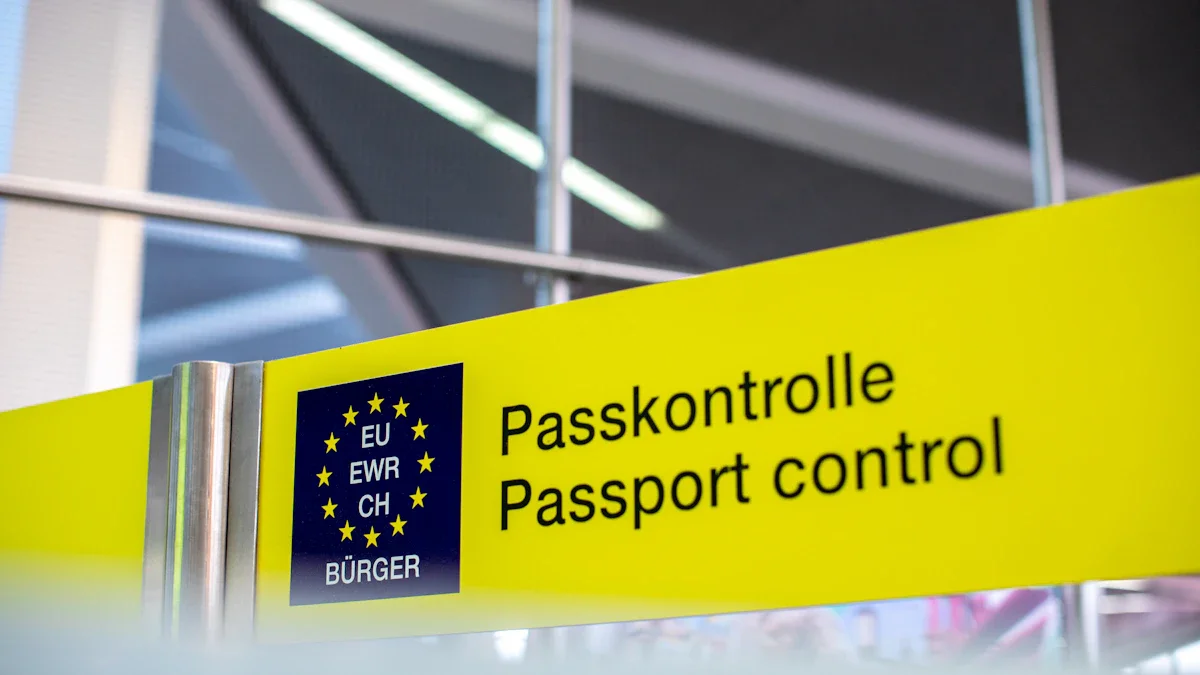
The UK and EU’s late-May 2026 security data-sharing framework means UK travellers to the Schengen Area should expect passport checks to be linked more closely with the EU Entry/Exit System, including mandatory biometric registration for non-EU citizens. For most passengers, the practical change is simple: arrive with a valid passport, allow extra time at first registration, and be ready for a facial image and fingerprint capture where EES checks are operating.
The UK government says the new cooperation framework is intended to strengthen security data exchange with the European Union. The European Commission states that EES biometric registration is mandatory for non-EU citizens entering the Schengen Area, which includes UK citizens travelling for short stays after Brexit.
Passport control changes for UK travellers
The EES records border crossings for non-EU nationals entering and leaving the Schengen Area. It replaces manual passport stamping with a digital entry and exit record, linked to identity data and biometrics.
UK travellers should expect the first EES registration to take longer than a normal passport scan. Later journeys may be quicker because the record can be checked against existing biometric data, but passengers can still be asked to verify their identity at the border.
The system does not remove normal entry conditions. Travellers still need a valid passport, must respect the 90-days-in-180-days Schengen short-stay rule, and may be asked about accommodation, return travel or sufficient funds.
Eurostar and airport biometric requirements
At Eurostar terminals and major UK airports handling flights to the Schengen Area, passengers should be prepared for these checks where EES controls are active:
| Requirement | What travellers should expect |
|---|---|
| Passport scan | Border systems read the passport and match it to travel records. |
| Facial image | A live facial image may be captured for EES identity checks. |
| Fingerprints | Fingerprints are required for most non-EU travellers registering in EES. |
| Exit record | Departure from the Schengen Area is digitally recorded. |
Families should allow more time if several passengers need first-time registration. Travellers who cannot use an automated gate may be directed to a staffed border officer.
Trusted Traveller trial for frequent passengers
The new framework also introduces a Trusted Traveller trial for frequent UK-EU passengers. The trial is expected to focus on repeat travellers whose identity and travel history can be verified more quickly, rather than removing border checks altogether.
Passengers should not assume they are enrolled automatically. Until official enrolment details are confirmed for a route or airport, frequent flyers and regular Eurostar users should follow the standard EES process and check their carrier’s pre-travel guidance.
What to do before travelling
Check that your passport is valid for Schengen travel, allow extra time at departure and arrival points, and follow instructions from Eurostar, your airline or border staff. If this is your first Schengen trip since EES registration began on your route, plan for additional processing time.
The clearest rule is that UK citizens are treated as non-EU travellers for EES purposes. That means biometric registration is not optional where the system is in force.
Frequently Asked Questions
What are the new UK-EU travel checks and why do they matter?
They mean UK passengers entering the Schengen Area should expect border checks to be more digital and identity-based. Instead of relying mainly on passport stamps, border systems can create or check an electronic entry record linked to your passport and biometrics.
For UK travellers, the key point is simple: your first trip through an active Entry/Exit System checkpoint may take longer, because your face image and fingerprints may need to be registered. The checks do not remove normal Schengen rules, including the 90 days in any 180-day period limit.
What should I do before travelling from the UK to the Schengen Area?
Before you leave, do a quick travel check:
- Make sure your passport is valid for Schengen travel.
- Arrive earlier than usual, especially on your first trip after the checks begin.
- Keep your return ticket, accommodation details and travel insurance easy to access.
- Be ready to remove glasses or hats if asked for a facial image.
- Follow border staff instructions for fingerprint capture where it is required.
If you are travelling with children, elderly relatives or anyone who may need assistance, build in extra time at Eurostar, airports, ferry ports or coach terminals.
Will UK travellers need to give fingerprints every time they go to Europe?
Not necessarily. The first registration is usually the slowest part because the system needs to create a biometric record. On later journeys, border officers may be able to verify you against the existing record, although you can still be asked for identity checks at the border.
You should still plan as if checks may take longer, particularly during school holidays, bank holidays and peak weekend departures.
How will this affect UK families, business travellers and travel companies?
UK families should allow more connection time and avoid tight transfers, especially if travelling with young children or mixed passport groups. Business travellers should treat first-time registration as a possible delay and avoid scheduling meetings too close to arrival.
Travel agents, tour operators and transport providers should update customer instructions to explain that passengers may need passport scanning, facial imaging and fingerprint checks before entering the Schengen Area.
Where can I check the latest official travel requirements?
Check official sources before you travel, because rollout dates and border procedures can vary by route and country.
Use:
- GOV.UK foreign travel advice for UK passenger guidance.
- European Commission Entry/Exit System information for Schengen border rules.
- Your airline, Eurostar, ferry company or coach operator for route-specific instructions.
Do this a few days before departure and again on the day of travel if you are using a busy route.
Source: European Commission
Source check Source trail
This article is based on UK government security cooperation information and European Commission guidance on the Entry/Exit System.
- Checked the UK government source for the UK-EU security cooperation framework.
- Checked European Commission EES guidance for biometric registration rules.
- Separated confirmed EES requirements from route-specific carrier procedures.
- Flagged Trusted Traveller enrolment as route-dependent until official details are availabl...
- Source
- European Commission Entry/Exit System guidance
- Scope
- United Kingdom and European Union
- Updated
- 2026-05-25 13:35
Source check
Report a trust issue
Send a clear signal to community moderation if the source, facts or context need review.
Article contextPeople & topics#7
What do you think about this article?
Reader Ideas Newsroom
Have a sharper angle for this topic? Add it to the community idea board and let readers vote it up for editorial review.





/linkComments
8+ useful words can earn +10-60 DP; shorter replies can still publish without DP.