
The key number for UK readers is not a strike count or a storm total. It is the official warning status shown on the Met Office UK warnings page at the time you check it. Lightning can move from a distant forecast risk to a local public-service warning quickly, so the practical question is whether your part of the United Kingdom is covered by an official weather warning, what level that warning carries, and when the next public update changes the picture.
Lightning matters because it is rarely a single-issue event for households, commuters, schools, outdoor venues and local services. It often sits inside a wider thunderstorm risk, where short-notice changes can affect outdoor plans, transport conditions and local operations. But the important distinction is simple: a risk discussed in weather coverage is not the same as an active official warning for your area. For that, readers should use the Met Office UK warnings page as the public reference point.
For wider context, our related report on Met Office Amber Warning is also useful.
BBC and Sky News coverage can add useful context when thunderstorms or lightning affect parts of the country, including how widely the weather is being reported and what communities are seeing. The status that should steer public-service interpretation, however, remains the official warning page.
Key points
- Lightning should be read as part of the broader warning wording, timing and geography shown by the Met Office
- Trusted news coverage can help explain the wider situation, but safety and travel meaning should come from official public sources
- A warning being discussed in national coverage does not automatically mean every UK area is affected
- The next meaningful change is an update on the Met Office UK warnings page that alters the area, level, timing or wording of the warning
The first check is whether your area is inside an official warning
For a reader trying to understand a lightning story, geography comes first. UK weather warnings are not just national headlines; they are public notices with defined areas and time windows. A warning can apply to one part of England, Wales, Scotland or Northern Ireland while leaving other areas outside the official zone.
That is why a headline about thunderstorms or lightning should be treated as a prompt to check the official map, not as a final answer. The most useful reader question is: is my area included on the Met Office warning page, and what does the warning actually say?
This matters because weather language can sound similar across very different levels of certainty. A forecast discussion may describe conditions that could produce lightning. A public warning, by contrast, is a service message with a defined location, timing and impact wording. The difference affects how readers should understand the story.
The Met Office page is also where changes become visible. If the warning area expands, narrows, is upgraded, downgraded, extended or removed, that page is the reader-facing place where the public record changes.
Lightning warnings are about timing as much as location
The second check is the warning window. Lightning risk can be tied to a short burst of unsettled weather rather than a full-day event, and the most relevant public information is often the start and end time attached to a warning.
A reader seeing lightning footage or reports from one county should not assume the same timing applies everywhere. Thunderstorm conditions can be uneven, and public warnings are designed to show where and when the official risk is considered relevant. That is why the time box attached to the warning matters as much as the coloured area on a map.
The latest public-service update is especially important against the latest official page or before making plans based on the article. A story can be accurate in broad context but stale in service value if the official warning page has changed since it was written. For readers, the safest editorial interpretation is to treat every lightning-warning article as time-sensitive and to check the public page directly before acting on the information.
This is also where trusted publishers have a useful but limited role. BBC and Sky News reports can help readers understand that storms are part of the current news agenda and may show examples of lightning being observed or reported. They do not replace the official warning text that defines the public-service position.
What is confirmed and what still needs confirmation
What is confirmed is the public-service structure: UK readers should use the Met Office UK warnings page for official weather warning status. That page is the relevant public source for whether a warning is in force, where it applies, when it applies and what official wording is being used.
What still needs confirmation in any lightning story is the live status at the moment of reading. An article can explain what to check, why the warning matters and how to read the public information, but it should not imply that a specific warning is active unless the official page supports that claim at that time.
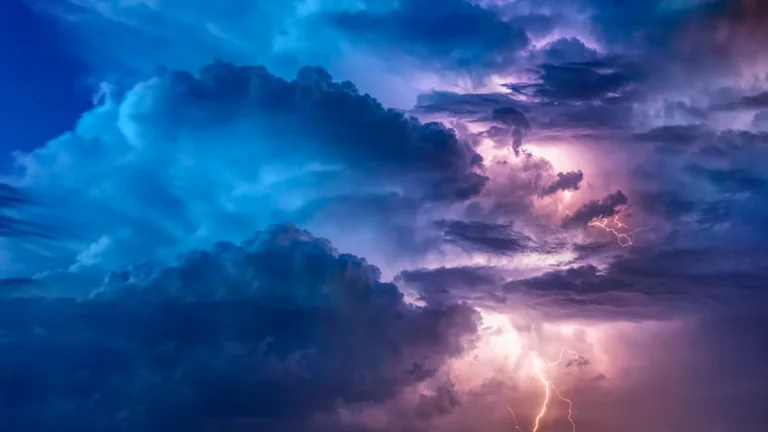
There are several details readers should treat as variable until they see them on the official page. The affected area can change. The start and end times can change. The warning level can change. The impact wording can change. The official page can also show that a warning has been removed or that no warning applies to a reader’s area.
That uncertainty is not a weakness in the information; it is part of how weather warnings work. Lightning and thunderstorms can be localised, fast-moving and difficult to summarise in one national sentence. A clear coverage should therefore separate confirmed public-service facts from details that depend on the latest official update.
Why news coverage can look broader than the warning map
Readers often encounter lightning through photographs, local reports, video clips or national weather articles before they check an official warning page. That can make the event feel larger or more immediate than the public warning map shows for a specific location.
There are good reasons for that difference. News coverage may focus on striking images, reported disruption, regional examples or the human interest of unusual weather. A public warning page has a different job: it presents the official warning status in a structured format for the country.
The two can sit together without saying the same thing. A BBC report about lightning captured on camera can show that the weather has been visible and newsworthy in a particular area. A Sky News article about thunderstorms can help readers understand broader weather context. The Met Office warning page is the place that gives the official public-service warning status.
That distinction helps avoid two common mistakes. The first is overstating the story by treating every thunderstorm report as proof of an active warning everywhere. The second is understating the story by assuming that a localised warning is unimportant because it does not cover the whole country. The correct reading depends on the official location, timing and wording.
The practical meaning for households and local plans
For households, schools, workplaces, event organisers and anyone with outdoor plans, the useful takeaway is not a generic instruction. It is the need to check the exact official status for the relevant place and time. A lightning-related warning can matter differently for a rural journey, a sports fixture, an outdoor venue, a commute or a local service schedule.
coverage should not turn that into invented route advice or unofficial emergency guidance. The official warning text is the correct place for the public meaning of the warning. If the Met Office wording changes, the reader-facing interpretation changes with it.
That is especially important for people reading through search, social feeds or Google Discover, where an article may be surfaced after the original publication moment. A headline about lightning can still be useful if it teaches readers what to verify. It becomes misleading if it leaves them with a stale impression of active risk that the official page no longer supports.
In practical terms, readers should focus on four pieces of public information: whether a warning exists for their area, what level it carries, what time period it covers and whether the wording has changed since they last checked. Those are the details that turn a broad weather story into a local service question.
The next public milestone that would change the story
The next thing that would materially change this story is a new Met Office UK warnings page status for lightning-related thunderstorm risk. That could be a fresh warning, an updated warning area, a changed time window, a revised warning level, amended impact wording or the removal of a warning.
Until that public page changes, the cautious interpretation is that readers should not infer more than the official wording supports. Trusted news reports may explain context and show how the weather is being experienced, but the official public warning page is the check that decides whether the story has changed for a specific UK location.
For the latest reader-facing position, check the Met Office UK weather warnings page and look for any change to the warning area, level, timing or wording.
Context & actions About this article
Source check Source check
This article separates official UK warning status from wider news context about lightning and thunderstorms.
- Checked the Met Office UK warnings page as the official public warning reference.
- Used BBC and Sky News only as wider context sources.
- Avoided active-warning claims unless supported by the official public page.
- Kept safety and travel meaning tied to official public information.
- Source
- Met Office UK weather warnings
- Scope
- United Kingdom
- Updated
- 2026-05-27 23:32
Source check
Report a trust issue
Send a clear signal to community moderation if the source, facts or context need review.
Article contextPeople & topics#6
What do you think about this article?
Reader Ideas Newsroom
Have a sharper angle for this topic? Add it to the community idea board and let readers vote it up for editorial review.



/linkComments
8+ useful words can earn +10-60 DP; shorter replies can still publish without DP.