
UK weather can change daily, so the safest first step this morning is to check the Met Office UK weather warnings page before school runs, commuting, outdoor work or local events. The warning map is the official place to see whether rain, wind, thunderstorms, snow, ice, fog or extreme heat warnings apply in your area today.
This brief does not name affected regions, warning colours or times unless they are shown on the Met Office warning page at the time you check it. Use the official page for the live position, then adjust your plans around the warning colour, hazard and timing.
Check the Met Office warning map before leaving home
The Met Office publishes UK weather warnings by area and hazard. For a morning check, look at three things before making travel or work decisions:
- Whether your home, route, workplace or school area is inside a warning zone.
- The warning colour and the start and end times shown for that area.
- The named hazard, such as rain, wind, thunderstorms, snow, ice, fog or extreme heat.
A warning may affect only part of a journey. A school may be outside the warning area while a road, rail route or work site is inside it, so checking only a home postcode may not be enough.
What warning colours mean for daily decisions
Met Office warning colours are designed to help people judge likely impact, not just the strength of the weather. The practical question is how much disruption or danger the weather could create for the activity you are planning.
| Warning colour | How to treat it in morning plans |
|---|---|
| Yellow | Be aware of possible disruption and check local conditions before travelling. |
| Amber | Prepare for more likely disruption and consider changing travel, work or event plans. |
| Red | Take serious action to stay safe and follow official advice for the affected area. |
The same colour can feel different depending on where you are. Heavy rain may be more serious near rivers, low-lying roads or already saturated ground, while strong winds can matter more for exposed bridges, coastal routes, scaffolding or outdoor work at height.
School runs, road travel and rail journeys need route checks
For the school run, check the warning timing as well as the map. A warning that begins after morning drop-off may still affect pick-up, after-school clubs or the journey home.
Drivers should look for hazards that could affect visibility, stopping distances or local flooding. Rain, thunderstorms, fog, ice and snow can all change safe journey times. Wind warnings can also affect high-sided vehicles, bridges, exposed roads and fallen branches.
Rail and bus passengers should check operator updates after checking the Met Office warning page. Weather warnings do not automatically mean services will be cancelled, but they are a signal to look for delays, altered routes or advice from transport providers.
Outdoor work and events should be reviewed early
Outdoor workers should match the warning hazard to the task. Wind matters for ladders, lifting, roofing, scaffolding and temporary structures. Rain and thunderstorms can affect ground conditions, electrical safety and flood risk. Ice, snow and fog can change access routes before work even begins.
Event organisers should check whether temporary structures, car parks, stewarding, queues or exposed areas are vulnerable to the listed hazard. A low-risk event in calm weather can become harder to manage if the warning window overlaps with arrival or departure times.
Local flooding risk can be very specific
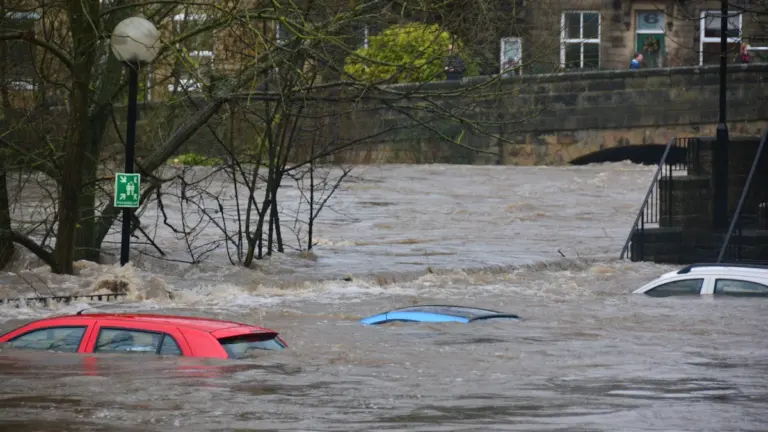
Rain and thunderstorm warnings should prompt a local check, especially in places with poor drainage, steep roads, underpasses or nearby rivers and streams. Flooding can be highly local, so a warning for a broad area does not mean every street will be affected.
If your route regularly floods, avoid assuming it will stay passable because nearby roads look clear. Check local council, transport and flood information alongside the Met Office warning map when rain is the main hazard.
What to do next this morning
Open the Met Office UK weather warnings page and check your location, route and destination. If a warning applies, note the colour, hazard and times, then check transport operators, school or workplace messages, local council updates and any event organiser advice before committing to the journey.
Source: Met Office
Context & actions About this article
Source check Weather sources
This article uses Met Office warning information and guidance to explain how readers can check local weather risks before making daily plans.
- Check the Met Office UK warnings map for live warning areas and times.
- Confirm the warning colour and named hazard before changing plans.
- Use transport, school, council or event updates for local disruption details.
- Source
- Met Office UK weather warnings
- Scope
- United Kingdom
- Updated
- 2026-06-04 08:09
Source check
Report a trust issue
Send a clear signal to community moderation if the source, facts or context need review.
Article contextPeople & topics#6
What do you think about this article?
Reader Ideas Newsroom
Have a sharper angle for this topic? Add it to the community idea board and let readers vote it up for editorial review.



/linkComments
8+ useful words can earn +10-60 DP; shorter replies can still publish without DP.