Lukas Svirplys: The Fashion Model Confronting the Reality of Male Anorexia
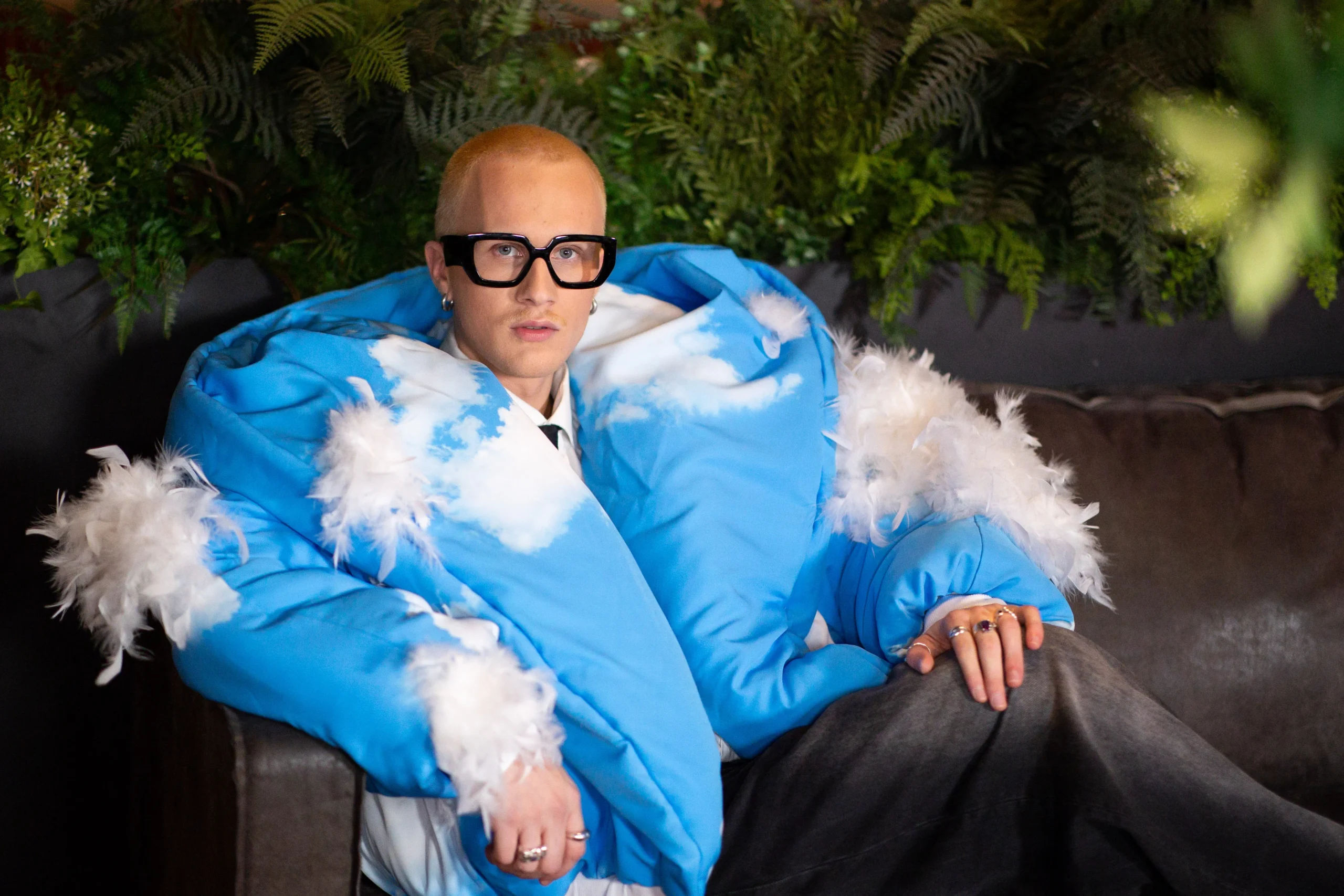
Lukas Svirplys is a name synonymous with the avant-garde in Lithuania. A multidisciplinary artist and human rights activist, he is a fixture of red carpets, known for an extravagant style that is impossible to ignore. Yet, behind the flashbulbs and the designer garments, Svirplys has been fighting a silent, physical battle. At 27 years old and standing 186 centimetres tall, the model recently saw his weight plummet to just 55 kilograms—a dangerous threshold that led to a diagnosis of anorexia nervosa.
His story, shared from a hospital ward where he is currently receiving treatment, offers a stark look at the intersection of rural upbringing, the pressures of the fashion industry, and the specific stigma surrounding male eating disorders.
From a Remote Homestead to the Runway
Svirplys’s journey did not begin in the fashion capitals of Europe, but in the deep Lithuanian countryside. He grew up on a remote homestead, a “vienkiemis,” far from the rigid social structures of urban life. He credits this isolation with his early creative freedom, noting that he grew up without the usual stereotypes or rules that dictate how a young man should look or behave.
However, this freedom came with its own pressures. As the child of village teachers, his every move was under the microscope of a small, traditional community. This contrast between his rural roots and his burgeoning identity as an artist created a unique friction. Today, he describes himself with a touch of irony as an “educated villager,” a term that bridges his humble beginnings with his current status in the high-fashion world.
The Industry that Validated a Disorder
One of the most unsettling aspects of Svirplys’s experience is how the fashion industry reacted to his declining health. Rather than raising alarms, the professional world initially embraced his increasingly thin frame. For years, his low weight was seen as an asset, a perfect canvas for the industry’s aesthetic demands.
Svirplys points out a cold economic reality behind the “thin cult” that persists on runways and in shop windows. From a production standpoint, he notes, it is simply cheaper and faster to design and sew clothes for smaller sizes. This systemic preference for thinness provided a dangerous validation for his condition. It wasn’t until medical professionals intervened that the gravity of his situation became clear. The diagnosis of anorexia nervosa was not a choice, but a consequence of a world where his body was treated as a commodity.
Breaking the Silence on Male Anorexia
Perhaps the most difficult part of his recovery has been the isolation of being a man in a space traditionally associated with women. While seeking treatment at the psychiatric hospital on Vasaros Street in Vilnius, Svirplys found himself as the only male patient in the eating disorder ward.
This lack of male representation in recovery spaces often breeds a deep sense of shame and self-doubt. Svirplys admits to questioning his place there, wondering why an artist who felt so free from stereotypes had succumbed to the very beauty standards he often critiqued. His decision to speak openly about his diagnosis is a deliberate attempt to dismantle the gendered stigma of eating disorders.
A Path Toward Recovery
Currently, Svirplys is focusing on the slow process of re-evaluating his relationship with his body. He acknowledges that the cult of thinness is not going anywhere, but his perspective has shifted from seeking beauty to seeking survival. His journey from a quiet homestead to the intense scrutiny of the fashion world has been anything but easy, yet his transparency serves as a vital reminder that eating disorders do not discriminate by gender or background.
As he continues his treatment, Svirplys remains committed to his art, but with a new understanding of the cost of the “perfect” image. His story is a call for a more humane approach to fashion—one that values the person behind the clothes more than the size of the garment.
Source: ELTA