The 10km Commute on Horseback: A Lithuanian Forester’s Slow Life
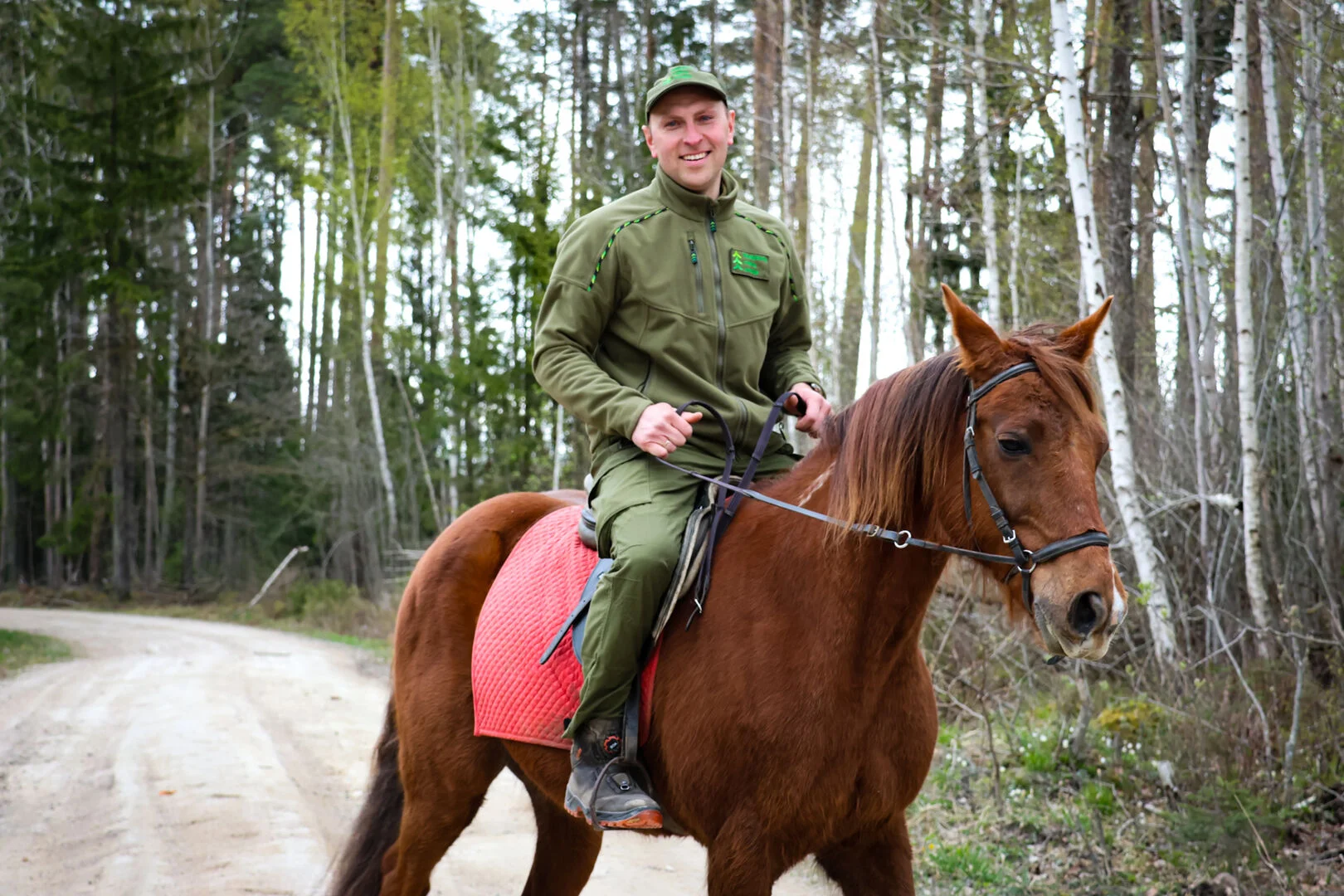
While most professionals across Europe are navigating morning traffic or squeezing onto crowded trains, Gediminas Vitkauskas is taking a decidedly different route. A forester in Lithuania’s Žagarė district, Vitkauskas often swaps his car keys for a saddle, embarking on a 10-kilometre journey through the woods on his American Trotter, Tomis.
It is a commute that takes roughly an hour—significantly longer than a drive—but for Vitkauskas, the time isn’t lost; it is reclaimed. In an era where ‘slow living’ has moved from a niche lifestyle choice to a necessary mental health strategy, his morning ride serves as a practical masterclass in reconnecting with the natural world.
A Friend with a Swedish Past
The horse at the centre of this story, officially named Ilves Toma but known simply as Tomis, is far more than a mode of transport. His arrival in the Joniškis region was somewhat accidental. Seeking a horse of his own after a few rides with a neighbour, Vitkauskas found an advert for an American Trotter with health issues.

“I didn’t know anything about horse health at the time,” Vitkauskas admits. When he first met Tomis, the horse was coughing and clearly struggling. It was later discovered that Tomis suffers from severe dust allergies, meaning he cannot live in a traditional stable or eat standard hay. This ‘disability’ turned out to be a blessing for his lifestyle; Tomis now lives entirely outdoors in the fresh air of Spirakiai village, growing a thick, ‘mammoth-like’ coat in the winter to withstand temperatures as low as -30°C.
Tomis also carries a hidden pedigree. Years after the purchase, Vitkauskas learned that the horse was originally from Sweden and had even competed in Lithuania’s famous Sartai horse races—an annual winter tradition held on ice. However, Tomis wasn’t built for the podium. Having finished last in his races, he was sold on, eventually finding a role where his character mattered more than his speed.

The Modern Forester’s Balancing Act
Vitkauskas’s choice of transport reflects a deep-seated connection to the land that is becoming increasingly rare. Growing up in a remote forest homestead, he admits that as a child, he often envied his classmates who lived in the city with access to modern entertainment. Today, he lives in that same homestead with his wife and four children, raising geese, royal pheasants, and dogs alongside Tomis.
Working as a forester since 2013, Vitkauskas views his role through a traditional lens that predates modern bureaucracy. “When I was studying, they used to say a forester was equal to a priest, a teacher, and a doctor,” he explains. The job requires a blend of management and psychology—balancing the needs of the timber industry with the conservation of the ecosystem and the concerns of the local community.

Life with a 500kg Family Member
Living with a horse that has free rein of the yard comes with unique hazards. Tomis has become so integrated into the family that he frequently knocks his nose against the window during dinner, waiting for a piece of bread or a carrot.
However, his presence hasn’t been as kind to the family’s vehicles. Vitkauskas recalls an incident where guests were blowing soap bubbles in the yard; Tomis, suspicious of the floating spheres, delivered a defensive kick that landed squarely on a car. On another occasion, the horse accidentally dented a vehicle while taking a sand bath.
Despite the occasional repair bill, the bond remains unshakable. For Vitkauskas, the hour spent on Tomis’s back is a vital buffer against the pressures of the modern workplace. It is a reminder that while the world demands speed, the forest—and those who care for it—operates on a much older, slower clock.
Source: BNS