Threads of Resilience: How Kaunas is Celebrating Ukrainian Vyšyvanka Day
In the quiet wards of the Kaunas Clinics Neonatology Clinic, a small but profound gesture is bridging the distance between Lithuania and Ukraine. This May, as the world observes Vyšyvanka Day, the smallest residents of Kaunas—premature newborns—are receiving extraordinary gifts: traditional embroidered shirts known as vyshyvankas, sent directly from the Ukrainian capital.
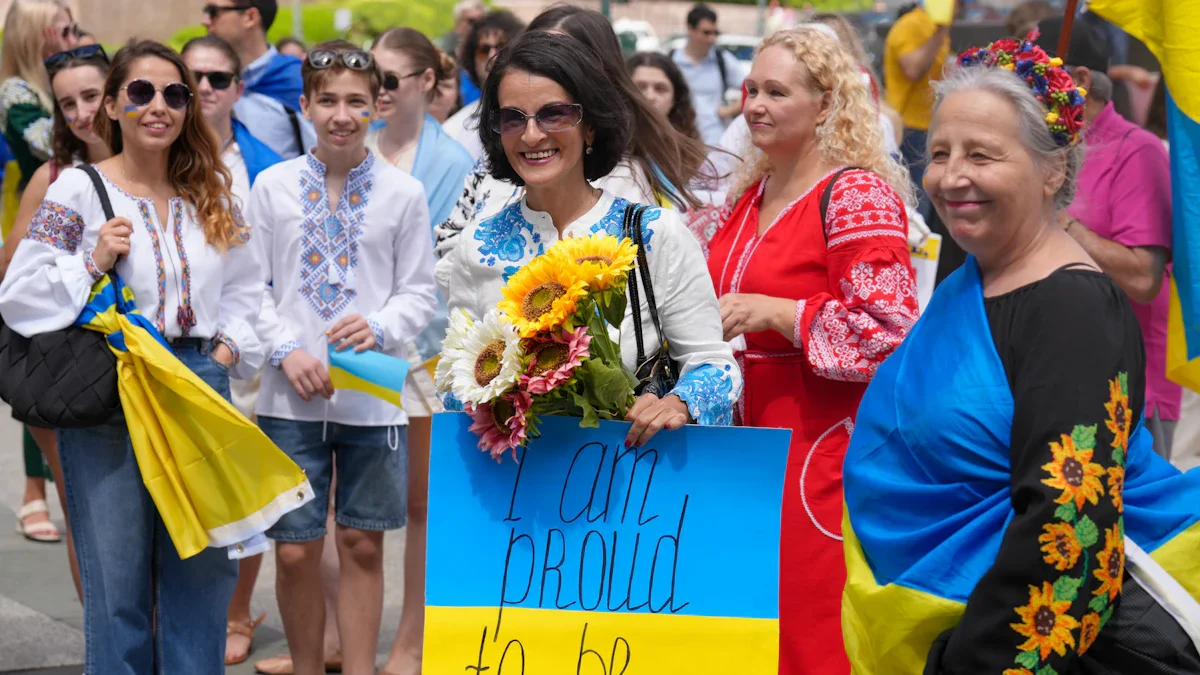
Vyšyvanka Day, celebrated annually on the third Thursday of May, has evolved from a cultural holiday into a global symbol of solidarity and survival. In Kaunas, the occasion is being marked not just by the wearing of these intricate garments, but by a series of events designed to share the deep history and craftsmanship behind the embroidery with the local community.
The Symbolic Code of the Ukrainian People
The vyshyvanka is far more than a decorative garment; it is often described as a “code” of the Ukrainian identity. For centuries, the patterns and colours stitched into the fabric have carried specific meanings. Geometric designs are frequently associated with harmony and the balance of nature, while floral motifs represent life and renewal.
Colour choice is equally deliberate. Red typically symbolises love, passion, and vital energy, while black represents the earth and the strength of one’s roots. Across Ukraine, regional variations have preserved distinct traditions. The Poltava region is famed for its subtle white-on-white embroidery, the Hutsul region for its vibrant and complex geometric shapes, and Podolia for its intricate, multicoloured compositions. Historically, these shirts were believed to act as a form of protection, with the specific placement of symbols around the neck and cuffs intended to ward off misfortune.
In the context of the ongoing war, the vyshyvanka has taken on an existential dimension. It has become a “wearable testimony” of a nation’s refusal to be erased, serving as a visible link to ancestors and a source of communal strength that remains unbroken even under the threat of conflict.
A Gift of Strength for Kaunas’ Smallest Warriors
The initiative to bring these symbols to Kaunas was spearheaded by Viktorija Krasnikova-Herasymenko, the director of the VKR Kaunas para-fencing club. Having moved to Lithuania from Kyiv, she sought to continue a tradition she cherished back home: gifting tiny embroidered shirts to newborns as a symbol of hope and continuity.
This year, fifteen miniature vyshyvankas, hand-embroidered in the Kyiv region, along with fifteen traditional motanka dolls, have arrived in Kaunas. These items are being donated to the Neonatology Clinic at Kaunas Clinics, a facility that cares for premature infants from across three-fifths of Lithuania’s territory.
Professor Rasa Tamelienė, head of the Neonatology Clinic, noted that these gifts carry a weight far beyond their physical size. She described the infants in her care as “little fighters” who, from their first breath, are engaged in a battle for survival. The presence of the vyshyvanka—a symbol of resilience—serves as a gesture of human connection and support for both the families and the medical staff during difficult times.
Learning the Craft at the Kaunas Artists’ House
For the wider Kaunas community, the celebration extends to the Kaunas Artists’ House (Kauno menininkų namai) located at V. Putvinskio g. 56. The venue is hosting an educational event led by Ukrainian artist Vira Liashenko, offering locals a chance to move beyond observation and into the practice of the craft itself.
The workshop includes a detailed introduction to the history and symbolism of the embroidery, accompanied by a short musical performance to provide cultural context. Participants are given the opportunity to learn various regional stitching techniques during a two-hour practical session.
While the event is free of charge, it reflects a growing interest in Kaunas for authentic cultural exchange. Registration is typically managed through the Kaunas City Municipality’s social media channels, allowing residents to engage directly with the Ukrainian diaspora and understand the living history stitched into every thread of the vyshyvanka.
Source: Kauno miesto savivaldybė