Lithuania Hits Solar Record as Domestic Power Meets 85% of Demand

Lithuania’s energy transition reached a significant milestone last week as domestic electricity production covered 85% of the nation’s total demand. This surge in self-sufficiency was driven by a record-breaking performance from the country’s solar sector, which saw peak generation levels surpass previous highs by a substantial margin.
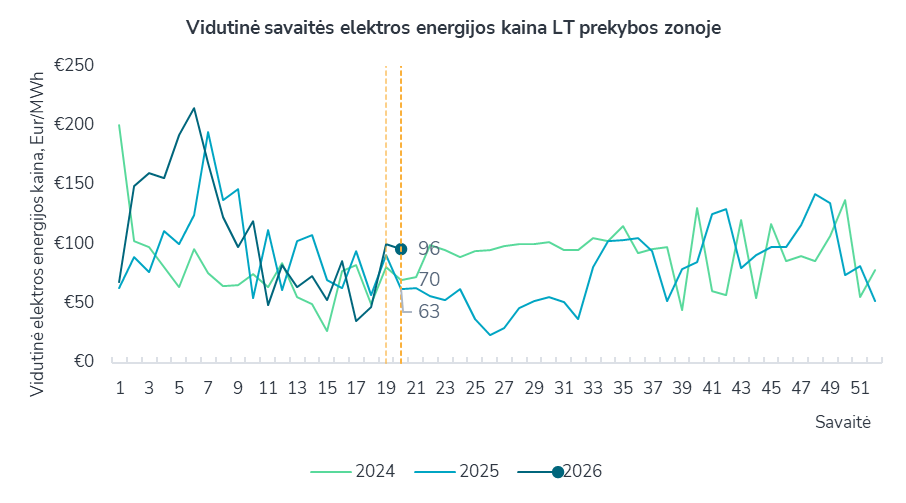
Between May 11 and May 17, the average wholesale electricity price in the Lithuanian bidding zone of the Nord Pool exchange dropped by 4%, falling from €100/MWh to €96/MWh. This price stabilization occurred despite a slight decrease in total domestic generation, as the efficiency and growing capacity of renewable sources began to exert more influence on market dynamics.
Breaking the Solar Ceiling
The most notable data point from the week occurred on Friday between 12:30 and 12:45, when Lithuania’s solar power plants reached a peak generation of 1,547 MW. This figure represents an increase of 112 MW over the previous record. According to Paulius Kozlovas, Head of the Strategy Department at Litgrid, the national transmission system operator, this growth is a direct result of the rapidly increasing installed capacity of solar power across the country.
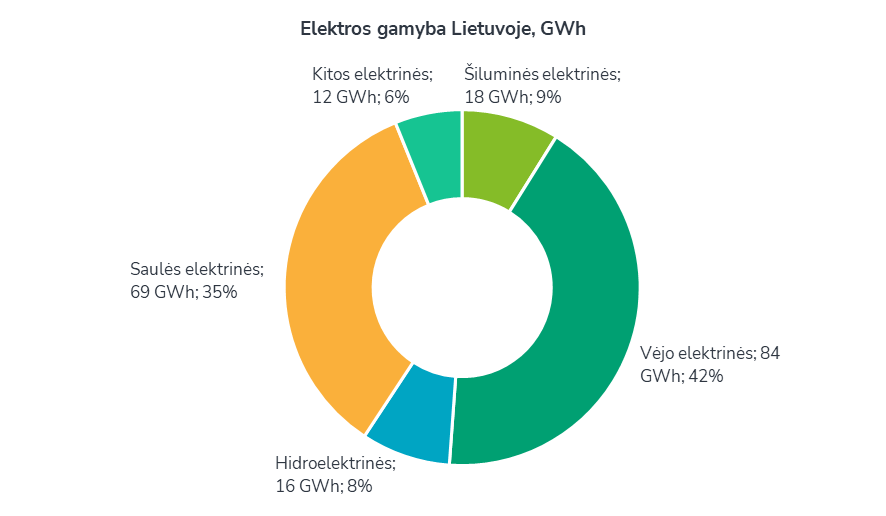
While solar grabbed the headlines with its peak performance, wind energy remained the primary workhorse of the Lithuanian grid. Despite a 23% week-on-week drop in wind output due to calmer weather conditions, wind turbines still accounted for the largest share of domestic production.
| Energy Source | Share of Total Domestic Generation |
|---|---|
| Wind | 42% |
| Solar | 35% |
| Thermal | 9% |
| Hydro | 8% |
| Other | 6% |
Market Dynamics and Regional Connectivity
The 4% reduction in wholesale prices reflects a broader regional trend, though Lithuania remains slightly more expensive than some of its northern neighbors. During the same period, while Lithuania and Latvia both averaged €96/MWh, Estonia saw significantly lower prices at €76/MWh. This discrepancy highlights the ongoing importance of cross-border interconnectors in balancing regional supply and demand.
Lithuania’s total electricity demand actually decreased by 4% last week, falling from 240 GWh to 234 GWh. This dip in consumption, combined with high renewable output, allowed the country to maintain a high level of energy independence. However, the data also reveals the necessity of the European grid network; Lithuania imported 88 GWh of electricity—a 21% increase from the previous week—primarily from Latvia (52%) and Sweden (42%). Simultaneously, the country exported 65 GWh, with the majority flowing toward Sweden and Poland.
The Path to 100% Renewables
The current data proves that Lithuania is successfully scaling its infrastructure to meet its ambitious green energy goals. The fact that local generation can now cover 85% of demand during optimal weather conditions suggests that the technical barriers to full energy independence are being dismantled.
However, the 8% overall decrease in total production (from 216 GWh to 200 GWh) despite the solar record serves as a reminder of the volatility inherent in a renewable-heavy grid. As wind generation fluctuated, the system relied on imports and thermal plants to fill the gaps. The continued utilization of the LitPol Link (reaching 74% capacity toward Poland) and the NordBalt connection to Sweden remains critical for maintaining stability as the country transitions away from fossil fuel reliance. For investors and consumers alike, the trend is clear: as installed capacity grows, the “price floor” for electricity is increasingly set by the weather rather than fuel costs.
Source: ELTA