Lithuania’s Dbox Joins €28m EU Initiative to Digitise Defence
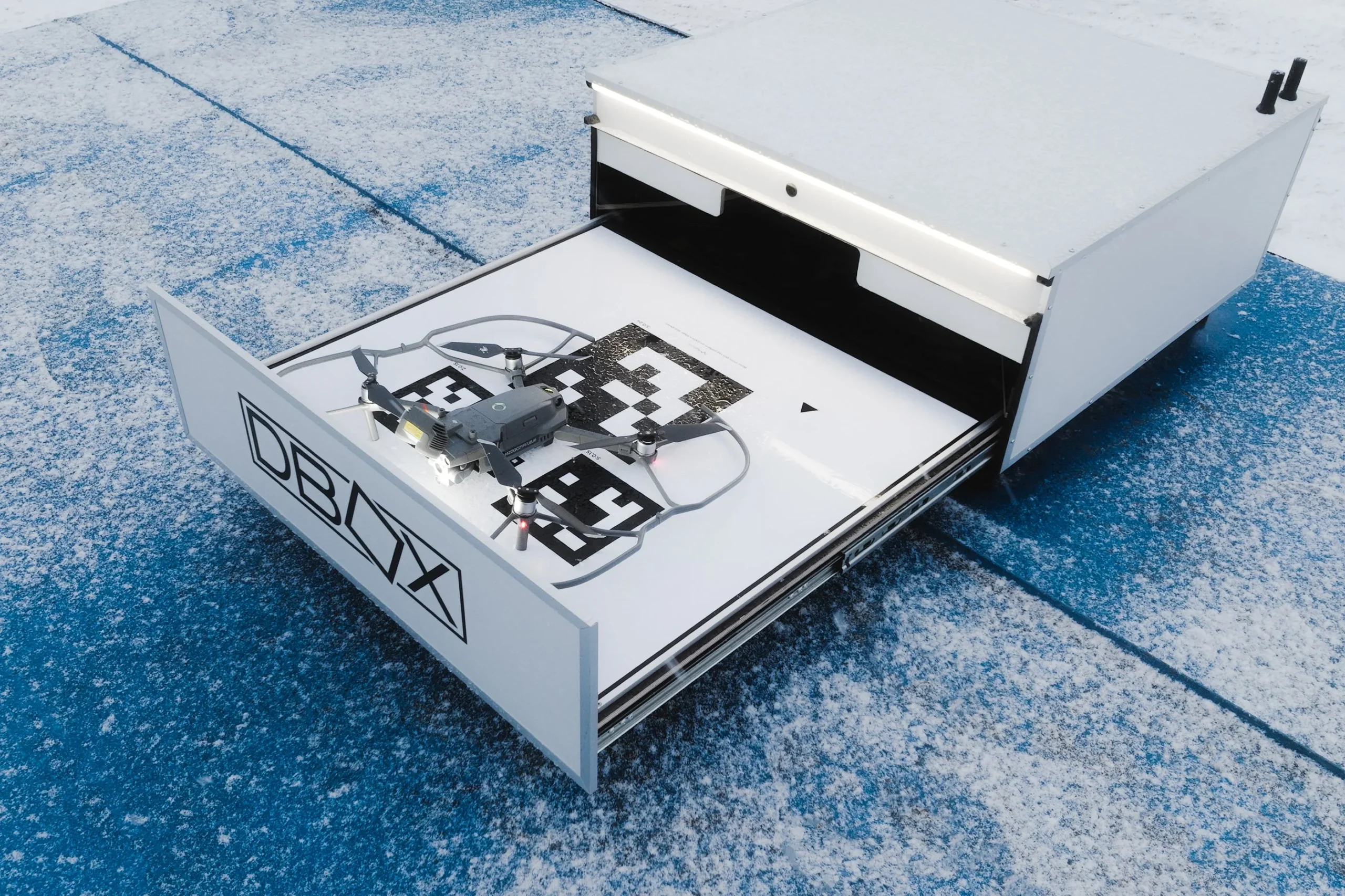
The European Union is accelerating its transition toward a digitally integrated military infrastructure, with a €28 million project known as DART (Digital Twin for Defence) taking centre stage. At the heart of this initiative is a Lithuanian-developed autonomous drone system, ‘Dbox’, which has been selected to provide the real-time data flow necessary to sustain complex ‘digital twin’ environments for continental security.
Developed by the Lithuanian firm IT Logika, the Dbox system functions as an autonomous drone station that manages the entire operational cycle—from takeoff and landing to charging and data transmission—without human intervention. In the context of the DART project, this technology is not merely a surveillance tool but a critical data node. It allows the European defence ecosystem to maintain a living, breathing digital replica of physical assets, ranging from logistics chains and manufacturing plants to airspace platforms and border infrastructure.
Bridging the Gap Between Simulation and Reality
The DART project, funded by the European Defence Fund (EDF), aims to solve one of the most persistent hurdles in modern military planning: the disparity between theoretical models and real-world conditions. By utilizing digital twin technology, commanders and engineers can simulate operational scenarios and test system interactions before they are deployed in the field.
However, a digital twin is only as effective as the data feeding it. This is where the Lithuanian contribution becomes pivotal. The Dbox system provides a constant stream of reliable information about the status of modeled infrastructure. In practical application, this allows for the continuous monitoring of territories and rapid response to incidents, ensuring that the digital model reflects the physical reality in real-time. This level of automation reduces the margin for human error and significantly lowers the operational costs associated with manual drone piloting.
The Strategic Scale of European Defence Funding
The inclusion of Lithuanian technology in a consortium alongside European industrial giants—including France’s Dassault Systèmes and Safran Electronics & Defense, and Spain’s Indra Sistemas—underscores a shift in how the EU approaches its internal supply chain. The EDF is increasingly prioritizing the integration of small and medium-sized enterprises (SMEs) from across the Baltic and Eastern European regions to bolster collective strategic autonomy.
| Funding Stream / Metric | Financial Value / Scope |
|---|---|
| DART Project Total Budget | €28 Million |
| Total EDF Budget (2021-2027) | €7.3 Billion |
| 2024 EDF Investment Target | €1 Billion |
| Research Phase Funding Coverage | Up to 100% of eligible costs |
| Consortium Composition | 20+ entities across Europe |
Martynas Survilas, Head of the Breakthrough Department at Lithuania’s Innovation Agency, suggests that participation in such high-stakes projects is a validation of the country’s growing innovation sector. He notes that while the technical achievements are significant, the economic opportunities created by these international partnerships are equally vital for long-term regional stability.

From Local Innovation to Continental Security
Despite the sophistication of European-developed security solutions, a recurring challenge remains: the transition from prototype to market-wide implementation. Jurgita Gelažanskienė, Product Development Manager at IT Logika, points out that while Europe produces high-level technology that rivals global leaders, these solutions often remain underutilized at a local level.
Projects like DART are designed to break this cycle by forcing interoperability between different national systems. By integrating Lithuanian drone stations with French software and Spanish aerospace systems, the EU is building a modular defence architecture that is less reliant on external, non-European providers. This is particularly relevant for the protection of critical infrastructure and border monitoring—areas where Lithuania’s geographic position provides unique operational insights.
The Road to Strategic Autonomy
Looking ahead, the focus for the European Defence Fund remains on land combat capabilities, maritime security, and cyber defence. For Lithuanian companies, the success of Dbox serves as a blueprint for how niche technological solutions can be scaled through international cooperation.
As the EDF continues to deploy its €7.3 billion budget through 2027, the emphasis will stay on Permanent Structured Cooperation (PESCO) initiatives. These projects are not just about building hardware; they are about creating a unified digital language for European defence. The DART project, with its reliance on Lithuanian autonomous systems, represents a significant step toward a future where European security is managed through high-fidelity, real-time digital oversight.
Source: ELTA


