Solar Power Shift: Why Homeowners Are Swapping Size for Storage
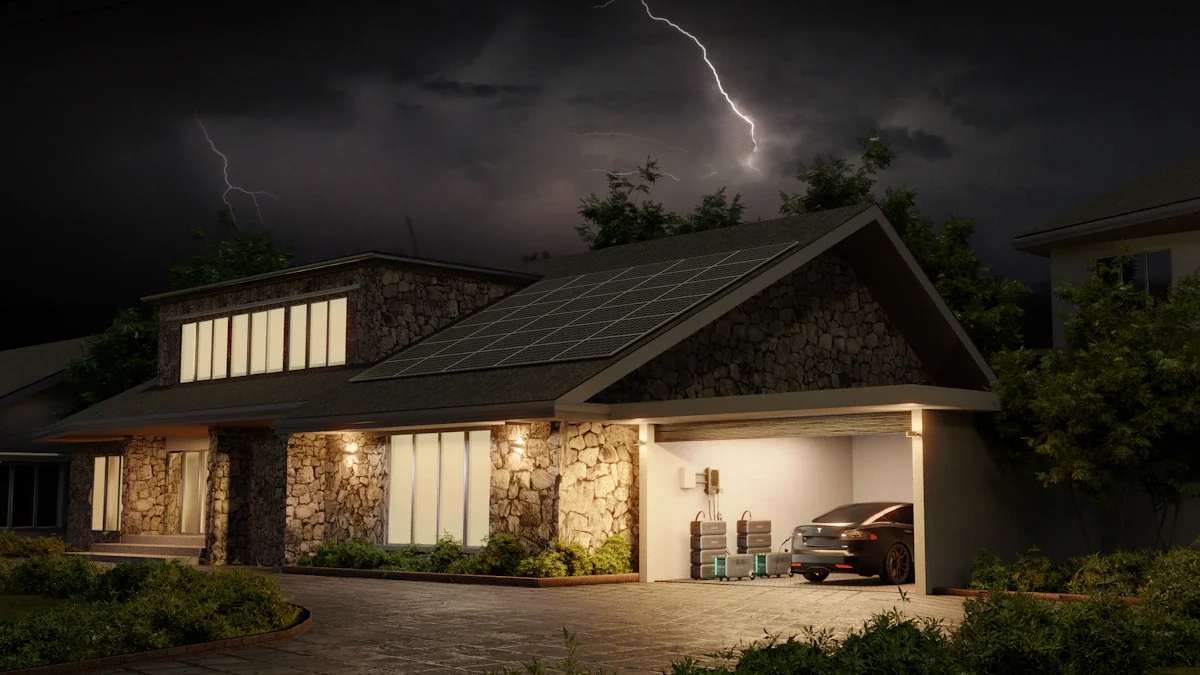
As the global energy transition accelerates, a significant shift in strategy is emerging among residential solar adopters. For years, the prevailing wisdom for ‘prosumers’—those who both produce and consume energy—was that bigger is always better. However, new data from Lithuania, a European leader in solar adoption, suggests that the era of oversized solar plants is coming to an end, replaced by a focus on efficiency and battery storage.
Lead: The End of the ‘Bigger is Better’ Era
Recent data from Lithuania’s Energy Distribution Operator (ESO) reveals a startling trend: nearly 99,000 prosumers (known locally as gaminantys vartotojai) ended their two-year accounting period with a massive surplus of unused electricity. This surplus indicates that a vast number of households installed solar plants (saulės elektrinės) with capacities far exceeding their actual needs. While generating excess power sounds ideal, experts warn it is often a poor investment. The focus is now shifting from maximizing generation to maximizing self-consumption through smart storage solutions.
Data Snapshot: The Surplus Problem
The scale of over-generation in the Lithuanian market provides a cautionary tale for UK homeowners and international investors alike.
| Category | Statistic |
|---|---|
| Total Prosumers with Surplus | ~99,000 |
| Average Private Surplus | 1,400 kWh |
| Record Private Surplus | 88,000 kWh |
| Total Connected Batteries | 11,000 (up 8,000 in one year) |
| Self-Consumption (No Battery) | ~35% |
| Self-Consumption (With Battery) | ~60% |
In total, the country now boasts over 178,000 prosumers, with 53,000 joining in the last year alone. However, the sheer volume of unused energy—reaching up to 1.4 million kWh for some business clients—highlights a disconnect between installation size and actual utility.
Context: Why Efficiency Beats Capacity
“For a long time, the view prevailed that the larger the power plant, the better,” explains Eglė Drungienė, Head of Service Development at ESO. “But practice shows that excess generation does not necessarily mean greater benefit. If the energy produced is not consumed, the investment becomes less efficient due to higher equipment costs.”
This realization is driving a surge in the popularity of energy storage. In the UK, where the Smart Export Guarantee (SEG) often pays significantly less for exported power than the cost of importing it, the Lithuanian experience is highly relevant. By investing in a battery rather than a larger array of panels, users can store energy generated during the day for use during peak evening hours or at night.
Mindaugas Pranaitis, Head of Network Development at ESO, notes that state support for battery systems has been a primary catalyst for this change. Beyond personal savings, storage helps solve grid capacity issues. In areas where the grid cannot handle massive injections of solar power, batteries allow for larger installations without requiring expensive network reconstructions.
What Next: Data-Driven Energy Management
The next phase of the solar revolution is personalization. ESO has begun providing prosumers with individual energy efficiency assessments based on a full year of data. This allows homeowners to see if they are on the right tariff and whether a battery—and specifically what capacity—would be economically rational for their specific consumption patterns.
For UK residents considering solar, the lesson is clear: before signing off on the largest possible array, analyze your hourly consumption data. The most efficient solar setup is no longer the one that produces the most power, but the one that ensures every kilowatt-hour generated is used within the home.
Original reporting by: infoerdve.lt
Source: ELTA