Preparing for ‘Day X’: Why Every Profession Matters in National Defense
In the quiet grounds of Leonpolis Manor, a question is being posed that carries more weight in Eastern Europe than perhaps anywhere else in the democratic world: “Do we truly know what we would do if ‘Day X’ arrived?” This hypothetical scenario—the moment of a national security crisis or foreign invasion—is no longer a fringe concern for the Baltic states, but a central pillar of public discourse.
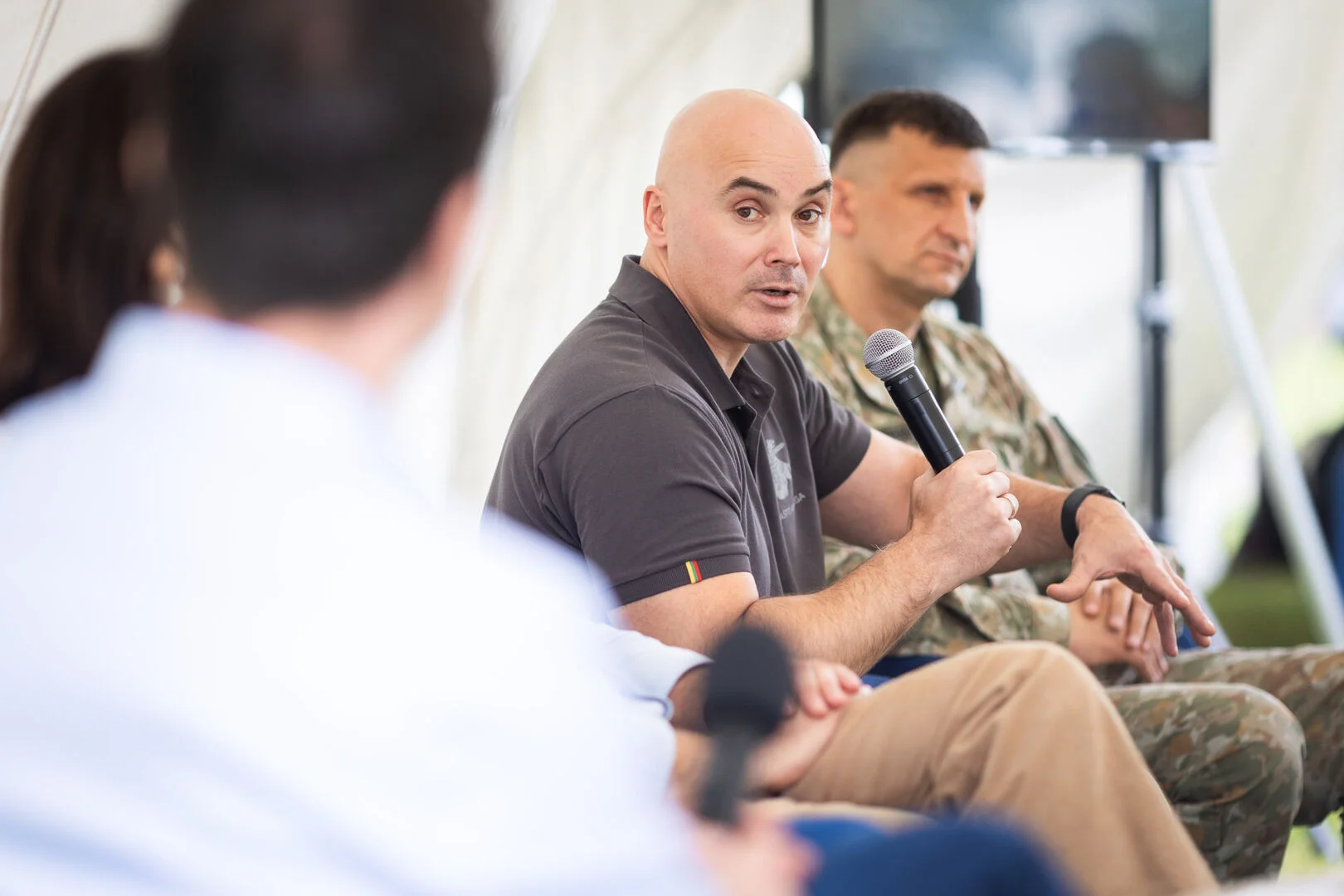
Dominykas Kubilius, a well-known Lithuanian filmmaker, volunteer soldier, and public figure, is bringing this conversation to the forefront at the upcoming Citizenship Festival. As the moderator of the discussion “Total Defense – Reality or Utopia?”, Kubilius argues that national resilience does not begin with a rifle, but with a personal inventory of one’s own skills and responsibilities.
The Philosophy of Total Defense
The concept of “Total Defense” (Visuotinė gynyba) is a strategic model that integrates military and civilian resources to deter aggression. However, as Kubilius points out, the psychological transition for the average citizen is the most difficult hurdle. The message is clear: while the front lines require soldiers, the survival of the state requires everyone else to stay at their posts.
“Everyone must think about what they would do during the worst-case scenario,” Kubilius explains. “If someone feels that a weapon is not for them, they must do what they do best in their real life. A chef must feed, a teacher must care for children, a journalist must inform, and a business person must mobilize support. Every one of us is important, and if the worst happens, every one of us will be needed.”
This approach shifts the burden of national security from a specialized military caste to the entire social fabric. It is a model increasingly studied by NATO allies as they look to the Baltics for lessons in societal resilience. In the UK, similar discussions have recently surfaced regarding the “whole-of-society” approach to defense, highlighting that modern conflicts are won not just on battlefields, but through the endurance of civilian infrastructure and public morale.
Maturity Over Fear
Supporting this view is Lithuania’s Vice Minister of National Defense, Tomas Godliauskas, who will join the panel on June 6. He emphasizes that discussing “Day X” is not an exercise in fear-mongering, but a mark of a mature society. According to Godliauskas, total defense is about living responsibly and calmly, knowing that individual preparation is a vital link in the national security chain.

The psychological aspect of this preparation is equally critical. Rosita Kanapeckaitė, a psychologist and reserve major, will address the festival on the importance of community ties. Her perspective suggests that the greatest threat during a crisis is not just physical danger, but the breakdown of social cohesion. By fostering a sense of duty and mutual aid now, a nation builds the “psychological armor” necessary to withstand external pressure.
A Cultural Foundation for Civic Duty
The Citizenship Festival, now in its third year, is organized by the “Lithuania’s Millennium Rotary Club.” It seeks to blend serious policy discussion with cultural heritage, suggesting that a nation’s defense is rooted in its identity. This year’s program features a unique dialogue of poetry and music between Professor Vytautas Landsbergis—a pivotal figure in Lithuania’s independence—and his daughter, Birutė Landsbergytė-Cechanavičienė.
Beyond the high-level debates involving activists like Skirmantas Malinauskas and former Special Forces Colonel Gintaras Koryzna, the event includes practical demonstrations by the Lithuanian Riflemen’s Union (Lietuvos šaulių sąjunga). These activities aim to demystify the military and provide families with a tangible connection to the country’s defense structures.
For readers outside the region, the festival serves as a case study in how a modern democracy prepares for uncertainty without sacrificing its democratic values. The discussion “Total Defense – Reality or Utopia?” is scheduled to begin at 12:00 PM on Saturday, June 6, at Leonpolis Manor in the Ukmergė district. The event remains open to the public, inviting citizens to move past the abstract fear of conflict and toward a practical, professionalized role in their country’s future.
Source: BNS